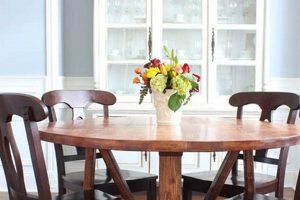
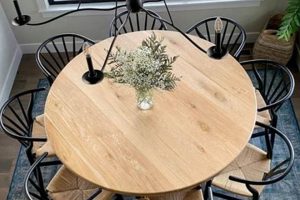
Self-created decorative objects placed at the center of a table provide a focal point for visual interest. These handcrafted arrangements can utilize a wide range of materials, from floral arrangements and candles to repurposed household items and thematic objects. For example, a collection of vintage bottles filled with wildflowers can serve as an aesthetically pleasing and cost-effective accent.
Such personalized adornments offer several advantages. They present opportunities for creative expression and customization to match specific events or personal styles. The process of crafting these arrangements can result in significant cost savings compared to purchasing pre-made decorations. Historically, homemade table decorations have been a sign of hospitality and resourcefulness, reflecting the host’s personal touch.
The following sections will delve into the various design principles, material options, and construction techniques involved in producing unique and memorable centerpieces. Exploration of thematic applications and considerations for different table sizes and event types will also be addressed.
Creating Memorable Table Accents
The creation of visually appealing and impactful table accents requires careful consideration of several key factors. These guidelines aim to provide practical advice for designing and constructing arrangements that enhance any table setting.
Tip 1: Establish a Focal Point: Begin by identifying a central element that will draw the eye. This might be a tall vase, a cluster of candles, or a uniquely shaped object. Ensure that this element is proportionally balanced with the size of the table.
Tip 2: Consider Table Size and Shape: The dimensions of the table dictate the scale and shape of the arrangement. A long rectangular table can accommodate a linear design, while a round table may benefit from a circular or multi-element arrangement.
Tip 3: Maintain Appropriate Height: Ensure that the arrangement does not obstruct sightlines across the table. Generally, arrangements should be either below eye level when seated or tall and narrow enough to allow for unobstructed views.
Tip 4: Select Complementary Colors and Textures: Choose colors that harmonize with the surrounding dcor and event theme. Incorporate a variety of textures, such as smooth glass, rough wood, or delicate fabrics, to add visual interest.
Tip 5: Prioritize Stability and Safety: Ensure that all elements are securely attached to prevent tipping or accidental damage. When using candles, select appropriate holders and maintain a safe distance from flammable materials.
Tip 6: Incorporate Natural Elements: Integrate natural materials such as flowers, branches, leaves, or stones to add organic beauty and texture. Consider seasonal availability and select elements that are appropriate for the time of year.
Tip 7: Embrace Repurposing and Recycling: Utilize recycled materials such as glass jars, tin cans, or wooden crates to create unique and sustainable arrangements. This approach can add character and reduce environmental impact.
By adhering to these principles, one can produce table accents that are not only visually appealing but also functional and reflective of individual style. The result is an enhanced dining or event experience for all involved.
The subsequent sections will explore various design themes and provide step-by-step instructions for creating specific types of table arrangements.
1. Creativity

Creativity serves as the foundational element in the design and execution of self-constructed table adornments. Its application extends beyond mere aesthetic considerations, influencing the functional and thematic coherence of the final product.
- Imaginative Material Repurposing
Creativity manifests in the innovative use of unconventional materials. For instance, transforming discarded books into elevated platforms for floral displays demonstrates resourcefulness and visual ingenuity. Such repurposing reduces waste while adding a unique, personalized touch that sets the arrangement apart from commercially produced alternatives.
- Original Thematic Interpretation
Developing unique themes that resonate with the event or personal style is a hallmark of creativity. Rather than adhering to conventional motifs, crafting a centerpiece based on a shared hobby, an inside joke, or a specific color palette allows for a more meaningful and engaging experience. This interpretive approach moves beyond generic decorations to reflect genuine personality.
- Innovative Structural Design
Creative structural design involves conceptualizing arrangements that deviate from standard formats. Employing geometric shapes, asymmetrical compositions, or suspended elements adds a dynamic and contemporary feel. For example, constructing a miniature terrarium as a centerpiece demonstrates both botanical knowledge and spatial awareness, resulting in a visually striking display.
- Adaptable Problem-Solving
The creative process involves overcoming challenges through resourceful solutions. When encountering limitations with available materials or budget constraints, improvising with readily accessible alternatives is crucial. For instance, substituting expensive blooms with locally foraged wildflowers or creating faux flowers from paper or fabric showcases adaptability and problem-solving skills.
By fostering imaginative material use, original thematic interpretations, innovative structural designs, and adaptable problem-solving, creativity transforms simple materials into distinctive table centerpieces that enhance the ambiance and reflect individual expression.
2. Affordability

Affordability is a primary driver in the adoption of self-constructed table adornments. Commercial centerpieces often incur substantial costs, particularly for large events or elaborate designs. Creating these decorations independently provides a direct means of cost reduction, enabling resource allocation to other event components.
The economic advantage stems from several factors. Raw materials, sourced directly from craft stores, gardens, or repurposed items, are generally less expensive than finished products. Labor costs are eliminated, as the individual undertakes the construction. Further savings arise from avoiding retail markups and designer fees. For instance, wedding decorations frequently consume a significant portion of the budget. A couple creating their own centerpieces, using wildflowers from a local farm and candles from a discount store, could save hundreds or even thousands of dollars compared to hiring a florist.
However, affordability should not compromise quality or aesthetic appeal. Careful planning, resourcefulness in material selection, and attention to detail are essential. While potential cost savings are significant, the successful execution of affordable, homemade centerpieces requires a commitment to craftsmanship and a realistic assessment of one’s skills and time. By balancing cost-effectiveness with aesthetic considerations, individuals can achieve visually pleasing and budget-conscious table adornments.
3. Personalization

Personalization forms a central tenet of self-made table adornments, enabling the creation of decorations that reflect specific tastes, themes, or individual histories. The ability to tailor these objects distinguishes them from mass-produced alternatives, fostering a unique connection between the event and its participants. The cause-and-effect relationship is clear: investment in personalizing elements results in a greater sense of ownership and enhanced emotional resonance. For instance, a family gathering might feature centerpieces incorporating photographs or heirlooms, transforming the table into a visual narrative of shared experiences. This level of detail elevates the ordinary, making each arrangement a meaningful expression of identity.
The practical significance of personalization extends beyond mere aesthetics. It provides an opportunity to express gratitude, commemorate milestones, or reinforce values. For example, a corporate event could feature centerpieces showcasing the company’s history, mission statement, or key achievements, subtly reinforcing brand identity. Likewise, a charity gala might employ thematic decorations that directly reflect the cause being supported, thereby increasing awareness and engagement. The customization process itself becomes a form of communication, conveying messages and fostering a deeper connection between the audience and the event.
While the potential for personalization is vast, challenges may arise in effectively translating personal visions into tangible objects. Skill levels, resource constraints, and time limitations can all impact the final outcome. However, these challenges can be mitigated through careful planning, realistic expectations, and a willingness to embrace imperfections. The key insight is that the value of self-made table decorations lies not only in their visual appeal but also in their ability to authentically represent the individuals or organizations behind them. This authenticity is what ultimately transforms a simple decoration into a cherished memory.
4. Thematic Cohesion

Thematic cohesion serves as a critical factor in the design and implementation of self-constructed table adornments. This principle ensures that all decorative elements are aligned with a central concept or motif, resulting in a unified and aesthetically pleasing presentation.
- Event-Specific Design Integration
Thematic cohesion demands that the table adornments directly reflect the nature of the event. For a wedding, this might involve incorporating floral arrangements that complement the bridal bouquet or using colors that match the wedding’s overall palette. A corporate event could feature centerpieces incorporating company logos or reflecting the industry in which the company operates. The goal is to create a seamless integration between the decorations and the event’s purpose, enhancing the overall ambiance and reinforcing the intended message.
- Color Palette Synchronization
A consistent color palette is essential for achieving thematic cohesion. The colors used in the centerpieces should align with the event’s overall color scheme, creating a visual harmony that is both pleasing and impactful. This might involve selecting flowers, fabrics, and other decorative elements that fall within a specific range of hues. For example, a rustic-themed event could feature centerpieces with earthy tones, while a modern event might incorporate bold, contrasting colors. Careful consideration of color relationships can significantly enhance the overall aesthetic appeal.
- Material Consistency
The materials used in the centerpieces should also contribute to the thematic cohesion. Choosing materials that are consistent with the event’s overall style can create a sense of unity and purpose. For instance, a nautical-themed event might incorporate seashells, driftwood, and rope into the centerpieces, while a vintage-themed event could feature antique books, lace, and pearls. The selection of materials should be deliberate and purposeful, reflecting the intended theme and enhancing the overall visual impact.
- Narrative Enhancement
Well-crafted decor should tell a story or evoke an emotion. Think of each element as a word in a sentence, carefully chosen to convey a specific message. A centerpiece for a literary gathering, for example, might feature stacked antique books adorned with quills and inkwells, subtly nodding to the event’s theme and enhancing the attendees’ experience.
The application of thematic cohesion elevates self-made table adornments beyond mere decorations, transforming them into integral components of the event’s overall design. By aligning every element with a central theme, one can create a cohesive and impactful visual experience that resonates with attendees and reinforces the event’s purpose.
5. Material Sourcing

Material sourcing represents a fundamental aspect of creating self-assembled table adornments. The selection of materials directly influences the aesthetic outcome, budgetary considerations, and overall sustainability of the project. The origins of the materials and their inherent qualities often dictate the visual impact and longevity of the final centerpiece. For instance, using locally sourced, seasonal flowers not only supports regional agriculture but also ensures freshness and appropriateness for the specific time of year. Conversely, relying solely on imported, non-biodegradable components could diminish the aesthetic appeal and raise environmental concerns. Therefore, a thoughtful approach to procurement is integral to realizing a successful and responsible outcome.
The practical implications of material sourcing extend beyond mere aesthetics. Effective material selection can significantly reduce costs, minimize waste, and promote ethical consumption. Repurposing existing materials, such as glass jars, wooden crates, or fabric scraps, presents a cost-effective and environmentally conscious alternative to purchasing new items. Employing foraged natural materials, like branches, leaves, or stones, can introduce organic textures and visual interest while minimizing environmental impact. Careful consideration of material durability and suitability for the intended purpose is also crucial. Selecting materials that are resistant to damage and appropriate for the event’s environment can ensure that the centerpieces maintain their visual appeal throughout the event.
In conclusion, material sourcing plays a pivotal role in the creation of distinctive and effective table adornments. While challenges may arise in balancing cost, availability, and sustainability, a deliberate and informed approach to material selection enhances the aesthetic impact, minimizes environmental consequences, and promotes responsible consumption. The insights gained from understanding material sourcing enable individuals to create centerpieces that are not only visually appealing but also ethically and economically sound, fostering a sense of accomplishment and contributing to a more sustainable approach to event decoration.
Frequently Asked Questions
The following addresses commonly encountered inquiries regarding the creation and implementation of self-assembled table adornments. Concise answers provide clarity and guidance.
Question 1: What is the optimal time frame for constructing self-made table decorations prior to an event?
The construction timeline is contingent on the complexity of the design and the perishability of the materials. Floral arrangements should ideally be assembled one to two days prior to the event to ensure freshness. Non-perishable arrangements can be constructed further in advance, allowing ample time for revisions and refinements.
Question 2: What measures can be implemented to maintain stability and prevent accidental tipping of centerpieces?
A wide and stable base is crucial. Employing heavy materials in the base or securing components with adhesives can enhance stability. Consider the placement of the arrangement to minimize the risk of accidental contact or obstruction.
Question 3: How can sightlines be maintained across the table while incorporating visually appealing centerpieces?
Arrangements should be either sufficiently low (below seated eye level) or tall and narrow to avoid obstructing views. Transparent containers or elevated platforms can enhance visibility while maintaining visual interest.
Question 4: What are some cost-effective alternatives to fresh floral arrangements?
Alternatives include silk or dried flowers, foliage from local sources, fruit and vegetable arrangements, or decorative objects such as candles, stones, or repurposed items. These options offer durability and can significantly reduce costs.
Question 5: How can one ensure that centerpieces align with the overall event theme or style?
A cohesive color palette, consistent material selection, and thematic consistency are essential. Researching event themes and referencing design resources can provide guidance. Create a mood board to help visualize the desired aesthetic.
Question 6: What safety precautions should be observed when incorporating candles into table decorations?
Candles should be placed in stable holders and positioned away from flammable materials. Avoid using candles in areas with high traffic or where they may be easily knocked over. Never leave burning candles unattended.
Effective planning, careful material selection, and adherence to safety guidelines are paramount in the creation of successful table adornments.
The subsequent section will explore specific design styles and provide step-by-step instructions for creating unique centerpieces.
DIY Table Centerpieces
This article explored the multifaceted nature of diy table centerpieces, emphasizing aspects such as creativity, affordability, personalization, thematic cohesion, and material sourcing. Practical tips were offered to guide individuals in crafting visually appealing, stable, and safe arrangements. The exploration underscored the potential for self-made adornments to significantly enhance event aesthetics while allowing for considerable cost savings and personalized expression.
Effective utilization of these principles enables the creation of table settings that are not only visually striking but also deeply meaningful. As individuals continue to seek personalized and budget-conscious solutions for event decoration, the relevance of creating these adornments remains significant. Further exploration and innovation in this domain promise to yield even more unique and impactful design possibilities.