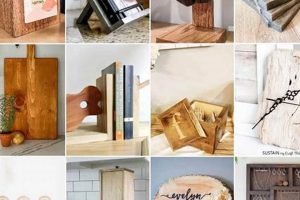
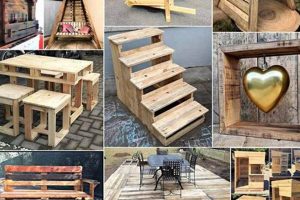
Constructing plant containers from timber through do-it-yourself methods involves assembling wooden components into receptacles suitable for housing flora. This process typically necessitates utilizing tools such as saws, drills, and fasteners to join precut or self-fabricated wooden pieces. An example would be the creation of a rectangular box from cedar planks, designed to accommodate herbs or flowering plants on a patio.
The practice of building custom receptacles offers several advantages, including cost savings compared to purchasing pre-made versions and the ability to tailor dimensions and aesthetics to specific needs and preferences. Historically, utilizing available timber resources to create planting containers has been a common practice in various cultures, reflecting both practical resourcefulness and a desire to integrate natural elements into living spaces. This approach also minimizes environmental impact through repurposing materials and reducing reliance on mass-produced items.
The following sections will delve into the essential tools and materials required for undertaking such projects, explore a variety of design options and construction techniques, and provide guidance on selecting appropriate wood types for longevity and resistance to environmental factors.
Wood Planters
The following guidelines enhance the structural integrity and extend the lifespan of plant containers fabricated from timber.
Tip 1: Wood Selection: Prioritize decay-resistant wood species, such as cedar, redwood, or cypress, for outdoor applications. These species contain natural oils that deter insect infestation and fungal growth.
Tip 2: Proper Drainage: Incorporate drainage holes at the base of the container to prevent waterlogging, which can lead to root rot and accelerate wood decay. Consider adding a layer of gravel or landscape fabric to further improve drainage.
Tip 3: Liner Utilization: Employ a plastic liner between the soil and the wood to create a barrier against moisture. This reduces direct contact between the soil and the wood, thereby minimizing the potential for degradation. Ensure the liner also has drainage holes.
Tip 4: Sealing and Protection: Apply a non-toxic, water-resistant sealant to the interior and exterior surfaces of the container. This helps to protect the wood from moisture penetration and prolongs its lifespan. Reapply the sealant periodically as needed.
Tip 5: Elevated Placement: Position the container on feet or risers to promote air circulation beneath the structure. This reduces moisture accumulation and minimizes the risk of decay caused by prolonged contact with damp surfaces.
Tip 6: Fastener Selection: Use corrosion-resistant fasteners, such as stainless steel or galvanized screws, to assemble the container. These fasteners will withstand exposure to moisture and prevent rust, which can weaken the structure.
Tip 7: Consider Soil Composition: The type of soil placed within the planter can impact its structural integrity. Use a well-draining soil mix. Heavy clay soils retain excessive moisture, potentially accelerating wood decay.
Adhering to these recommendations ensures the creation of aesthetically pleasing and durable receptacles capable of withstanding environmental stressors.
These guidelines facilitate optimal resource utilization and promote sustainable gardening practices. The subsequent section will explore design considerations for enhancing both functionality and visual appeal.
1. Wood Species

The selection of wood species is a primary consideration in the construction of plant containers. The chosen material directly impacts the planter’s durability, resistance to environmental factors, and overall longevity.
- Natural Decay Resistance
Certain wood species possess inherent resistance to decay and insect infestation due to the presence of natural oils and compounds. Cedar, redwood, and cypress are examples of species frequently employed for outdoor applications due to these properties. Utilizing naturally resistant wood reduces the need for chemical treatments and prolongs the lifespan of the planter.
- Dimensional Stability
Dimensional stability refers to a wood’s ability to resist warping, cracking, and shrinking in response to changes in moisture content. Species with high dimensional stability, such as teak or ipe, are less prone to these issues, resulting in more robust and aesthetically pleasing containers. However, these species often come at a higher cost.
- Workability and Cost
The ease with which a wood can be cut, shaped, and fastened significantly influences the construction process. Softer woods like pine are easier to work with but may require additional treatment to enhance their resistance to decay. The cost of different wood species varies considerably, impacting the overall budget of the project. Pine is an accessible and cost-effective material, though less durable than cedar or redwood.
- Environmental Impact
The sourcing of wood can have significant environmental implications. Choosing sustainably harvested wood, certified by organizations like the Forest Stewardship Council (FSC), ensures responsible forest management practices. Reclaimed wood offers an alternative, reducing the demand for newly harvested timber and minimizing waste. Using reclaimed material reduces the environmental impact of constructing wood planters.
Therefore, careful evaluation of various wood characteristics decay resistance, dimensional stability, workability, cost, and environmental impact is crucial for selecting the appropriate material for a particular planter project. The chosen species will directly influence the container’s performance and its contribution to sustainable gardening practices.
2. Drainage Importance
Effective drainage is a critical factor influencing the longevity and success of receptacles built using do-it-yourself methods. The absence of adequate water outflow from the planting medium within a wooden container initiates a cascade of detrimental effects. Excess moisture saturation fosters an anaerobic environment, inhibiting root respiration and contributing to root rot. Plant health suffers directly, leading to stunted growth, nutrient deficiencies, and ultimately, plant mortality. Moreover, prolonged contact with saturated soil accelerates the decay of the wooden components, compromising the structural integrity of the receptacle. A tangible example is a cedar planter without drainage holes, which exhibits accelerated rot at the base due to constant moisture exposure from accumulated water, shortening its lifespan significantly. The presence of functioning drainage is not optional, but a required component for functional planters.
The incorporation of drainage features into wooden containers requires strategic planning and execution. Drainage holes, typically drilled into the base of the structure, facilitate the escape of excess water. The number and size of these holes are dependent on the overall dimensions of the container and the water retention characteristics of the chosen soil mix. The implementation of a drainage layer, consisting of gravel or crushed stone placed at the bottom of the container, further enhances drainage by preventing soil compaction and promoting water flow. For instance, large planters used for trees may require a more substantial drainage layer to manage water volumes effectively. These steps mitigate the negative impacts of overwatering and contribute to the healthy development of plants.
In summary, understanding the vital role of drainage in wooden container construction is essential for ensuring both plant health and the extended lifespan of the structure. Neglecting this aspect leads to plant morbidity and accelerated material degradation. Prioritizing effective drainage through design and implementation constitutes a fundamental best practice, thereby mitigating potential problems and promoting sustainable gardening practices. Therefore, the correct execution of drainage provides positive results for the overall health of the plants within a wooden planter.
3. Joint construction

The structural integrity of plant containers fabricated through do-it-yourself methods hinges significantly on the quality of joint construction. The points at which individual pieces of wood are connected directly influence the overall strength and stability of the structure. Inadequate jointing leads to premature failure, rendering the container unable to support the weight of the soil and plants it houses. This failure is a direct result of forces exerted on the joints by the contents of the planter and external environmental factors. Consider a scenario where a simple butt joint, relying solely on fasteners and lacking any interlocking features, is utilized for the corners of a large planter. The continual expansion and contraction of the wood due to moisture fluctuations will eventually weaken this type of joint, leading to separation and collapse. Therefore, the careful selection and execution of appropriate jointing techniques are essential for creating durable and long-lasting plant containers.
Various joint construction methods offer different levels of strength and aesthetic appeal. Basic techniques, such as butt joints reinforced with screws or nails, are suitable for smaller, less demanding projects. More robust options, including rabbet joints, dado joints, and mortise-and-tenon joints, provide superior structural integrity by increasing the surface area of the glue bond and incorporating mechanical interlocking. For example, a rabbet joint, where one piece of wood fits into a groove cut into another, offers significantly greater resistance to shear forces compared to a simple butt joint. Furthermore, the choice of fasteners and adhesives plays a critical role in the overall performance of the joint. Corrosion-resistant screws and waterproof adhesives are necessary for outdoor applications to prevent degradation and maintain the joint’s integrity over time. Correct construction requires planning and skillful execution.
In conclusion, the selection and implementation of appropriate joint construction techniques is a fundamental aspect. A planter’s structural stability is dependent on the integrity of its joints. Overlooking this aspect leads to structural failure and premature degradation. By prioritizing strong and durable jointing methods, and taking account of environmental factors, it ensures the construction of containers that will withstand the test of time and provide a stable environment for plant growth. Thus, a solid structural integrity equates to durable planter design.
4. Protective coatings

The application of protective coatings represents a critical step in extending the service life of receptacles crafted via do-it-yourself methods. These coatings serve as a barrier against environmental stressors that would otherwise degrade the wooden components of the structure.
- Moisture Resistance
The primary function of a protective coating is to impede the penetration of water into the wood. Moisture absorption leads to expansion, contraction, and ultimately, decay. Coatings such as waterproof sealants and paints create a hydrophobic layer, preventing water from saturating the wood fibers. For instance, applying a marine-grade varnish to the interior of a planter minimizes water damage from damp soil.
- Ultraviolet (UV) Protection
Exposure to ultraviolet radiation from sunlight causes the lignin in wood to break down, leading to discoloration, surface checking, and weakening of the material. Coatings that contain UV inhibitors, such as exterior-grade paints and stains, shield the wood from these harmful effects. A planter painted with a UV-resistant exterior paint will maintain its color and structural integrity longer than an uncoated one.
- Pest Deterrence
Certain coatings incorporate additives that deter wood-boring insects and fungal growth. These additives provide an extra layer of protection against organisms that can compromise the structural integrity of the wood. For example, applying a wood preservative containing borates can prevent infestation by termites and other wood-destroying pests.
- Aesthetic Enhancement
In addition to their protective properties, coatings contribute to the aesthetic appeal of timber planters. Stains allow the natural grain of the wood to remain visible while adding color and depth, while paints offer a wider range of color options and a more uniform finish. This can be seen in the use of bright, colorful paints to create visually striking planters for patios or balconies.
Thus, the careful selection and application of appropriate coatings is essential for maximizing the longevity and visual appeal of plant containers. These coatings act as a shield against the elements, protecting the wood from moisture, UV radiation, and pests, while also allowing for customization of the planter’s appearance.
5. Size Constraints

The dimensions of a receptacle constructed through do-it-yourself methods are governed by a confluence of factors, primarily material properties, intended usage, and logistical considerations. Wood possesses inherent structural limitations; excessive spans without adequate support lead to deformation or failure under load. The intended volume of the plant container dictates the quantity of soil required, directly influencing the overall weight. Transportation, placement, and handling become increasingly challenging as the size escalates. An illustrative instance involves attempting to construct a large, unsupported planter box from thin pine lumber; the weight of the saturated soil would inevitably cause the sides to bow outward, potentially leading to structural collapse. Therefore, size is not arbitrary, but a carefully considered parameter dictated by physical constraints and practical requirements.
The selection of appropriate wood species mitigates some size limitations, but does not eliminate them entirely. Utilizing thicker lumber or employing internal bracing enhances structural rigidity, permitting larger dimensions without compromising stability. For example, incorporating vertical supports and horizontal crossbeams within a large rectangular planter box enables it to withstand the outward pressure exerted by the soil. Design also plays a crucial role. A series of smaller, modular receptacles offers greater flexibility and maneuverability compared to a single, monolithic structure of equivalent volume. A series of small planters can allow easier re-positioning of the garden.
In summary, successful implementation of homemade wooden planter designs necessitates careful consideration of physical constraints. Material strength, intended load, and logistical accessibility all dictate the practical boundaries of size. While design choices and material selection can partially overcome these limitations, a thorough understanding of these size constraints is crucial for ensuring both structural integrity and ease of use in the completed project. Therefore, a design that overlooks these can lead to failure, while one that embraces them ensures longevity.
6. Design aesthetics

The intersection of design principles and practical construction techniques forms the core of aesthetically pleasing plant containers built through do-it-yourself methods. The visual appeal of a wooden receptacle significantly influences its integration into the surrounding environment, whether it be a garden, patio, or interior space. A poorly designed container, regardless of its structural integrity, detracts from the overall visual harmony. Conversely, a well-considered design enhances the visual experience and complements the flora it contains. For example, a minimalist, geometric container constructed from reclaimed wood can serve as a striking counterpoint to the organic forms of the plants, creating a balanced and visually interesting composition.
The aesthetic considerations extend beyond simple visual preference. Proportions, materials, and surface finishes all contribute to the overall aesthetic impact. A container that is disproportionately large or small relative to the plants it houses appears unbalanced. The selection of wood species and finishes influences the perceived formality and texture of the container. A rough-sawn cedar planter evokes a rustic sensibility, while a smooth, painted container projects a more refined and contemporary aesthetic. The practical application of design aesthetics involves carefully considering the surrounding environment, the intended plants, and the desired visual effect to create a cohesive and harmonious composition. Thus it is important to consider all factors of aesthetic impact.
Understanding the connection between design aesthetics and wooden container construction is paramount for achieving a successful outcome. Neglecting aesthetic considerations results in containers that are functional but visually unappealing, failing to fully integrate into their surroundings. Successfully integrating design and function requires a careful balance between practical construction techniques and a conscious awareness of visual principles. The ultimate goal is to create containers that not only provide a healthy environment for plants but also enhance the beauty of the surrounding space. Therefore, it follows that to achieve a cohesive aesthetic for one’s space, one must take into account its surroundings.
Frequently Asked Questions
The following addresses common inquiries regarding the construction and maintenance of plant containers fabricated from timber through do-it-yourself methods. These answers aim to provide clarity on best practices and potential challenges.
Question 1: Which wood species provides the optimal balance between cost-effectiveness and resistance to decay for outdoor plant containers?
While species such as teak and ipe offer superior durability, cedar represents a more economical choice with satisfactory resistance to decay. Regular application of wood preservatives can further extend its lifespan.
Question 2: What is the recommended method for preventing soil from leaching out of drainage holes in a wooden plant container?
Lining the base of the container with landscape fabric prior to adding soil effectively prevents soil erosion through drainage openings while still allowing water to escape.
Question 3: Is it necessary to line the interior of a plant container built from naturally rot-resistant wood species?
While not strictly essential, utilizing a plastic liner significantly reduces the direct contact between soil and wood, extending the container’s lifespan even when employing naturally resistant materials.
Question 4: What type of fasteners should be used when constructing a plant container intended for prolonged outdoor use?
Stainless steel or galvanized screws provide the necessary corrosion resistance to withstand exposure to moisture and environmental elements, preventing premature failure of the structure.
Question 5: How frequently should a protective sealant be reapplied to wooden receptacles to maintain their water resistance?
The reapplication frequency depends on the specific sealant employed and the degree of environmental exposure. A general guideline suggests reapplication every one to two years, or as indicated by the sealant manufacturer.
Question 6: What steps should be taken to minimize the risk of a plant container collapsing under the weight of saturated soil?
Employing thicker lumber, incorporating internal bracing, and ensuring adequate drainage are crucial for distributing weight and preventing structural failure, particularly in larger containers.
In summary, meticulous attention to material selection, construction techniques, and maintenance protocols is paramount for ensuring the longevity and functionality of self-constructed plant containers.
The following section explores advanced design considerations for those seeking to elevate the aesthetic and functional aspects of their plant containers.
Conclusion
The preceding exploration of wood planters diy elucidates the intersection of horticultural practice and basic carpentry. The information presented underscores the importance of careful material selection, sound construction techniques, and proactive maintenance for ensuring the creation of durable and aesthetically pleasing receptacles for plant cultivation. Emphasis has been placed on understanding the impact of various factors, ranging from wood species to drainage provisions, on the long-term performance and sustainability of these self-made structures.
The fabrication of plant containers using wood empowers individuals to tailor their gardening environments to specific needs and preferences. By applying the principles outlined herein, practitioners can realize both functional utility and aesthetic satisfaction, thereby enriching their horticultural endeavors. Continued adherence to recommended practices will yield durable and sustainable plant containers for years to come.