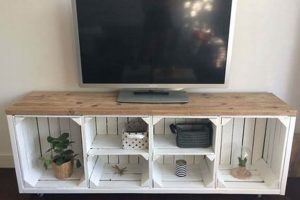
A self-constructed support structure designed to hold an electronic piano or keyboard is a project often undertaken by musicians seeking customized or cost-effective solutions. These projects range from simple, easily assembled designs to more complex, robust constructions built to specific height, width, and aesthetic preferences. Considerations often include stability, portability, and integration with other studio equipment.
The creation of such a device offers several advantages, including significant cost savings compared to commercially available stands. Furthermore, it allows for complete customization, enabling the builder to tailor the stand to the exact dimensions of the instrument and the playing environment. Historically, musicians have always adapted and modified equipment to suit their individual needs, and constructing instrument supports is a continuation of this resourceful tradition.
The subsequent sections will delve into various design considerations, materials, and construction techniques relevant to creating a functional and aesthetically pleasing support for a keyboard instrument. This will encompass topics such as material selection, joinery methods, and ergonomic considerations to ensure optimal comfort and performance.
Construction Recommendations
The following guidelines are intended to provide practical advice for building a stable and ergonomic support for a keyboard instrument. Adherence to these recommendations can enhance both the playing experience and the longevity of the finished structure.
Tip 1: Prioritize Stability: A robust base is paramount. Implement a wide footprint for the legs or supports to minimize the risk of tipping. Diagonal bracing can significantly enhance stability, particularly for wider instruments.
Tip 2: Accurate Measurement is Crucial: Precise measurements of the keyboard’s dimensions and the desired playing height are essential before commencing construction. Account for the thickness of materials used in the stand to ensure a proper fit.
Tip 3: Material Selection: The choice of materials should balance cost, weight, and structural integrity. Solid wood offers durability and aesthetic appeal, while metal provides strength and allows for adjustable height options. Plywood can serve as a cost-effective alternative for less visible components.
Tip 4: Consider Ergonomics: The keyboard’s height relative to the player is critical for comfort and posture. Ensure the playing height allows for relaxed shoulders and wrists. Adjustable height options offer versatility for multiple users or playing styles.
Tip 5: Secure Keyboard Attachment: Implement a secure method for attaching the keyboard to the stand. This may involve using screws, straps, or a recessed platform to prevent movement during play. Consider vibration dampening materials to minimize unwanted noise.
Tip 6: Cable Management: Integrate a cable management system to keep cables organized and prevent tripping hazards. This can involve routing holes, cable ties, or dedicated cable trays.
Tip 7: Finish and Protection: Apply a protective finish to the stand to enhance its durability and appearance. Paint, stain, or varnish can protect the wood from moisture and scratches. Metal components should be treated to prevent rust.
The application of these recommendations results in a functional and durable support tailored to the musicians individual needs. A thoughtfully designed and constructed support enhances both the playing experience and the overall aesthetic of the musical environment.
With these key considerations addressed, the user can confidently proceed to the design and construction phases, leading to a satisfying and personalized solution.
1. Stability and safety

The stability and safety of a self-constructed keyboard support are paramount, directly impacting the user’s well-being and the instrument’s integrity. A poorly designed or constructed stand can lead to tipping, instrument damage, or even personal injury.
- Base Design and Footprint
The dimensions and geometry of the base directly influence stability. A wider footprint increases resistance to tipping forces. Employing splayed legs or a broad, solid platform distributes weight more effectively. Inadequate base design compromises the structural integrity of the entire assembly, making it susceptible to instability.
- Material Strength and Load Capacity
The selected materials must possess sufficient strength to support the instrument’s weight without deformation or failure. Exceeding the load capacity of the materials can result in catastrophic collapse. Stress testing and accurate calculation of load-bearing capacity are essential for ensuring structural integrity.
- Joint Integrity and Fastener Selection
The connections between structural components must be robust and secure. Poorly executed joints or inadequate fasteners can create weak points in the structure, leading to instability. Appropriate joinery techniques, such as mortise and tenon, or the use of high-strength fasteners, are crucial for maintaining structural integrity.
- Center of Gravity and Weight Distribution
The position of the keyboard’s center of gravity relative to the base significantly affects stability. Placing the instrument too high or with an uneven weight distribution increases the risk of tipping. Lowering the keyboard’s height and ensuring even weight distribution enhances stability and reduces the likelihood of accidents.
These elements are essential considerations for any individual undertaking the construction of a keyboard support. Neglecting these aspects can lead to compromised safety and instrument damage, undermining the intended benefits of a customized solution.
2. Ergonomic considerations

Ergonomic considerations are integrally linked to the design and construction of a self-constructed keyboard support. A poorly designed stand, failing to address ergonomic principles, can lead to musculoskeletal strain, discomfort, and ultimately, impaired playing performance. Conversely, a thoughtfully designed support, prioritizing ergonomic factors, promotes proper posture, reduces strain, and facilitates extended periods of comfortable play. The cause-and-effect relationship is clear: inadequate attention to ergonomics results in physical discomfort, while proactive ergonomic design enhances the playing experience. For instance, a stand that is too high forces the player to elevate their shoulders, causing tension in the neck and upper back. Conversely, a stand set at the appropriate height allows for relaxed shoulders, neutral wrist angles, and efficient finger movement.
The practical application of ergonomic principles in support construction involves several key factors. These include adjustable height to accommodate different players and playing styles, appropriate keyboard tilt to minimize wrist strain, and sufficient legroom to allow for comfortable posture. Furthermore, the surface texture of the support should be non-slip to prevent the instrument from shifting during play. Incorporating these features requires careful planning and precise execution during the construction process. For example, an adjustable-height mechanism, constructed with readily available hardware, can allow the keyboard height to be modified to suit individual needs. Similarly, a slight incline can be engineered into the keyboard platform to promote a more natural wrist position.
In summary, ergonomic considerations are not merely optional enhancements, but rather fundamental requirements for a functional and healthful support. Overlooking these aspects compromises the benefits of a customized solution. Prioritizing ergonomic design principles enhances the playing experience, reduces the risk of injury, and ensures the long-term well-being of the musician. By addressing these concerns during the construction phase, a self-constructed keyboard support can be a valuable asset that promotes both comfort and performance.
3. Material selection

Material selection is a critical determinant in the success of any self-constructed keyboard support. The properties of the chosen materials directly impact the stand’s structural integrity, stability, aesthetic appeal, and longevity. Consequently, the selection process necessitates a thorough understanding of material characteristics and their suitability for the intended application. For example, using particleboard, while cost-effective, may lead to structural failure under the sustained weight of a heavy keyboard, whereas a hardwood like maple offers superior strength and durability. The choice is not solely a matter of cost; it is a fundamental engineering decision.
Specific examples further illustrate the connection. For a portable keyboard support, lightweight yet robust materials such as aluminum or high-density plywood become advantageous, allowing for easy transport without sacrificing stability. Conversely, for a stationary studio setup prioritizing aesthetic integration, solid hardwoods like walnut or cherry may be preferred, lending a visual warmth and professional appearance. Furthermore, the selection influences the construction techniques required. Joining hardwoods necessitates robust joinery methods such as mortise and tenon or dovetail joints, while metal frameworks might involve welding or bolted connections. Therefore, material selection dictates the construction process and the tools and skills required for successful completion.
In conclusion, the selection of appropriate materials constitutes a pivotal stage in the creation of a keyboard support. It necessitates careful consideration of factors such as load-bearing capacity, weight, durability, aesthetic qualities, and construction feasibility. Inadequate material choice can compromise the structural integrity and usability of the stand, negating the benefits of a customized solution. A comprehensive understanding of material properties and their implications is therefore crucial for achieving a functional, durable, and aesthetically pleasing self-constructed keyboard support, effectively linking material selection to the broader project goals.
4. Customization options

The element of individual tailoring forms a core advantage of the self-constructed keyboard support, offering a departure from standardized, commercially available alternatives. These customization options enable the constructor to adapt the structure to specific needs and preferences, optimizing functionality and integration with the playing environment.
- Dimensional Adaptation
Dimensional adaptation permits the precise adjustment of height, width, and depth to match the instrument’s dimensions and the player’s ergonomic requirements. This includes modifying the keyboard’s playing height to accommodate seated or standing positions, as well as adjusting the width to perfectly fit the instrument, eliminating unnecessary space. The ability to tailor dimensions is particularly relevant for individuals with specific ergonomic needs or instruments with non-standard sizes.
- Integrated Features
Integration of supplementary features expands the utility of the support beyond simple instrument placement. Examples include built-in cable management systems to organize and conceal wiring, headphone hangers to maintain a tidy workspace, and microphone or music stands directly incorporated into the structure. Such integrations streamline the playing environment and improve workflow efficiency.
- Material and Aesthetic Choices
The selection of materials and finishes directly influences the aesthetic integration of the support into the playing environment. Options range from cost-effective plywood to elegant hardwoods, with a wide array of stain and paint finishes available. The ability to choose materials that complement existing furniture or studio dcor contributes to a cohesive and professional appearance.
- Adjustability Mechanisms
Incorporating adjustable elements enhances the versatility of the support. Adjustable height mechanisms, tilt adjustments, and sliding shelves allow the player to fine-tune the instrument’s position for optimal comfort and performance. These mechanisms provide a dynamic playing experience and accommodate a range of playing styles.
These customization options converge to create a support that is not only functional but also reflective of the player’s individual needs and aesthetic preferences. By leveraging the inherent flexibility of a self-constructed approach, musicians can achieve a level of personalization unattainable with commercially available alternatives, thus maximizing the utility and enjoyment derived from their instrument.
5. Portability features

Portability is a crucial consideration in the construction of a self-made keyboard support, especially for musicians who require transportation of their instrument for performances, rehearsals, or storage. The design and implementation of portability features directly influence the ease and safety with which the support can be moved and reassembled.
- Collapsible or Folding Designs
Incorporating hinges or detachable components allows the support to be collapsed into a more compact form for transportation. Examples include folding legs, detachable support arms, or a multi-section design that can be disassembled into smaller pieces. Collapsible designs minimize the overall footprint, facilitating storage and transportation in vehicles or carrying cases. Practical implications include reduced storage space requirements and increased ease of handling.
- Lightweight Material Selection
Choosing lightweight materials, such as aluminum, thin-gauge steel, or lightweight plywood, reduces the overall weight of the support, making it easier to carry. Balancing weight reduction with structural integrity is essential to ensure the support remains stable and capable of safely holding the instrument. The implications of lightweight material selection are evident in reduced physical strain during transport and increased maneuverability in confined spaces.
- Integrated Carrying Handles or Cases
The addition of carrying handles or the design of a custom-fitted carrying case streamlines the transport process. Handles should be ergonomically designed and securely attached to the support to provide a comfortable and balanced grip. A carrying case offers protection from damage during transport and facilitates organization of associated accessories. The practical benefit is enhanced convenience and protection during transport and storage.
- Quick Assembly and Disassembly Mechanisms
Employing quick-release mechanisms or simple, tool-free assembly methods expedites the setup and takedown process. This is particularly relevant for musicians who frequently move their instrument between locations. Examples include spring-loaded pins, cam levers, or snap-fit connectors. Quick assembly minimizes setup time and reduces the risk of lost or damaged hardware components.
The inclusion of these elements within a self-made keyboard support enhances its practicality for musicians requiring portability. Prioritizing portability features alongside stability and ergonomic considerations results in a versatile and convenient solution for both studio and performance settings, addressing diverse logistical needs.
6. Aesthetic integration
Aesthetic integration, in the context of a self-constructed keyboard support, refers to the harmonization of the stand’s visual appearance with its surroundings. It extends beyond mere functionality, encompassing design choices that contribute to a cohesive and visually pleasing environment. The degree to which a support seamlessly integrates aesthetically influences the overall ambiance of the space and reflects the constructor’s attention to detail.
- Material Selection and Finish
The choice of materials, and subsequently the applied finish, exerts a significant influence on aesthetic integration. Utilizing wood species that complement existing furniture, or employing a paint color that aligns with the room’s palette, contributes to a unified visual theme. The selection process should consider the existing aesthetic elements to ensure harmony rather than discord. For instance, a support constructed from reclaimed wood may integrate seamlessly within a rustic or industrial-themed room, whereas a sleek metal stand may be more appropriate for a modern setting.
- Form and Proportion
The overall form of the support, including its proportions and silhouette, plays a critical role in its visual integration. A bulky, oversized stand can appear visually obtrusive, while a streamlined, minimalist design may blend more seamlessly into the background. Careful consideration should be given to the stand’s dimensions relative to the instrument it supports and the surrounding space. The principle of visual balance is applicable here: the support should neither dominate nor disappear within its environment.
- Cable Management and Visual Clutter
Effective cable management contributes significantly to aesthetic integration by minimizing visual clutter. Exposed cables detract from the overall appearance and can disrupt the visual flow of the space. Incorporating cable routing channels, concealed compartments, or strategically placed cable ties helps to maintain a clean and organized aesthetic. A visually uncluttered support appears more refined and less distracting, allowing the focus to remain on the instrument and the musician.
- Design Style Consistency
Maintaining consistency in design style between the support and the surrounding environment fosters visual coherence. Whether the prevailing style is modern, traditional, industrial, or minimalist, the support should reflect these design principles in its form, materials, and finishes. Divergence from the established style can create a visual disconnect and disrupt the overall aesthetic harmony. This requires thoughtful planning and execution, ensuring the support complements, rather than clashes with, its surroundings.
The success of a self-constructed keyboard support hinges not only on its structural integrity and ergonomic design but also on its ability to integrate seamlessly into its environment. Aesthetic integration enhances the overall experience, contributing to a visually pleasing and harmonious space. The choices made throughout the construction process, from material selection to cable management, collectively determine the success of the aesthetic integration and the ultimate visual impact of the self-constructed keyboard support.
7. Cost-effectiveness

Cost-effectiveness is a primary motivator for individuals undertaking the construction of a support for a keyboard instrument. This approach allows for potential savings compared to purchasing commercially manufactured alternatives, diverting resources towards other musical equipment or educational pursuits.
- Material Cost Optimization
The selection of materials directly influences the overall expenditure. Employing locally sourced lumber, reclaimed materials, or cost-effective sheet goods, such as plywood, reduces the investment. The trade-off, however, requires careful consideration of structural integrity. Substituting expensive hardwoods with more economical alternatives necessitates a corresponding adjustment in design to ensure adequate stability. A real-world example includes using construction-grade lumber for non-visible structural components while reserving more aesthetically pleasing materials for exposed surfaces. This strategic allocation of resources minimizes the overall cost without compromising functionality.
- Labor Investment and Skill Level
The perceived savings must account for the time and effort invested in the construction process. The value of labor is subjective and depends on the individual’s skill level and opportunity cost. A complex design requiring advanced joinery techniques necessitates a higher skill level and a corresponding increase in labor hours. Conversely, a simpler design employing basic construction methods minimizes the labor investment. A musician with limited woodworking experience might opt for a straightforward design that can be completed with readily available tools and minimal training, thus maximizing cost-effectiveness.
- Tool Acquisition and Existing Resources
The cost-effectiveness calculation must incorporate the expenses associated with acquiring necessary tools and equipment. If specialized tools are required, the initial investment can offset the potential savings. Assessing existing resources is crucial. If the constructor already possesses a well-equipped workshop, the incremental cost is limited to materials. However, if tool acquisition is necessary, the overall cost-effectiveness diminishes. A practical example involves borrowing or renting specialized tools rather than purchasing them outright, thus minimizing the initial investment.
- Customization vs. Commercial Alternatives
The cost-effectiveness proposition is further nuanced by the benefits of customization. While a commercially available keyboard stand may offer a lower upfront cost, it lacks the inherent adaptability of a self-constructed solution. Tailoring the dimensions, features, and aesthetics to specific requirements adds value that cannot be readily quantified. A musician requiring a stand with integrated cable management and precise height adjustments may find that a self-constructed solution, despite requiring a higher initial investment, offers superior long-term value compared to a standardized commercial product.
The perceived cost-effectiveness of constructing a keyboard support hinges on a holistic assessment encompassing material selection, labor investment, tool acquisition, and the benefits of customization. A strategic approach that balances these factors maximizes the potential savings and results in a functional and economically viable solution, tailored to the specific needs and constraints of the musician.
Frequently Asked Questions
The following addresses common inquiries regarding the design, construction, and suitability of building a keyboard support independently. The information is intended to provide clarity and guidance for individuals considering this undertaking.
Question 1: What is the minimum level of construction skill required to build a functional and safe keyboard support?
A basic understanding of woodworking or metalworking principles is advisable. Familiarity with tools such as saws, drills, and measuring instruments is essential. The complexity of the design should align with the constructor’s skill level. Simple designs can be executed with minimal experience, while more intricate designs necessitate advanced techniques.
Question 2: What are the critical safety considerations during the construction process?
Eye protection, respiratory protection, and appropriate work gloves are mandatory when using power tools or handling materials that generate dust or fumes. Secure all workpieces before cutting or drilling to prevent slippage. Ensure the work area is well-lit and free of obstructions. Consult safety guidelines specific to the tools and materials being used.
Question 3: How is stability ensured in a self-constructed keyboard support?
A wide base and a low center of gravity contribute significantly to stability. Employing diagonal bracing and robust joinery techniques further enhances structural integrity. Testing the support under load before placing the instrument is recommended to verify its stability and weight-bearing capacity.
Question 4: What materials are most suitable for building a durable keyboard support?
Solid hardwoods, such as maple or oak, offer excellent strength and durability. Metal frameworks, utilizing steel or aluminum, provide a robust and adjustable alternative. High-density plywood can be used for less critical structural components. The choice of materials should balance cost, weight, and the desired aesthetic.
Question 5: How can cable management be effectively integrated into a keyboard support?
Drilling discreet holes through the support structure, installing cable routing channels, or utilizing cable ties allows for organized cable management. Concealing cables minimizes visual clutter and prevents tripping hazards. Careful planning during the design phase facilitates seamless integration of cable management features.
Question 6: What are the ergonomic considerations that should influence the design?
The playing height should allow for relaxed shoulders and neutral wrist angles. Adjustable height mechanisms provide versatility for different players and playing styles. Incorporating a slight tilt to the keyboard platform can further enhance ergonomic comfort. Prioritizing ergonomic factors minimizes strain and promotes comfortable playing sessions.
The information provided addresses common concerns and provides practical guidance for constructing a functional and safe keyboard support. Adherence to these recommendations enhances the likelihood of a successful outcome.
The subsequent article section will discuss specific design examples and case studies, offering practical insights into the application of these principles.
Conclusion
The preceding sections have explored various facets of the construction of a self-made keyboard support. From initial design considerations to material selection and ergonomic optimization, a comprehensive framework has been established. The discussion highlighted the importance of stability, customization, portability, aesthetic integration, and cost-effectiveness, providing a multifaceted understanding of the endeavor. A recurrent theme throughout has been the careful balancing of design trade-offs and the prioritization of both functionality and safety.
The potential benefits of embarking on a “diy piano keyboard stand” project are evident. Musicians are encouraged to critically evaluate their individual needs and skillsets, weighing the potential advantages against the time commitment and resource investment required. Continued innovation in design and materials promises further refinement of these self-made supports, offering even greater customization and value in the future. A commitment to informed decision-making and diligent execution ensures a successful outcome.
![Build a Strong DIY Boat Motor Stand [Easy Guide] | The DIY Hub: Creative Crafts, Repairs & Life Hacks](https://craftingdiycenter.com/wp-content/uploads/2025/07/th-3394-300x200.jpg "Build a Strong DIY Boat Motor Stand [Easy Guide] The DIY Hub: Creative Crafts, Repairs & Life Hacks")