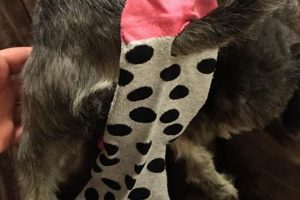
The concept involves the creation of protective footwear for canines through do-it-yourself methods. These homemade coverings shield a dog’s paws from various environmental hazards. For example, individuals may construct these items using readily available materials to protect their pets’ feet from ice, salt, or rough terrain.
Constructing paw protectors offers several advantages, including cost-effectiveness and customization. Historically, owners have improvised coverings for their working dogs’ feet. The ability to tailor these protections to a specific animal’s size and needs enhances comfort and functionality. Furthermore, repurposing existing materials aligns with sustainable practices.
The subsequent sections will address specific construction techniques, material selections, and fitting guidelines for fabricating durable and effective paw protection. Detailed instructions and considerations for various environments will be provided.
Essential Considerations for Canine Paw Protector Construction
The following guidelines will enhance the efficacy and durability of self-made canine paw protectors. Careful attention to these details ensures both the safety and comfort of the animal.
Tip 1: Material Selection: Prioritize durable, water-resistant fabrics such as canvas, ripstop nylon, or repurposed rubber. These materials offer protection against various environmental elements. Avoid materials that may cause chafing or irritation, such as coarse wool.
Tip 2: Accurate Measurement: Precise measurements of the dog’s paw length and width are crucial for a proper fit. Include the distance from the claw tips to the back of the paw pad. A snug, but not constricting, fit is essential to prevent slippage and discomfort.
Tip 3: Secure Fastening: Implement a reliable fastening system, such as adjustable straps or hook-and-loop closures. Ensure the fasteners are positioned to prevent rubbing or pressure points on the dog’s leg. Regular inspection of the fasteners is necessary to ensure their integrity.
Tip 4: Sole Reinforcement: Reinforce the sole of the paw protector with a non-slip material, such as rubber or textured fabric. This enhances traction and reduces the risk of slips and falls, particularly on slick surfaces.
Tip 5: Proper Fit Assessment: After construction, assess the fit of the paw protectors while the dog is both standing and moving. Observe for signs of rubbing, discomfort, or restricted movement. Adjustments may be necessary to optimize the fit.
Tip 6: Gradual Acclimation: Introduce the paw protectors to the dog gradually. Begin with short periods of wear and gradually increase the duration as the dog becomes accustomed to them. Positive reinforcement, such as treats, can facilitate the acclimation process.
Tip 7: Regular Cleaning: Routinely clean the paw protectors to remove dirt, debris, and potential irritants. Follow the manufacturer’s instructions for cleaning the selected materials. Allow the protectors to air dry completely before storage.
Adherence to these recommendations will result in self-made paw protectors that offer effective protection and enhance the animal’s well-being. Regular maintenance and careful observation are crucial for ensuring the continued efficacy of these items.
The subsequent section will provide instructions for creating various designs of homemade paw protection, taking into account individual dog needs and available materials.
1. Material Durability
Material durability is a paramount consideration within the context of do-it-yourself canine paw protection. The longevity and effectiveness of these protective items are directly proportional to the resilience of the materials employed. The selection of appropriate fabrics is therefore a critical step in the construction process.
- Abrasion Resistance
The chosen material must withstand constant contact with various surfaces, including pavement, snow, and rough terrain. Materials with high abrasion resistance, such as canvas or heavy-duty nylon, are essential. Insufficient abrasion resistance results in premature wear and potential compromise of the bootie’s protective function. An example is the quick fraying of thin cotton fabric when used on abrasive concrete, rendering the bootie ineffective within a short timeframe.
- Water Resistance
Exposure to moisture can degrade certain materials, leading to structural weakening and discomfort for the animal. Water-resistant fabrics, such as treated nylon or waterproof canvas, prevent water absorption. Failure to utilize water-resistant materials can result in the booties becoming waterlogged, increasing weight and reducing insulation. Consider situations where a dog walks through snow; a non-water resistant material will quickly become saturated and freeze, negating any protective benefit.
- Tear Strength
The material’s ability to resist tearing is crucial, particularly when subjected to stress or sharp objects. Ripstop fabrics, known for their interwoven reinforcement, provide enhanced tear strength. Low tear strength allows for easy damage from thorns, rocks, or even the dog’s own claws. Picture a dog running through a wooded area; a material lacking tear strength will be easily punctured and torn.
- UV Resistance
Prolonged exposure to sunlight can degrade certain materials, leading to fading, weakening, and eventual failure. UV-resistant fabrics, commonly used in outdoor gear, are essential for booties intended for frequent outdoor use. The lack of UV resistance can cause materials to become brittle and prone to cracking over time, shortening the lifespan of the protective wear. Continuous exposure to direct sunlight during summer months will rapidly degrade non-UV resistant materials.
The selection of durable materials represents a fundamental element within the broader scope of canine paw protection. Optimizing material durability not only extends the lifespan of the homemade paw protection, but also maximizes its protective function, thereby promoting canine well-being in various environmental conditions. Further investigation into material properties is recommended before embarking on construction.
2. Paw Measurement Accuracy
Paw measurement accuracy is a critical determinant of success in do-it-yourself canine paw protection. The efficacy of these homemade items hinges on a precise fit, attainable only through meticulous measurement. Inaccurate measurements undermine the bootie’s functionality, potentially causing discomfort or posing safety risks to the animal.
- Length Determination
The longitudinal dimension of the paw, from the rearmost portion of the heel pad to the tip of the longest claw, dictates the bootie’s overall length. Underestimation leads to inadequate coverage, exposing the paw to environmental hazards. Overestimation results in excess material, increasing the risk of tripping or entanglement. For instance, a bootie constructed 1 centimeter shorter than the paw exposes the claws to ice, while a bootie 2 centimeters too long may cause the dog to stumble.
- Width Assessment
Paw width, measured at the widest point of the paw pad, influences the bootie’s internal volume. Insufficient width constricts blood flow and causes discomfort. Excessive width allows for slippage and rotation, reducing traction and increasing wear. Consider a scenario where a bootie’s width is too narrow; prolonged use may induce ischemia in the paw. Conversely, an overly wide bootie may spin on the paw, rendering the traction sole ineffective.
- Circumference Consideration
While not always explicitly measured, the circumference around the ankle or metacarpal/metatarsal region contributes to the secure fit of the bootie. Tight circumference impedes movement and restricts circulation. Loose circumference permits debris intrusion and bootie detachment. A bootie with a binding circumference may lead to chafing and restricted gait. A bootie with excessive circumference might be easily dislodged during rigorous activity.
- Accounting for Claw Protrusion
Claw length must be factored into both length and width measurements. Failure to accommodate claw protrusion can cause discomfort or impede proper paw placement within the bootie. Trimmed claws necessitate less allowance than untrimmed claws. Neglecting this factor can result in the claws pressing against the bootie’s interior, leading to discomfort and potential damage to the bootie’s structure. A regular grooming schedule impacts the accuracy requirements of initial measurements.
These measurement facets are interdependent and collectively determine the bootie’s fit. The success of do-it-yourself paw protection directly correlates with the precision of paw measurement. Erroneous measurements negate material quality and construction technique, emphasizing the primacy of accurate assessment within the bootie creation process. Calibration and periodic re-measurement are therefore recommended, particularly as the animal grows or undergoes changes in weight or activity level.
3. Fastening Security
Fastening security represents a critical performance parameter in do-it-yourself canine paw protection. Secure retention of the paw protector is essential for maintaining its functionality and preventing potential hazards associated with dislodgement. The design and implementation of fastening mechanisms directly influence the bootie’s effectiveness in protecting the animal’s paws.
- Strap Material and Tensile Strength
The composition of straps significantly affects fastening security. Materials with high tensile strength, such as nylon webbing, resist stretching and breakage under stress. Inferior materials, like thin elastic, are prone to failure, resulting in bootie detachment. A real-world example involves a dog traversing uneven terrain; robust straps maintain secure attachment, preventing the bootie from slipping off and exposing the paw to potential injury. Conversely, weakened or broken straps render the bootie useless, negating its protective purpose.
- Closure Mechanism Reliability
The chosen closure mechanism, whether hook-and-loop fasteners, buckles, or elastic cords, must provide a reliable and adjustable hold. Hook-and-loop closures offer convenience but may lose effectiveness with repeated use or exposure to debris. Buckles offer greater security but require precise adjustment to prevent discomfort or constriction. Elastic cords provide flexibility but may loosen over time. A malfunctioning closure compromises fastening security, increasing the likelihood of bootie loss. Consider a dog running through mud; a secure closure prevents the bootie from being pulled off by suction, whereas a faulty closure results in immediate detachment.
- Placement and Distribution of Fasteners
Strategic placement and even distribution of fasteners are essential for maintaining uniform pressure and preventing localized stress points. Fasteners concentrated in a single area may create pressure sores or impede circulation. Distributing fasteners across multiple points ensures a more secure and comfortable fit. An improperly designed bootie with a single, tight strap can cause chafing and discomfort, leading to premature removal by the dog. Well-distributed fasteners, however, provide a secure yet comfortable fit, encouraging compliance and maximizing protection.
- Adjustability and Customization
Fastening systems must offer adjustability to accommodate variations in paw size and shape, as well as changes in sock thickness or swelling. The ability to customize the fit enhances security and comfort. Non-adjustable fasteners may be too tight or too loose, compromising both security and comfort. Adjustable straps or closures enable owners to fine-tune the fit, ensuring a snug and secure attachment that adapts to the dog’s individual needs and environmental conditions. This adjustability is particularly important for dogs with differently sized paws or those wearing protective socks.
Secure fastening, therefore, is an indispensable element in the creation of effective homemade canine paw protection. Optimal fastening security necessitates careful consideration of strap material, closure mechanism reliability, fastener placement, and adjustability. Prioritizing these factors ensures the bootie remains securely attached, thereby maximizing its protective function and promoting canine well-being in diverse environmental conditions. Consistent monitoring of the fastening mechanisms is also essential to guarantee continued functionality and prevent unforeseen detachment.
4. Sole Traction
The concept of sole traction is fundamentally intertwined with the success of do-it-yourself canine paw protection. Effective paw coverings necessitate adequate grip to prevent slips, falls, and subsequent injuries to the animal. The selection and application of materials to provide this traction represent a crucial stage in the construction process. Sole traction directly impacts mobility, safety, and overall functionality of the homemade bootie. Failure to adequately address this aspect renders the protector ineffective, potentially increasing the risk of harm. For example, a dog navigating an icy surface with booties lacking sufficient sole traction experiences an increased risk of falling, leading to sprains, fractures, or other related injuries. Conversely, appropriately designed paw protection with reliable sole traction enables confident movement, minimizing the likelihood of such incidents.
Practical applications of this understanding are evident in various environmental contexts. In icy or snowy conditions, textured rubber or specialized non-slip materials applied to the sole provide the necessary grip for secure ambulation. Similarly, on hot pavement, adequate sole traction prevents sliding and potential burns. Owners might repurpose materials such as old tires or textured mats, adapting them to the paw protector’s sole for enhanced grip. These adaptations demonstrate a direct translation of the understanding of sole traction into practical solutions. Moreover, the durability of the traction material influences the long-term effectiveness of the booties, requiring periodic inspection and potential replacement to maintain optimal performance. The design, therefore, should consider ease of repair or replacement of the traction elements.
In summation, the provision of adequate sole traction forms an integral part of the homemade canine paw protection. Overlooking this aspect compromises the entire purpose of the bootie. Key insights include the necessity of appropriate material selection, the adaptation of designs to suit varying environmental conditions, and the importance of maintaining the traction surface over time. Challenges may arise in sourcing durable, non-slip materials at a reasonable cost. The understanding of this connection ultimately contributes to the creation of safer and more functional paw protectors, enhancing the animal’s well-being and mobility in challenging environments.
5. Weather Protection
Weather protection is intrinsically linked to do-it-yourself canine paw protection, as the primary function of such homemade items is frequently to shield the animal’s paws from adverse environmental conditions. Temperature extremes, precipitation, and chemical exposure represent significant threats to canine paw health, necessitating the implementation of effective protective measures. The construction and material selection for paw protectors must therefore prioritize mitigation of these weather-related risks. For example, in sub-zero temperatures, insulated paw protectors prevent frostbite and hypothermia in the paws, while in arid environments, breathable materials shield against hot pavement burns. Without adequate weather protection, the utility of the paw protector is significantly diminished, as the animal remains vulnerable to environmental hazards.
The specific weather conditions dictate the design and materials used in the construction of paw protection. Waterproofing becomes paramount in wet conditions, requiring the use of water-resistant fabrics and seam sealing techniques. Insulation is essential for cold climates, necessitating the incorporation of thermal materials such as fleece or synthetic batting. In hot weather, breathable fabrics and light colors minimize heat absorption. A bootie designed for snowy conditions may be entirely unsuitable for use on hot asphalt. The effectiveness of the chosen weather protection measures must be evaluated considering the prevailing environmental conditions. Furthermore, regional variations in weather patterns necessitate customized bootie designs, reflecting localized needs.
In summation, weather protection constitutes a critical component of effective do-it-yourself canine paw protection. Overlooking weather considerations compromises the bootie’s functionality and potentially exposes the animal to harm. Understanding the specific threats posed by various weather conditions informs the design, material selection, and construction techniques employed. The success of homemade paw protection directly hinges on its ability to effectively mitigate these weather-related risks, highlighting the practical significance of incorporating robust weather protection features. Challenges exist in balancing competing needs, such as breathability and waterproofing, requiring careful evaluation and material selection.
6. Design Simplicity
The concept of design simplicity within the context of do-it-yourself canine paw protection directly influences the practicality and accessibility of constructing effective booties. Complexity in design introduces challenges in fabrication, increasing the likelihood of errors and reducing the number of individuals capable of producing functional protectors. A complex pattern requiring specialized sewing skills or equipment effectively limits the scope of participation in this endeavor. Conversely, a straightforward design utilizing readily available materials and basic construction techniques broadens accessibility, empowering a greater number of owners to provide paw protection for their animals. A bootie requiring intricate stitching, multiple pattern pieces, and specialized fasteners presents a significant barrier to entry for many, potentially leading to reliance on commercially produced options, which may not be tailored to individual animal needs.
The benefits of a simple design extend beyond ease of construction. A reduced number of seams and components minimizes potential points of failure, increasing the bootie’s durability and lifespan. A simpler design facilitates easier cleaning and maintenance, promoting hygiene and reducing the risk of paw infections. Furthermore, a less complex design allows for more rapid prototyping and modification, enabling owners to quickly adapt the paw protectors to specific environmental conditions or animal requirements. For example, a simple envelope-style bootie constructed from a single piece of fabric requires minimal stitching and can be quickly modified to accommodate different paw sizes or added insulation. This adaptability is particularly valuable for owners facing unpredictable weather conditions or animals with unique paw conformations. Complex designs also tend to increase the amount of time required for construction, a crucial consideration for owners with limited time resources.
In summation, design simplicity is a pivotal aspect of effective do-it-yourself canine paw protection, influencing both the feasibility of construction and the long-term functionality of the bootie. Overcomplicating the design introduces unnecessary challenges, potentially negating the benefits of homemade paw protection. Key insights emphasize the importance of prioritizing ease of fabrication, minimizing potential points of failure, and maximizing adaptability. Challenges may arise in balancing design simplicity with the need for specific features, such as robust fastening mechanisms or advanced weather protection. The optimal approach involves a careful consideration of the trade-offs between complexity and functionality, ensuring that the final design remains accessible, durable, and effective.
7. Comfort Assessment
Comfort assessment is an indispensable element within the process of do-it-yourself canine paw protection. The acceptance and consistent use of such protective wear hinges on the animal’s perceived comfort. Discomfort resulting from poorly designed or ill-fitting booties directly leads to rejection, negating the intended protective benefits. A dog experiencing chafing, restricted movement, or pressure points from improperly fitted booties will actively resist wearing them, rendering the construction effort futile. This cause-and-effect relationship underscores the paramount importance of incorporating rigorous comfort assessment procedures throughout the design and fabrication process.
Effective comfort assessment extends beyond initial fitting. Observation of the animal’s gait and behavior during use is crucial for identifying subtle signs of discomfort, such as altered stride, limping, or attempts to remove the booties. Palpation of the paw and leg after use reveals potential areas of rubbing, pressure, or restricted circulation. Adjustments to the design, materials, or fastening system become necessary based on these observations. Consider a scenario where a newly constructed bootie appears to fit well initially. However, after a short walk, the dog begins to limp. A thorough assessment reveals that the seam along the toe is causing pressure and irritation. Addressing this issue requires modifying the seam design or using a softer, more flexible material.
In summary, the connection between comfort assessment and successful do-it-yourself canine paw protection is undeniable. Prioritizing comfort not only enhances the animal’s well-being but also ensures the consistent use of the protective wear. The process involves careful initial fitting, ongoing observation, and iterative design adjustments based on the animal’s response. Overlooking this critical aspect compromises the effectiveness of homemade paw protectors. Challenges may arise in accurately interpreting subtle behavioral cues or designing for animals with pre-existing sensitivities. Addressing these challenges requires patience, attention to detail, and a commitment to prioritizing the animal’s comfort throughout the design and construction process. The ultimate goal is to create paw protectors that are both functional and comfortable, promoting canine well-being and enabling safe ambulation in diverse environments.
Frequently Asked Questions
The following addresses common inquiries regarding the construction of do-it-yourself protective footwear for canines. The information provided aims to clarify essential aspects and promote informed decision-making.
Question 1: Are commercially available patterns necessary for constructing effective canine paw protectors?
While commercially available patterns can provide a starting point, they are not strictly necessary. Individuals with basic sewing skills can create functional protectors using simple, self-drafted designs. Emphasis on accurate paw measurements and durable material selection is more crucial than adherence to a pre-existing pattern.
Question 2: What constitutes an appropriate material for the sole of a homemade canine paw protector?
The sole material should exhibit both abrasion resistance and non-slip properties. Repurposed rubber from bicycle tires or textured fabric commonly found in household items can serve as suitable options. The selected material must withstand repeated contact with various surfaces without compromising grip.
Question 3: How does one ensure a secure fit when constructing canine paw protectors without causing discomfort?
A secure fit requires a balance between snugness and freedom of movement. Adjustable straps or closures, strategically positioned to avoid pressure points, are essential. Regular observation of the animal’s gait and behavior during initial use is critical for identifying and addressing potential discomfort.
Question 4: Is waterproofing a mandatory feature for all canine paw protectors, regardless of the intended use?
Waterproofing is not universally required, but it is highly recommended for use in wet or snowy conditions. Water-resistant fabrics and seam sealing techniques prevent moisture penetration, minimizing the risk of discomfort and potential paw damage. However, for dry environments, breathable materials may be preferable to prevent overheating.
Question 5: What is the recommended method for cleaning and maintaining homemade canine paw protectors?
Cleaning methods vary depending on the materials used in construction. Generally, hand washing with mild detergent and air drying is recommended. Regular inspection for wear and tear, followed by prompt repair or replacement, is essential for maintaining the protectors’ functionality.
Question 6: Can homemade canine paw protectors effectively protect against extreme temperatures, both hot and cold?
Homemade protectors can provide a degree of protection against temperature extremes, but their effectiveness depends on the materials employed. Insulated materials, such as fleece, offer protection against cold, while breathable fabrics and light colors minimize heat absorption. However, for prolonged exposure to extreme temperatures, commercially available, purpose-built options may offer superior protection.
The preceding responses offer guidance on common concerns related to constructing canine paw protectors. Individual circumstances and environmental conditions may necessitate further research and adaptation.
The subsequent section will delve into specific construction techniques and design considerations for various types of homemade canine paw protectors.
Dog Booties DIY
This exploration of do-it-yourself canine paw protection has underscored essential considerations for effective construction. Material durability, precise paw measurements, secure fastening mechanisms, adequate sole traction, appropriate weather protection, design simplicity, and rigorous comfort assessment are all critical determinants of success. Each aspect influences the functionality, longevity, and the animal’s acceptance of the protective wear.
The information presented provides a foundation for informed decision-making in the creation of canine paw protection. Continued research, adaptation to individual animal needs, and meticulous attention to detail are paramount for ensuring the efficacy and safety of homemade solutions. Diligence in these efforts translates to enhanced canine well-being and the mitigation of environmental hazards to paw health.