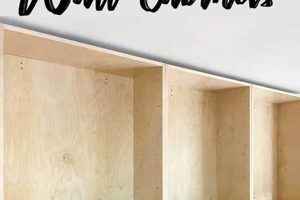
A do-it-yourself media wall constitutes a customized entertainment center created by individuals rather than purchased pre-made. This structure typically integrates a television, storage, and potentially other features such as shelving or integrated lighting, all constructed by the homeowner or a hired independent contractor, offering significant customization compared to prefabricated options.
The appeal of such projects lies in the ability to tailor the design precisely to the available space, aesthetic preferences, and functional requirements of the user. Historically, entertainment centers were standalone pieces of furniture. The rise of larger televisions and increasing desire for integrated home entertainment systems have driven the trend toward these built-in or wall-mounted solutions. Benefits include improved space utilization, enhanced aesthetic appeal, and potential cost savings compared to professionally installed, custom solutions.
The following sections will delve into the planning considerations, material selection, construction techniques, and essential tools required to successfully execute such a project. Subsequent content will address safety precautions, potential challenges, and advanced design features to further enhance the finished product.
Essential Considerations for Media Wall Projects
Successful execution of a do-it-yourself media wall requires meticulous planning and adherence to established best practices. Neglecting crucial details can lead to structural instability, aesthetic inconsistencies, or functional deficiencies.
Tip 1: Precise Measurement and Space Assessment: Accurately measure the intended installation area, accounting for wall irregularities and existing structural elements. This step is paramount to ensure proper fit and prevent costly rework.
Tip 2: Detailed Design and Planning: Create comprehensive blueprints or digital models outlining dimensions, material specifications, and wiring schematics. A well-defined plan serves as a roadmap, minimizing errors during construction.
Tip 3: Prioritize Structural Integrity: Employ appropriate framing techniques and secure mounting hardware capable of supporting the weight of the television, shelving, and other components. Structural failure poses a significant safety risk.
Tip 4: Conceal Wiring and Cabling: Plan for the integration of power outlets, data cables, and speaker wires within the wall structure. Employ cable management solutions to maintain a clean and organized appearance, preventing visible clutter.
Tip 5: Strategic Material Selection: Choose materials that complement the existing dcor and offer the desired level of durability and aesthetic appeal. Consider factors such as moisture resistance, fire resistance, and ease of maintenance.
Tip 6: Professional Electrical Work: Engage a qualified electrician to handle all electrical connections and wiring. Incorrect electrical work poses a serious safety hazard and may violate local building codes.
Tip 7: Adequate Ventilation: Ensure sufficient airflow around electronic components to prevent overheating and extend their lifespan. Consider incorporating ventilation grilles or other cooling solutions into the design.
Tip 8: Pre-Construction Mockup: Before commencing final assembly, conduct a full-scale mockup using cardboard or inexpensive materials. This allows for visual confirmation of dimensions, proportions, and overall aesthetic impact.
Adhering to these guidelines will significantly increase the likelihood of a successful and aesthetically pleasing outcome. Careful planning and execution are key to achieving a functional and visually appealing focal point for the entertainment space.
The following sections will further explore advanced techniques and design elements that can elevate the project beyond basic functionality, creating a truly bespoke media experience.
1. Precise Planning

Precise planning forms the bedrock of any successful media wall undertaking. Without a detailed and comprehensive plan, the resulting structure is likely to suffer from functional deficiencies, aesthetic inconsistencies, or, in severe cases, structural instability. The planning phase dictates the overall success of the project and minimizes potential for costly rework or safety hazards.
- Dimensional Accuracy
Accurate measurements are non-negotiable. Walls are rarely perfectly square, and discrepancies, however minor, can accumulate and lead to significant problems during installation. Taking multiple measurements at various points, accounting for baseboards and crown molding, and creating detailed sketches or digital models are essential steps. Failing to do so may result in gaps, uneven surfaces, and the inability to properly fit components within the planned structure.
- Load-Bearing Assessment
Every component added to the structure the television, shelving, decorative elements contributes to the overall weight. The plan must account for the load-bearing capacity of the wall itself. Identifying stud locations, determining wall composition (drywall, plaster, concrete), and selecting appropriate mounting hardware are crucial for preventing structural failure. Ignoring this aspect can lead to sagging, wall damage, or, in extreme cases, complete collapse.
- Electrical and Cable Management
Aesthetically pleasing media walls conceal unsightly wiring. The planning phase must incorporate pathways for power cables, HDMI cables, speaker wires, and any other necessary connections. This includes determining outlet locations, planning for conduit runs within the wall, and selecting appropriate cable management accessories. Insufficient planning results in exposed wires, creating a messy and unprofessional appearance, and potentially posing a safety hazard.
- Material Selection and Budgeting
The choice of materials wood, metal, drywall, paint, trim directly impacts both the aesthetic and functional qualities of the media wall. The plan should specify the exact materials to be used, taking into account factors such as cost, durability, ease of installation, and aesthetic compatibility with the existing dcor. Creating a detailed budget that accounts for all materials, hardware, and potential unforeseen expenses is essential for maintaining financial control throughout the project. Lack of planning in this area can lead to cost overruns, material shortages, and compromised aesthetic outcomes.
In conclusion, meticulous planning transforms the abstract concept of a media wall from an idea into a tangible reality. The accuracy of the measurements, the assessment of structural integrity, the strategic management of electrical wiring, and the careful selection of materials each contribute to the ultimate success of the endeavor. Investing time and effort in this initial phase represents a critical investment in the overall quality, safety, and aesthetic appeal of the finished media wall.
2. Structural Integrity
Structural integrity is a fundamental aspect of any do-it-yourself media wall project. It dictates the safety, longevity, and overall success of the installation. A media wall, by nature, bears the weight of electronic equipment and storage components, necessitating robust construction methods to prevent collapse or failure.
- Load Distribution and Support Systems
Proper load distribution is crucial to prevent localized stress points that could compromise the structure. The design must consider the weight of the television, shelving, and any additional items to be placed on the media wall. This requires careful planning and the use of appropriate support systems, such as strategically placed studs, reinforced mounting brackets, and load-bearing shelving. The selection of materials with adequate strength and rigidity is also paramount. Examples of load distribution strategies include spreading the weight across multiple wall studs and utilizing bracing techniques to strengthen weak points.
- Wall Anchoring Techniques
The manner in which the media wall is anchored to the existing wall structure is critical for stability. Choosing the correct type of anchors is essential, considering the composition of the wall itself (drywall, plaster, concrete). Drywall anchors, for example, are inadequate for supporting heavy loads and should be avoided in favor of stronger alternatives like toggle bolts or molly bolts. For concrete walls, specialized concrete anchors are necessary to ensure a secure and lasting connection. Proper installation of these anchors, following manufacturer’s instructions, is equally important.
- Material Selection and Strength
The materials used in the construction of the media wall directly impact its structural integrity. Solid wood, plywood, and metal are commonly employed due to their strength and durability. Particleboard and MDF, while less expensive, are generally not recommended for load-bearing components due to their lower strength and susceptibility to moisture damage. Choosing the appropriate thickness and grade of material is also crucial. Thicker lumber and higher-grade materials offer greater resistance to bending and deformation under load, enhancing the overall structural integrity of the media wall.
- Fastener Selection and Placement
The type and placement of fasteners (screws, nails, bolts) play a significant role in the structural integrity of the media wall. Using screws instead of nails provides a stronger and more durable connection. The length and diameter of the screws should be appropriate for the thickness of the materials being joined. Proper screw placement, avoiding over-tightening or stripping, is also essential. Spacing fasteners evenly and strategically reinforces the joints and prevents them from pulling apart under stress. Consider using construction adhesive in conjunction with mechanical fasteners for increased strength and rigidity.
Neglecting structural integrity in a do-it-yourself media wall project can have serious consequences, ranging from aesthetic issues like sagging shelves to catastrophic failures resulting in damage to property or injury. Therefore, a thorough understanding of load-bearing principles, appropriate material selection, and proper construction techniques is essential for ensuring the safety and longevity of the finished product. Careful planning and diligent execution are crucial to achieving a structurally sound and visually appealing media wall.
3. Aesthetic Integration

Aesthetic integration represents a critical determinant of success in a do-it-yourself media wall project. It defines the extent to which the newly constructed media wall harmonizes with the pre-existing architectural style, dcor, and spatial characteristics of the room. A failure to achieve aesthetic integration can result in a visually jarring element that detracts from the overall appeal of the space. Conversely, a well-integrated media wall elevates the room’s aesthetic, creating a cohesive and visually pleasing environment. For example, a modern, minimalist media wall constructed from sleek materials like glass and brushed metal would be incongruous within a room characterized by traditional, rustic dcor. The result is visual disharmony, diminishing the value of both the media wall and the surrounding space.
The achievement of aesthetic integration necessitates careful consideration of several factors. These include the color palette of the room, the existing furniture style, the architectural details (e.g., crown molding, baseboards), and the lighting scheme. The media wall design should incorporate elements that complement these existing features. For instance, if the room features warm, earth-toned colors, the media wall might incorporate similar colors or natural materials like wood veneer. If the furniture is characterized by clean, modern lines, the media wall design should mirror this aesthetic with simple shapes and minimal ornamentation. Another relevant example involves matching the hardware finishes (e.g., drawer pulls, cabinet hinges) of the media wall to the existing hardware in the room to create a unified appearance. Consideration of the room’s lighting is also crucial. Integrated lighting within the media wall can enhance its visual appeal, but it must be carefully planned to avoid glare or harsh shadows.
In summary, aesthetic integration is not merely an aesthetic consideration but a fundamental component of a successful media wall project. It requires a thorough understanding of the existing space and a deliberate effort to create a design that seamlessly blends with its surroundings. The challenges lie in balancing personal preferences with the existing aesthetic and in making informed design choices that enhance rather than detract from the overall appeal of the room. Prioritizing aesthetic integration elevates the media wall from a simple entertainment unit to a carefully considered design element that enhances the overall value and enjoyment of the living space.
4. Wiring Concealment
Wiring concealment is an indispensable element in the successful execution of a do-it-yourself media wall project. The ability to effectively manage and hide unsightly cables and wires contributes significantly to the overall aesthetic appeal and professional finish of the installation, transforming it from a purely functional structure into a visually integrated component of the living space.
- In-Wall Conduit Systems
The integration of in-wall conduit systems provides a dedicated pathway for routing electrical and data cables within the structure of the media wall. This approach ensures that wires are completely hidden from view, eliminating clutter and presenting a clean, organized appearance. Furthermore, conduits facilitate future upgrades or modifications to the system by allowing cables to be easily added or removed without requiring extensive disassembly of the wall. Examples include using PVC or flexible ENT tubing to run cables behind drywall, providing a secure and concealed pathway.
- Cable Management Accessories
Cable management accessories offer practical solutions for organizing and securing cables within and around the media wall. These accessories include cable ties, wire clips, cable sleeves, and power strips with integrated cable management features. These components assist in bundling cables together, preventing them from becoming tangled or creating a visual mess. They also aid in routing cables neatly and discreetly along the back of the media wall, minimizing their visibility. For instance, adhesive-backed cable clips can be used to secure cables to the back of shelving units, keeping them out of sight.
- False Walls and Panels
The construction of false walls or removable panels provides a highly effective method for concealing extensive wiring and equipment. These structures create a hidden compartment behind the media wall, allowing for easy access to cables and components while maintaining a clean, uncluttered exterior. This approach is particularly useful for accommodating larger components such as amplifiers, gaming consoles, and network devices. For example, a shallow false wall can be constructed using a wood frame covered with drywall, creating a hidden space for wiring and equipment.
- Power Outlet Relocation
Strategically relocating power outlets behind the media wall allows for a cleaner, more streamlined appearance. By moving outlets to a hidden location, visible power cords are minimized, reducing clutter and improving the overall aesthetic. This often involves hiring a qualified electrician to safely relocate existing outlets or install new outlets behind the television or within the media wall structure. Proper planning is essential to ensure that outlets are accessible for maintenance and repairs, but remain concealed during normal use.
The implementation of effective wiring concealment techniques transforms a do-it-yourself media wall from a basic structure into a professional-grade installation. A thoughtfully designed and executed wiring solution contributes significantly to the overall visual appeal and functionality of the entertainment space, elevating the media wall from a purely utilitarian feature to an integral component of the room’s aesthetic design.
5. Ventilation Strategy

Ventilation strategy constitutes a critical, yet often overlooked, aspect of successful media wall construction. The enclosed nature of many such installations can lead to significant heat buildup from electronic components, potentially shortening their lifespan, impacting performance, and posing a fire risk. A well-defined ventilation strategy mitigates these risks, ensuring the longevity and safe operation of the media system.
- Natural Convection and Airflow
Natural convection relies on the principle that warm air rises, creating a natural airflow that draws cooler air into the enclosure. This can be achieved by incorporating strategically placed vents at the bottom and top of the media wall. Bottom vents allow cool air to enter, while top vents allow warm air to escape. The size and placement of these vents should be calculated based on the expected heat output of the electronic components. Inadequate vent sizing will negate the effectiveness of natural convection. For example, a media wall housing a high-powered amplifier will require larger and more numerous vents than one containing only a television and a streaming device.
- Forced Air Cooling Systems
In situations where natural convection is insufficient, forced air cooling systems become necessary. These systems employ fans to actively circulate air within the media wall, significantly increasing the rate of heat dissipation. Low-noise fans are typically used to minimize disruption to the viewing experience. These fans can be strategically positioned to draw cool air from outside the enclosure and exhaust warm air. Smart fans that automatically adjust their speed based on temperature readings offer an efficient and effective cooling solution. Improper fan placement or inadequate airflow can create dead zones where heat accumulates, rendering the system ineffective.
- Component Placement and Spacing
The physical arrangement of electronic components within the media wall significantly impacts ventilation effectiveness. Components that generate significant heat should be positioned with adequate spacing around them to allow for airflow. Avoiding tightly packing components together prevents heat from becoming trapped and allows for more efficient cooling. For example, placing a high-powered receiver directly on top of a game console will restrict airflow and lead to overheating. Shelving should be designed to allow for ample ventilation around each component. Insufficient spacing will negate the benefits of even the most elaborate ventilation systems.
- Material Selection and Thermal Conductivity
The materials used in constructing the media wall influence the overall thermal management of the enclosure. Materials with high thermal conductivity, such as metal, can help to dissipate heat more effectively than materials with low thermal conductivity, such as wood or plastic. Using metal shelving or incorporating metal heat sinks can enhance heat transfer away from electronic components. However, care must be taken to ensure that metal components are properly insulated to prevent electrical hazards. Selecting materials with appropriate thermal properties can contribute to a more efficient and reliable ventilation strategy.
In conclusion, a comprehensive ventilation strategy is not an optional add-on but an integral element of any well-designed media wall project. Integrating these considerations from the initial planning stages ensures optimal performance, prolongs the lifespan of electronic components, and mitigates potential safety hazards. The specific strategy will vary depending on the equipment housed within the media wall, but a thoughtful approach to heat management is always essential.
Frequently Asked Questions Regarding Media Wall Projects
The following addresses common inquiries and misconceptions pertaining to do-it-yourself media wall design and construction. This information is intended to provide clarity and guidance for individuals considering undertaking such a project.
Question 1: Is a media wall suitable for any size room?
The suitability depends on the dimensions of the room. Overly large media walls in small rooms can overwhelm the space and create a sense of claustrophobia. Conversely, an undersized structure in a large room may appear insignificant. Careful consideration of scale and proportion is crucial.
Question 2: What are the common mistakes to avoid in a media wall project?
Frequent errors include inaccurate measurements, inadequate structural support, insufficient ventilation, and neglecting wire management. Thorough planning and adherence to best practices are essential for avoiding these pitfalls.
Question 3: What is the typical cost for material selection in the media wall project?
Material costs vary significantly depending on the choice of materials. High-end woods, custom cabinetry, and advanced lighting systems will increase the overall expense. Budget-conscious options include using more economical wood alternatives and simpler design elements.
Question 4: How can I assess the structural integrity of my existing wall before building a media wall?
Determining wall composition (drywall, plaster, concrete) and stud location is essential. Consult building codes and consider hiring a structural engineer to assess load-bearing capacity, particularly for heavier installations. Ignoring structural considerations poses significant safety risks.
Question 5: What types of wiring should I consider for the media wall?
Power outlets, HDMI cables, Ethernet cables, and speaker wires are commonly required. Anticipate future needs and incorporate additional wiring capacity to accommodate potential upgrades or changes in equipment. Proper cable management is crucial to avoid visual clutter.
Question 6: Is professional assistance necessary for any aspect of this project?
Electrical work should always be performed by a licensed electrician. Depending on the complexity of the design, consulting a carpenter or contractor for structural elements may also be advisable. Prioritize safety and adherence to local building codes.
In conclusion, thorough planning, careful execution, and a realistic assessment of skills and resources are crucial for a successful media wall project. Seeking professional assistance when needed ensures a safe, functional, and aesthetically pleasing outcome.
The subsequent section will address specific design styles and trends in do-it-yourself media wall construction, providing inspiration for various aesthetic preferences.
Conclusion
This exploration of media wall diy projects has underscored the critical considerations for successful implementation. Emphasis has been placed on precise planning, structural integrity, aesthetic integration, effective wiring concealment, and adequate ventilation. The multifaceted nature of such undertakings necessitates a comprehensive understanding of design principles, construction techniques, and safety protocols.
The realization of a well-executed media wall enhances both the aesthetic and functional qualities of a living space. Adherence to established best practices and a commitment to quality craftsmanship are paramount for achieving a durable, visually appealing, and structurally sound result. Individuals should carefully evaluate their skills and resources before embarking on a do-it-yourself endeavor of this scope, and should not hesitate to seek professional guidance when necessary to ensure a positive and long-lasting outcome.