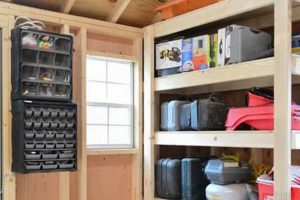
The construction of outbuildings for storage purposes by individuals, without professional assistance, represents a tangible solution to space constraints encountered in residential settings. For instance, a homeowner might choose to erect a small structure in their backyard to house gardening equipment, seasonal decorations, or recreational items that would otherwise clutter interior living areas.
This approach offers several advantages, including cost savings and the opportunity to customize the design to meet specific storage needs and aesthetic preferences. Historically, self-built storage structures have provided a means of managing resources and improving property functionality for homeowners with limited budgets or a desire for greater control over the building process. The ability to tailor the structure to fit unique property layouts and specific storage requirements further enhances its value.
The subsequent sections will delve into crucial aspects of planning, design, and construction techniques relevant to the creation of functional and durable storage buildings. These aspects include site preparation, foundation construction, framing methods, roofing options, and considerations for weatherproofing and security.
Construction Pointers for On-Site Storage Units
The following guidelines are intended to assist in the successful construction of independent storage units, emphasizing structural integrity and long-term usability.
Tip 1: Site Assessment is Crucial. A thorough site evaluation is paramount before commencing construction. Identify potential issues such as drainage problems, soil instability, and proximity to property lines or underground utilities. Addressing these concerns proactively will prevent future structural complications.
Tip 2: Foundation Stability is Non-Negotiable. A properly constructed foundation is the bedrock of any enduring structure. Depending on local climate and soil conditions, a concrete slab, gravel pad, or pier foundation may be appropriate. Adhere to local building codes regarding foundation depth and reinforcement.
Tip 3: Framing Techniques Matter. Employ sound framing practices, ensuring all lumber is pressure-treated and properly fastened. Utilize appropriate connectors and bracing to withstand wind and snow loads. Accurate measurements and square angles are essential for structural stability.
Tip 4: Roofing Requires Precision. The roof serves as the primary defense against the elements. Select roofing materials suitable for the local climate and install them according to manufacturer specifications. Proper flashing and sealing are crucial to prevent water infiltration.
Tip 5: Ventilation Prevents Damage. Adequate ventilation mitigates moisture buildup, preventing rot and mold growth. Incorporate vents near the roofline and soffits to promote airflow. Proper ventilation extends the lifespan of the structure.
Tip 6: Security Measures are Essential. Implement security measures to protect stored contents. Install a robust locking mechanism on the door and consider adding window coverings or security lighting. Deterring unauthorized access is a key component of storage unit management.
Tip 7: Weatherproofing Extends Lifespan. Apply sealant to all seams and joints to prevent water intrusion. Choose exterior paint or stain that is specifically designed for weather resistance. Regular maintenance and reapplication of sealant will maximize the structure’s longevity.
Adherence to these guidelines will contribute to the creation of a durable and functional storage unit, providing long-term value and protection for stored belongings.
The subsequent concluding remarks will summarize the salient points discussed in this article.
1. Planning

The initial phase of erecting a structure, encompassing meticulous Planning, dictates the subsequent success of the overall building. Within the scope of constructing self-reliant storage spaces, comprehensive preparation is not merely advisable, but indispensable. It predetermines material selection, site suitability, regulatory compliance, and overall structural integrity. Absent appropriate preparation, the project is subject to cost overruns, structural deficiencies, and potential legal ramifications. For example, failure to assess local zoning ordinances prior to construction could result in mandatory demolition, negating all invested resources.
Effective preparation involves several distinct stages. Firstly, identifying the specific storage needs informs the structure’s dimensions and internal configuration. Secondly, a thorough site analysis evaluates ground stability, drainage patterns, and accessibility for construction equipment. Thirdly, the creation of detailed blueprints, incorporating precise measurements and material specifications, provides a tangible roadmap for the building process. Consider the hypothetical scenario of a homeowner who neglects to account for potential snow loads in their geographical region. The inadequately reinforced roof structure would be prone to collapse under heavy snowfall, leading to significant property damage and potential safety risks.
In summation, thorough preparation functions as the cornerstone of effective building. It mitigates risks, optimizes resource allocation, and ensures the resulting structure fulfills its intended purpose while adhering to all applicable standards. The relationship between strategic preparation and building success is therefore direct and irrefutable. This preliminary stage has critical importance with the project’s structural longevity.
2. Foundation

The substructure represents a fundamental aspect of the construction of storage structures. A properly constructed foundation ensures stability, prevents settling, and protects against moisture intrusion, thereby extending the lifespan and usability of the storage building.
- Load Bearing Capacity
The foundation must adequately support the weight of the structure and its contents. Inadequate load-bearing capacity can lead to cracking, settling, and eventual structural failure. For instance, a concrete slab foundation is often employed for larger structures, while gravel pads may suffice for smaller, lighter buildings. The selection of materials and construction methods should align with the anticipated load.
- Moisture Barrier
Moisture intrusion can cause rot, mold growth, and damage to stored items. A properly installed moisture barrier, such as a polyethylene membrane, prevents ground moisture from wicking into the structure. Additionally, proper drainage around the foundation diverts water away from the building, minimizing the risk of water damage. For example, the inclusion of a capillary break, such as a layer of crushed stone, under a concrete slab can inhibit moisture migration.
- Frost Heave Protection
In regions with freezing temperatures, the foundation must be designed to resist frost heave, which can lift and crack the structure. This is achieved by extending the foundation below the frost line or by employing insulation techniques to prevent the ground from freezing. The depth of the frost line varies depending on the geographic location, necessitating a site-specific assessment. Ignoring this consideration can result in significant structural damage.
- Code Compliance
Local building codes often dictate specific requirements for foundation construction, including minimum depth, reinforcement, and materials. Adherence to these codes ensures structural safety and legal compliance. Failure to comply with local codes can result in fines, mandatory repairs, or even demolition of the structure. Building permits are typically required prior to commencing foundation work.
These elements collectively underscore the importance of a well-designed and properly constructed substructure for independent storage construction. Neglecting these considerations can compromise the structural integrity and long-term usability of the building. Thorough planning and adherence to best practices are essential for achieving a stable, durable, and code-compliant foundation.
3. Framing

The structural integrity of outbuildings is intrinsically linked to the quality and precision of its framework. In the context of independent storage unit construction, the framework constitutes the skeletal structure upon which all other components are integrated. Consequently, deficiencies in the framework’s design or execution will propagate throughout the entire structure, potentially compromising its long-term durability and stability. A common example is the use of improperly seasoned lumber, which can warp or twist over time, leading to uneven walls and a compromised roofline. The choice of framing material (e.g., lumber, steel) directly impacts load-bearing capacity and resistance to environmental stressors.
Effective framework relies on adherence to established building principles and techniques. Proper stud spacing, header sizing, and bracing are essential for distributing loads and resisting wind and snow forces. The implementation of these techniques often involves accurate measurements, precise cuts, and secure fastening methods. For example, the incorrect installation of hurricane ties can render the structure vulnerable to high winds, despite the use of otherwise adequate materials. Moreover, the framework must be meticulously aligned and plumb to ensure the walls are straight and the roof is properly supported. Deviations from these standards will manifest as functional problems, such as doors and windows that do not operate smoothly, or aesthetic flaws, such as visibly uneven surfaces.
In summation, the framework constitutes a critical element in determining the overall quality and longevity of the unit. A robust and well-executed framework not only ensures structural stability but also provides a solid foundation for the integration of subsequent building components. Neglecting this aspect can lead to costly repairs and premature structural failure. The inherent link between meticulous framework and overall building performance underscores the importance of prioritizing sound construction practices and adherence to established building codes.
4. Roofing

The roofing system is a critical component of any independent storage structure, directly influencing its ability to protect contents from environmental damage. Water infiltration, caused by substandard roofing materials or improper installation, can lead to significant losses through spoilage, corrosion, and mold growth. For structures designed to house sensitive items, such as documents or electronics, a robust roofing system is not merely desirable but essential. Consider, for example, a storage building utilizing a single layer of asphalt shingles in a region prone to heavy snow loads; the structural integrity of the roof may be compromised, resulting in collapse and subsequent damage to stored goods. The relationship between effective roofing and the preservation of stored contents is thus direct and consequential.
Effective roofing choices encompass a spectrum of materials, each with distinct advantages and disadvantages. Metal roofing, for example, offers superior durability and longevity but may present higher initial costs. Asphalt shingles are more economical but generally require more frequent maintenance and replacement. The selection process should consider the climate, budget, and aesthetic preferences of the owner. Moreover, proper installation techniques, including adequate underlayment and secure fastening, are paramount. Failure to adhere to manufacturer specifications can void warranties and increase the risk of premature failure. The inclusion of adequate ventilation within the roofing system is also vital to prevent moisture buildup and subsequent degradation of roofing materials. Ignoring these factors will lead to costly repairs or even total roof replacement.
In summary, roofing represents a critical element in safeguarding the contents of storage structures. The choice of materials, installation methods, and maintenance practices directly impact the roof’s ability to withstand environmental stresses and prevent damage. The practical significance of a well-maintained roofing system extends beyond mere aesthetics, encompassing the protection of valuable assets and the long-term viability of the storage structure. Overlooking roofing considerations poses a substantial risk to the integrity and functionality of the entire building, rendering all other construction efforts potentially futile.
5. Materials

Material selection exerts a profound influence on the success and longevity of self-constructed storage buildings. The decision to employ specific materials directly impacts structural integrity, resistance to environmental factors, and overall cost-effectiveness. For instance, opting for untreated lumber in an environment with high humidity will inevitably lead to rot and structural failure, necessitating costly repairs or complete reconstruction. Conversely, utilizing pressure-treated lumber or composite materials in such an environment can significantly extend the lifespan of the structure, reducing long-term maintenance expenses. The correlation between material choice and the structural health of the unit is demonstrably causal.
The significance of appropriate material selection extends beyond structural considerations. The choice of roofing materials, such as asphalt shingles versus metal panels, affects the unit’s resistance to weathering and thermal performance. Employing inferior-quality fasteners or neglecting to use appropriate weatherproofing sealants can compromise the building’s resistance to water infiltration, leading to damage to stored items. Furthermore, the selection of materials should align with aesthetic preferences and blend harmoniously with the surrounding environment. A well-constructed storage building that utilizes durable and aesthetically pleasing materials will enhance property value and overall curb appeal. Real-world examples abound: a unit constructed with reclaimed lumber can offer both cost savings and a unique visual aesthetic, while a building constructed with durable metal siding can withstand harsh weather conditions for decades with minimal maintenance.
Ultimately, the selection process for constructing a storage building demands a comprehensive understanding of material properties, environmental factors, and budgetary constraints. A poorly considered choice of materials can negate the cost savings associated with the self-construction process and result in a substandard structure that requires frequent repairs or premature replacement. The judicious selection and application of appropriate materials are, therefore, paramount to achieving a durable, functional, and aesthetically pleasing storage building that provides long-term value and protection for stored belongings. The challenges associated with this process underscore the need for thorough planning and research before commencing construction.
6. Regulations

Adherence to local building codes and regulations is a mandatory component of independent storage structure construction. Neglecting regulatory compliance can result in substantial financial penalties, legal action, or the forced demolition of the non-compliant structure. The cause-and-effect relationship is direct: constructing a storage building without securing the necessary permits or adhering to zoning restrictions invariably leads to negative repercussions. The importance of regulations stems from their purpose to ensure public safety, structural integrity, and neighborhood aesthetics. For example, height restrictions are often imposed to prevent structures from obstructing views or casting excessive shadows on neighboring properties. Setback requirements dictate the minimum distance a building must be from property lines, preventing encroachments and maintaining adequate spacing between structures. Without these regulations, unchecked building practices could lead to unsafe structures, property disputes, and diminished quality of life within communities.
The practical significance of understanding and complying with regulations is multifaceted. First, it protects the homeowner from legal liabilities and financial losses. Second, it ensures the structural soundness of the building, minimizing the risk of collapse or other hazards. Third, it contributes to the overall aesthetic appeal and property values within the neighborhood. Building departments typically require the submission of detailed plans and specifications for review, ensuring compliance with applicable codes. Inspections are conducted at various stages of construction to verify that the building is being erected in accordance with approved plans and codes. For instance, electrical work must be inspected by a certified electrician to ensure safety and compliance with electrical codes. Plumbing installations must also undergo inspection to prevent water leaks and ensure proper sanitation. These inspections serve as safeguards, preventing potentially dangerous or costly errors.
In conclusion, regulatory compliance is not merely a bureaucratic hurdle but a crucial element of independent storage structure construction. Ignoring regulations carries significant risks, while adhering to them provides tangible benefits in terms of safety, structural integrity, and legal protection. The challenges associated with navigating the complexities of building codes underscore the importance of thorough research and consultation with local building officials prior to commencing any construction project. Compliance assures that the building provides value while respecting the broader communitys standards and safeguards its welfare. The success of any “storage sheds diy” endeavors is intimately tied to the correct application of all applicable rules and regulations.
Frequently Asked Questions
The following addresses common inquiries regarding the construction of on-site storage units, providing clarity on essential aspects of the building process.
Question 1: Is a permit required for the construction of an independent storage structure?
The necessity of a permit is contingent upon local building codes and regulations. Generally, structures exceeding a specified square footage or height mandate a permit. Contacting the local building department is advised to ascertain permit requirements and zoning restrictions.
Question 2: What constitutes an adequate foundation for a on-site storage unit?
Foundation requirements vary based on soil conditions, climate, and the size of the structure. Options include concrete slabs, gravel pads, and pier foundations. A stable and level foundation is essential for structural integrity and preventing settling.
Question 3: What materials are most suitable for framing an independent storage structure?
Pressure-treated lumber is commonly used for framing due to its resistance to rot and insect infestation. Steel framing offers enhanced durability but may require specialized tools and expertise. The choice of material should align with budget, skill level, and local climate conditions.
Question 4: How can one ensure proper ventilation in a storage building?
Adequate ventilation is crucial for preventing moisture buildup and mold growth. Incorporating vents near the roofline and soffits promotes airflow. The size and number of vents should be proportional to the structure’s size.
Question 5: What security measures are recommended for independent storage structures?
Robust locking mechanisms, secure door hinges, and window coverings are essential for deterring theft. Security lighting and alarm systems can further enhance security. The level of security should be commensurate with the value of the stored contents.
Question 6: How can one prevent water intrusion into a storage structure?
Proper roofing techniques, including adequate underlayment and flashing, are crucial for preventing leaks. Sealing all seams and joints with weather-resistant sealant minimizes water intrusion. Regular maintenance and inspection are necessary to identify and address potential leaks promptly.
In summary, constructing a functional and durable on-site storage unit requires careful planning, adherence to building codes, and the use of appropriate materials and techniques. Thorough preparation and attention to detail are essential for achieving a successful outcome.
The subsequent section will explore advanced construction techniques for enhancing the durability and functionality of storage buildings.
Concluding Remarks on Independent Storage Construction
The preceding discussion has elucidated critical elements pertaining to independent storage construction. From initial planning and foundation work to framing, roofing, and material selection, each phase demands meticulous attention to detail and adherence to established building principles. Regulatory compliance, often perceived as an ancillary consideration, constitutes an indispensable aspect of the building process, safeguarding both the homeowner and the community.
The creation of on-site storage solutions represents a tangible investment in property functionality and organization. This article serves to highlight the multifaceted considerations inherent in such endeavors. Future success in independent storage building hinges on a commitment to thorough research, informed decision-making, and unwavering adherence to best practices.