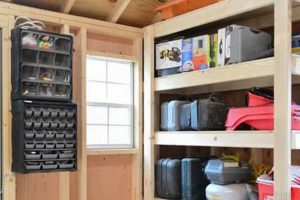
The undertaking of crafting custom-fitted compartments that extend from recreational vehicle expansions is a resourceful method for optimizing confined spaces. These individualized solutions enhance accessibility to stored items within the RV’s slide-out sections. As an illustration, consider the challenge of reaching items stored deep within a slide-out; installing these pull-out platforms allows for effortless retrieval without requiring one to stretch or unload other objects.
Implementing such storage enhancements contributes significantly to organization and efficient space utilization inside the RV. Historically, RV owners have sought innovative solutions to maximize storage capacity given the inherent size limitations. This approach represents a practical, cost-effective alternative to purchasing pre-made systems, allowing for customization to fit unique storage needs and spatial constraints. The long-term benefit is a more comfortable and functional living environment while traveling.
The subsequent sections will explore materials commonly employed in their creation, design considerations for optimal functionality, and step-by-step instructions for fabricating these beneficial storage solutions.
Fabrication Guidance for RV Slide-Out Storage Augmentation
The following guidelines provide salient recommendations for the construction of customized storage drawers or platforms designed to integrate seamlessly with recreational vehicle slide-out compartments. Adherence to these principles will promote both functionality and longevity of the implemented solution.
Tip 1: Material Selection: Prioritize durable, lightweight materials such as plywood or aluminum to minimize added weight to the slide-out mechanism. Ensure the selected material is adequately treated or naturally resistant to moisture to mitigate potential water damage commonly associated with RV environments.
Tip 2: Precise Measurement: Accurate measurement of the available space within the slide-out is paramount. Account for the slide-out’s full extension and retraction to prevent obstruction or binding. Multiple measurements at different points within the space are advisable to identify any inconsistencies.
Tip 3: Structural Reinforcement: Incorporate bracing and reinforcing elements, particularly at points of high stress, to enhance the structural integrity of the storage apparatus. Consider using metal brackets or corner reinforcements to distribute weight evenly and prevent sagging.
Tip 4: Smooth Operation: Implement high-quality drawer slides or rolling mechanisms to ensure smooth and effortless extension and retraction. Select slides with appropriate weight ratings to accommodate the anticipated load. Full-extension slides maximize accessibility to the stored contents.
Tip 5: Secure Fastening: Employ appropriate fasteners, such as screws or bolts, to securely attach the storage unit to the slide-out floor or walls. Avoid using adhesives alone, as they may degrade over time due to temperature fluctuations and vibrations inherent in RV travel. Pre-drilling pilot holes can prevent splitting or damage to the surrounding structure.
Tip 6: Safety Considerations: Ensure any protruding edges or corners are properly rounded or covered to prevent injury. Implement locking mechanisms to secure the drawers or platforms during transit, preventing accidental opening and shifting of stored items.
Tip 7: Weight Distribution: Distribute the weight of stored items evenly across the surface of the storage unit to avoid uneven stress on the slide-out mechanism. Place heavier items closer to the center of the platform or drawer to maintain stability.
Implementing these recommendations will result in the creation of robust and functional storage solutions, significantly enhancing the organization and usability of RV slide-out compartments.
The concluding section will summarize the comprehensive approach to RV slide-out storage enhancement.
1. Dimension Precision

Dimension precision is paramount to the successful implementation of recreational vehicle (RV) slide-out storage solutions. The construction of these compartments, intended to augment storage capacity within the limited confines of an RV, is predicated on accurate measurement and adherence to specified dimensions. Dimensional inaccuracies can lead to a range of problems, including but not limited to: obstruction of the slide-out mechanism, binding of the storage tray within its housing, and inefficient utilization of available space. The consequence of failing to achieve dimensional accuracy is a compromise in functionality and a diminished return on the effort invested in the building process.
The criticality of this precision is exemplified by the confined spaces characteristic of RV slide-outs. Even minor deviations from intended dimensions can result in interference with existing structures or a failure to fully extend or retract the slide-out. Consider, for instance, a drawer built with a width exceeding the available clearance by even a quarter of an inch. This seemingly negligible discrepancy can render the entire storage tray unusable, necessitating costly rework or complete abandonment of the project. Further, inaccurate depth measurements can lead to collisions with interior walls or furniture when the slide-out is extended, posing a safety hazard and potentially causing damage to the RV’s interior.
In conclusion, dimensional precision serves as a foundational prerequisite for effective RV slide-out storage solutions. Accurate measurements, careful planning, and meticulous execution are indispensable for ensuring the functionality, safety, and longevity of the implemented storage system. Overlooking this fundamental aspect compromises the overall value and utility of the storage modification.
2. Weight Minimization

Weight minimization is a critical design parameter in the context of constructing storage trays for recreational vehicle (RV) slide-outs. Slide-out mechanisms are engineered to support a specific maximum weight. Exceeding this limit can result in mechanical stress, premature wear, and ultimately, failure of the slide-out system. Therefore, the materials and construction techniques employed in creating slide-out storage trays must prioritize lightness without compromising structural integrity. The implementation of storage additions inherently increases the load on the system, necessitating careful consideration of the weight implications of each component.
The practical significance of weight minimization becomes apparent when considering the cumulative effect of multiple storage enhancements. An RV owner might be tempted to utilize heavy-duty materials for perceived durability; however, this can quickly escalate the overall weight, nearing or exceeding the slide-out’s rated capacity. For example, replacing plywood with solid hardwood for a drawer system could add a substantial amount of weight, potentially jeopardizing the functionality and longevity of the slide-out mechanism. Instead, selecting lightweight alternatives like aluminum or thin-gauge plywood, coupled with optimized structural design, can achieve the necessary strength while mitigating excessive weight. This proactive approach safeguards the operational integrity of the RV’s slide-out system.
In conclusion, weight minimization is not merely a desirable attribute but a fundamental requirement when developing storage solutions for RV slide-outs. Overlooking this aspect can have detrimental consequences for the RV’s mechanical systems. Therefore, a diligent assessment of material properties and construction methods is essential to ensure that increased storage capacity does not compromise the long-term reliability and safety of the vehicle.
3. Material Durability

Material durability holds significant importance in the construction of recreational vehicle (RV) slide-out storage trays, directly influencing the longevity and functionality of these storage solutions. The RV environment subjects these trays to diverse conditions, including temperature fluctuations, humidity, vibration from travel, and potential exposure to moisture. Therefore, the selection of materials capable of withstanding these stressors is crucial. Inadequate material durability leads to premature degradation, structural failure, and ultimately, a loss of the intended storage capacity. For instance, using untreated wood in a high-humidity environment will invariably result in warping, rot, and eventual collapse of the tray. The causal relationship between material selection and operational lifespan is undeniable.
Consider the practical implications of selecting durable versus non-durable materials. A storage tray constructed from marine-grade plywood, treated with a waterproof sealant, and secured with stainless steel hardware exhibits superior resistance to the aforementioned environmental challenges compared to one built from untreated particleboard with standard steel screws. The former is likely to maintain its structural integrity and functionality for many years, while the latter may succumb to damage within a relatively short timeframe. Furthermore, the increased durability minimizes the need for frequent repairs or replacements, offering a cost-effective solution over the long term. The choice of materials like powder-coated aluminum for framing also provides excellent corrosion resistance.
In summary, the inherent link between material durability and the overall effectiveness of RV slide-out storage trays cannot be overstated. Prioritizing materials resistant to moisture, temperature extremes, and mechanical stress is essential for ensuring a robust, reliable, and long-lasting storage solution. This mindful approach to material selection addresses the challenges posed by the RV environment and maximizes the return on investment in custom storage construction. The understanding emphasizes the importance of research and careful planning before embarking on the fabrication of RV slide-out storage components.
4. Smooth Extension

Smooth extension, in the context of self-constructed recreational vehicle (RV) slide-out storage trays, is a critical factor determining user convenience, system longevity, and overall functionality. The ease with which these storage trays extend and retract directly influences the accessibility of stored items and the potential for wear and tear on the slide-out mechanism itself. Failure to achieve smooth extension can lead to frustrating operational issues, increased maintenance requirements, and a diminished lifespan for both the storage tray and the RV slide-out system.
- Appropriate Slide Selection
The choice of drawer slides is paramount in achieving smooth extension. Slides must possess sufficient load-bearing capacity to handle the weight of the storage tray and its contents. Furthermore, the type of slide ball-bearing, friction, or soft-close significantly impacts the ease of movement. Ball-bearing slides generally offer the smoothest operation and are preferred for heavier loads. Utilizing undersized or low-quality slides inevitably results in jerky movement, binding, and eventual failure, especially when subjected to the vibrations and stresses of RV travel. The weight rating of the slides must exceed the fully loaded tray weight by a safety margin to ensure reliable performance.
- Accurate Installation and Alignment
Proper installation and alignment of drawer slides are equally crucial. Misalignment, even by a fraction of an inch, can introduce friction and impede smooth movement. Ensuring that the slides are mounted parallel and square to the drawer box and the slide-out frame is essential. The use of shims and leveling tools may be necessary to compensate for any imperfections in the mounting surfaces. A meticulous approach to installation minimizes binding and ensures that the slides operate within their designed parameters, promoting long-term smooth extension.
- Lubrication and Maintenance
Regular lubrication of drawer slides is a key maintenance practice that contributes to sustained smooth extension. Applying a suitable lubricant, such as silicone spray or grease, reduces friction and prevents corrosion. Periodic cleaning of the slides to remove debris and contaminants is also important. Neglecting lubrication and maintenance inevitably leads to increased friction, noisy operation, and eventual degradation of the slide mechanism, impacting the ease and reliability of the storage tray’s extension and retraction.
- Clearance and Obstruction Management
Sufficient clearance between the storage tray and surrounding structures is necessary for unobstructed movement. Even minor obstructions, such as protruding screws or misaligned trim, can impede smooth extension. Careful attention to detail during construction and installation is required to identify and eliminate potential interference points. The RV environment introduces the possibility of shifting cargo, so ensuring items within the slide-out cannot interfere with the tray’s path is crucial for maintaining smooth operation.
The facets of slide selection, accurate installation, lubrication, and clearance all converge to influence the overall experience of using self-constructed RV slide-out storage trays. Smooth extension is not merely a convenience; it is a fundamental aspect of functionality that impacts the longevity and reliability of the storage system. The meticulous planning and execution required to achieve this smoothness directly translate into increased user satisfaction and a reduced likelihood of maintenance issues arising from the stresses imposed on the RV’s mechanical systems.
5. Secure Containment

Secure containment, in the context of self-constructed recreational vehicle (RV) slide-out storage trays, represents a critical design and implementation element. It directly impacts the safety of occupants, the preservation of stored items, and the overall operational integrity of the RV. Proper securement prevents displacement of contents during transit, a scenario that can lead to damage, injury, and compromised vehicle handling. The following facets outline key considerations for achieving effective secure containment within these custom-built storage solutions.
- Latching Mechanisms
Latching mechanisms are essential for maintaining secure containment during RV travel. These devices, typically consisting of catches and corresponding receivers, prevent drawers or trays from inadvertently opening due to vibrations, acceleration, or deceleration. Examples include spring-loaded latches, magnetic catches, and locking hasps. The selection of a suitable latching mechanism depends on factors such as the size and weight of the drawer, the frequency of use, and the desired level of security. The implications of failing to incorporate robust latching mechanisms include the potential for stored items to shift, break, or even eject from the storage tray, posing a hazard to occupants and potentially damaging the RV’s interior.
- Compartmentalization
Compartmentalization, achieved through the use of dividers, bins, or custom-fitted inserts within the storage tray, prevents items from shifting and colliding during transit. This approach is particularly beneficial for storing fragile or irregularly shaped objects. For example, dedicated compartments can be designed to hold glassware, electronic devices, or tools, minimizing the risk of damage. The lack of compartmentalization can result in items becoming jumbled and damaged, making it difficult to locate specific items and potentially creating a safety hazard if loose objects obstruct the RV’s controls or walkways.
- Non-Slip Surfaces
The application of non-slip surfaces, such as rubber mats or coatings, within the storage tray provides an additional layer of secure containment. These surfaces increase the friction between stored items and the tray’s floor, reducing the likelihood of movement. This is especially important for items that are not easily secured with latches or compartmentalization. The absence of non-slip surfaces can lead to items sliding around during turns or sudden stops, potentially causing damage or creating noise distractions for the RV’s occupants.
- Perimeter Restraints
Perimeter restraints, such as raised edges or barriers along the sides and back of the storage tray, prevent items from falling out during extension or retraction of the slide-out. These restraints are particularly important for open-top trays or those that are frequently accessed. The absence of perimeter restraints creates a risk of items falling onto the RV’s floor or becoming trapped between the slide-out and the RV’s wall, potentially causing damage or injury. The height and design of the perimeter restraints should be carefully considered to accommodate the types of items being stored and to avoid obstructing access to those items.
These facets of secure containment highlight the importance of careful planning and execution when constructing RV slide-out storage trays. Integrating these features not only protects stored items and occupants but also contributes to a more organized and enjoyable RV travel experience. The implementation of secure containment measures represents a responsible approach to maximizing the utility and safety of custom-built RV storage solutions. Prioritization of secure containment is not an afterthought but a fundamental aspect that informs the design and construction process from the outset.
Frequently Asked Questions
The following questions address common inquiries and considerations regarding the design, construction, and implementation of customized storage trays within recreational vehicle slide-out compartments.
Question 1: What is the typical weight capacity a Do-It-Yourself RV slide-out storage tray should be designed to handle?
The weight capacity is contingent upon the slide-out mechanism’s specified limits and the materials employed in tray construction. Refer to the RV manufacturer’s documentation for weight restrictions. Exceeding these limits jeopardizes the slide-out’s integrity.
Question 2: Which materials are best suited for building Do-It-Yourself RV slide-out storage trays, considering both weight and durability?
Lightweight plywood (e.g., Baltic birch) and aluminum are frequently selected due to their favorable strength-to-weight ratios. Marine-grade plywood offers enhanced moisture resistance, crucial in RV environments.
Question 3: What type of drawer slides are recommended for Do-It-Yourself RV slide-out storage trays to ensure smooth and reliable operation?
Full-extension, ball-bearing drawer slides are advisable. Ensure the slides possess a weight rating exceeding the anticipated load. Locking slides prevent inadvertent opening during transit.
Question 4: How can the risk of moisture damage to Do-It-Yourself RV slide-out storage trays be minimized?
Employ moisture-resistant materials, such as marine-grade plywood or treated lumber. Apply waterproof sealants to all exposed surfaces and seams. Ensure adequate ventilation within the slide-out compartment.
Question 5: What are the essential safety considerations when designing and installing Do-It-Yourself RV slide-out storage trays?
Secure all trays with robust latching mechanisms to prevent opening during travel. Round or cover any sharp edges or corners. Ensure the weight distribution is even to avoid stressing the slide-out mechanism unevenly.
Question 6: How can the dimensions of a Do-It-Yourself RV slide-out storage tray be accurately determined to ensure a proper fit?
Measure the available space within the slide-out compartment with precision, accounting for any obstructions or irregularities. Create a cardboard template to verify the fit before commencing construction. Allow for slight clearances to facilitate smooth operation.
These questions and answers address fundamental considerations for designing and implementing effective RV slide-out storage. Diligent planning and execution are essential for realizing the benefits of these custom storage solutions.
The ensuing segment will address advanced design elements for specialized storage applications.
Conclusion
This exploration of diy rv slide out storage trays underscores the multifaceted considerations necessary for successful implementation. Dimensional accuracy, material selection, weight minimization, smooth operation, and secure containment are paramount. A failure to address these aspects adequately compromises functionality and safety. The guidance presented serves to inform the design and fabrication processes, enabling RV owners to optimize storage within constrained spaces.
The pursuit of efficient space utilization in recreational vehicles necessitates a thorough understanding of both the vehicle’s inherent limitations and the potential for customized solutions. Prioritizing safety and adherence to established principles ensures the creation of robust and functional storage enhancements that contribute to an improved RV travel experience. Continued diligence in design and construction will yield enduring benefits.