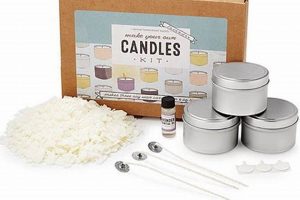
The creation of patterned textiles at home through tie-dyeing is a craft that combines artistic expression with accessible materials. A typical setup includes fabric, dye in a limited color palette, tools for binding the fabric (such as rubber bands or string), and instructions for completing the project. These supplies enable individuals to produce uniquely decorated items within their own living space.
This type of crafting allows for personalization and cost-effectiveness compared to purchasing pre-made, patterned fabrics. Historically, tie-dyeing has been associated with periods of cultural experimentation and individual expression. The process provides a tangible connection to art and allows for a creative outlet that can be shared across generations.
The subsequent sections will discuss material selection, dye application methods, and best practices for ensuring colorfastness and longevity of the finished product. These aspects contribute to a successful and satisfying crafting experience.
Essential Considerations for At-Home Textile Dyeing
Achieving optimal results in textile dyeing requires attention to detail and adherence to established practices. The following tips offer guidance for enhancing the quality and longevity of dyed fabrics.
Tip 1: Fabric Preparation: Thoroughly pre-wash the fabric prior to dyeing to remove any sizing or finishes that could impede dye absorption. This step is crucial for achieving even color distribution.
Tip 2: Dye Selection: Choose dyes specifically formulated for the type of fabric being used. Fiber-reactive dyes are suitable for cotton, linen, and rayon, while acid dyes are appropriate for wool, silk, and nylon. Using the correct dye type is essential for achieving vibrant, lasting color.
Tip 3: Color Palette Coordination: When using a limited color set, consider the principles of color theory to anticipate how the dyes will interact when mixed or layered. Experiment with small samples to preview the final results.
Tip 4: Binding Techniques: Experiment with various binding methods to achieve diverse patterns. Tightly bound areas will resist dye penetration, creating distinct designs. Different folding, twisting, and clamping techniques yield varied effects.
Tip 5: Dye Application: Apply dye evenly and consistently to ensure uniform color saturation. Use squeeze bottles, syringes, or brushes to control the application process. Consider the dye-to-water ratio recommended by the dye manufacturer.
Tip 6: Dye Fixation: Adhere strictly to the recommended dye fixation procedures, which may involve steaming, microwaving, or soaking in a chemical fixative. Proper fixation is critical for preventing color bleeding and fading.
Tip 7: Post-Dyeing Rinse: Rinse the dyed fabric thoroughly in cold water until the rinse water runs clear. This removes excess dye and prevents staining of other items during subsequent washing.
Tip 8: Washing Considerations: Wash dyed fabrics separately in cold water with a mild detergent to minimize color loss. Avoid using harsh chemicals or bleach, which can damage the fibers and fade the colors.
By following these guidelines, individuals can significantly improve the outcome of their textile dyeing endeavors. Careful attention to each stage of the process is key to producing high-quality, durable, and visually appealing dyed fabrics.
The subsequent section will provide insights into maintaining the vibrancy and integrity of dyed textiles over time, ensuring the longevity of the artistic creation.
1. Color Theory

Color theory provides a structured understanding of color mixing and relationships, directly influencing the aesthetic outcome of at-home textile dyeing projects. When working with a limited palette, such as a three-color dye kit, an understanding of color principles becomes critical for achieving desired effects.
- Primary Color Interactions
The foundation of color mixing lies in the interactions of primary colors: red, yellow, and blue. With a three-color dye kit, these primaries can be blended to create secondary colors (green, orange, violet) and tertiary colors. The proportions in which these primaries are mixed dictate the resulting hue. In textile dyeing, an awareness of these interactions allows for precise color control, enabling the creation of a broader spectrum of shades from a limited selection.
- Complementary Color Contrast
Complementary colors, those opposite each other on the color wheel (e.g., red and green, blue and orange, yellow and violet), create visual contrast when used together. Incorporating complementary colors in a tie-dye design can generate vibrant and dynamic patterns. However, care must be taken to prevent muddiness; overmixing complementary colors results in a neutral gray or brown. Strategic placement and controlled application are crucial for harnessing the energy of complementary contrast in tie-dyed textiles.
- Analogous Color Harmony
Analogous colors, those adjacent to each other on the color wheel (e.g., yellow, yellow-green, green), produce a sense of harmony and unity. When utilizing a three-color dye kit, careful selection of analogous hues can result in subtle and pleasing color transitions. This approach is suitable for designs that prioritize a gentle and cohesive aesthetic, minimizing visual jarring. Achieving a gradation of color is often easier with analogous colors.
- Color Saturation and Value
Saturation refers to the intensity or purity of a color, while value indicates its lightness or darkness. Modifying the saturation of a dye solution by adding water can create a range of tints (lighter shades) and tones (muted shades). Varying the value through layering or over-dyeing can add depth and dimension to a tie-dye design. Understanding saturation and value allows for nuanced color control, preventing designs from appearing flat or monotonous.
By integrating these principles of color theory, individuals engaging in at-home textile dyeing can move beyond arbitrary color choices to create deliberate and aesthetically pleasing designs. A foundational understanding of color relationships empowers dyers to maximize the potential of a limited color palette and achieve predictable, repeatable results. The application of color theory transforms a basic tie-dye project into an exercise in intentional artistic expression.
2. Fabric Choice
The selection of fabric fundamentally determines the success of any “design tie-dye fabric diy 3colors dyes kit textile home diy” project. The fiber composition dictates dye absorption, color vibrancy, and pattern clarity. Natural fibers like cotton, linen, and rayon readily accep
t fiber-reactive dyes, resulting in bright, lasting colors. Synthetic fibers, such as polyester, require specialized dyes and heat-setting processes, often yielding less predictable outcomes. For example, a 100% cotton t-shirt will consistently produce vibrant and well-defined patterns when dyed with fiber-reactive dyes, while a polyester blend may exhibit muted colors and uneven dye penetration. Therefore, fabric choice constitutes a primary factor influencing the final aesthetic and durability of the dyed textile.
Furthermore, the weave and texture of the fabric affect the pattern’s resolution and overall appearance. Tightly woven fabrics provide sharper, more defined lines, while looser weaves allow for greater dye diffusion, creating softer, more blurred effects. A tightly woven cotton percale, for instance, is ideal for intricate designs requiring precise lines. Conversely, a loosely woven cotton muslin is better suited for abstract patterns where dye bleeding is desired. The weight of the fabric also matters; lighter fabrics are easier to manipulate during the binding process, while heavier fabrics offer increased durability for items intended for frequent use.
In conclusion, fabric choice is an indispensable element of any “design tie-dye fabric diy 3colors dyes kit textile home diy” endeavor. Its impact on dye uptake, pattern definition, and textile longevity cannot be overstated. Prioritizing appropriate fabric selection, based on desired aesthetic outcomes and intended use, directly contributes to a successful and satisfying crafting experience. Disregarding fabric compatibility with the dye type and binding methods will invariably lead to compromised results, undermining the artistic potential and practical value of the project.
3. Dye Chemistry
The underlying principles of dye chemistry are paramount to achieving successful and durable results in textile coloration through “design tie-dye fabric diy 3colors dyes kit textile home diy.” Understanding the chemical interactions between dye molecules, fabric fibers, and mordants facilitates predictable color uptake, vibrancy, and wash fastness.
- Fiber-Reactive Dyes
Fiber-reactive dyes, commonly used for cotton, linen, and rayon, form covalent bonds with the cellulose fibers. These dyes contain reactive groups that chemically bind to the hydroxyl groups present in the fiber, creating a permanent bond that resists washing and fading. For example, Procion MX dyes are a popular choice in “design tie-dye fabric diy 3colors dyes kit textile home diy” because of their ease of use and ability to create vibrant colors on cellulosic fabrics. The effectiveness of these dyes depends on factors such as pH, temperature, and dye concentration.
- Acid Dyes
Acid dyes, suitable for protein fibers like wool, silk, and nylon, rely on ionic bonding. These dyes contain negatively charged dye molecules that are attracted to positively charged amino groups in the protein fibers. The acidic environment facilitates this attraction, allowing the dye to bind to the fabric. Acid dyes typically offer excellent color saturation and wash fastness on protein fibers. However, they are not effective on cellulosic fibers due to the lack of appropriate binding sites.
- Dye Fixation Mechanisms
The fixation process is crucial for ensuring that the dye molecules are permanently attached to the fabric. Different dyes require different fixation methods. Fiber-reactive dyes often require an alkaline environment, achieved through the addition of soda ash, to facilitate the chemical reaction with the cellulose fibers. Acid dyes, on the other hand, are typically fixed through steaming or heat setting, which promotes the ionic bonding between the dye and the protein fibers. Inadequate fixation can lead to poor wash fastness and color bleeding.
- Mordants and Dye Uptake
Mordants are substances used to improve dye uptake and color fastness. They act as a bridge between the dye and the fabric, forming a complex that is more resistant to washing and fading. Some mordants, such as alum, are commonly used with natural dyes. The choice of mordant can also influence the final color achieved. Understanding the role of mordants allows for greater control over the dyeing process and the resulting color and durability of the dyed textile in “design tie-dye fabric diy 3colors dyes kit textile home diy.”
In summary, a thorough understanding of dye chemistry is essential for achieving predictable and lasting results in “design tie-dye fabric diy 3colors dyes kit textile home diy.” Knowledge of dye types, fixation mechanisms, and the role of mordants empowers individuals to create vibrant, durable, and aesthetically pleasing dyed textiles. Neglecting these chemical principles can lead to unsatisfactory outcomes, characterized by poor color uptake, fading, and bleeding.
4. Binding Methods

Binding methods are integral to achieving desired patterns and visual effects within the “design tie-dye fabric diy 3colors dyes kit textile home diy” framework. The specific technique employed directly dictates the areas of the fabric that resist dye penetration, thus forming the basis of the design.
- Folding Techniques
Folding techniques, such as pleating, accordion folding, or crumpling, create geometric or randomized patterns on the finished textile. For instance, tightly pleating fabric and securing it with rubber bands results in linear, striated designs. Conversely, a random crumpling method yields more organic, unpredictable patterns. The precision and consistency of the folding directly correlate with the sharpness and definition of the resulting design elements in “design tie-dye fabric diy 3colors dyes kit textile home diy”.
- Tying and Knotting
Tying and knotting methods involve constricting specific areas of the fabric to prevent dye from reaching those sections. Simple overhand knots, strategically placed and secured, create circular resist patterns. More complex knotting techniques, such as those used in Shibori, produce intricate and varied designs. The tightness of the knot influences the degree of dye penetration, with tighter knots resulting in sharper resist areas. The skill in executing these knots greatly impacts the complexity and visual appeal of the final design in “design tie-dye fabric diy 3colors dyes kit textile home diy”.
- Clamping and Compression
Clamping and compression techniques utilize physical pressure to restrict dye flow. Securing fabric between two flat objects, such as wooden blocks or tiles, creates distinct geometric patterns. The shape and texture of the clamping objects directly translate onto the fabric, influencing the design’s aesthetic. The pressure applied must be consistent to ensure uniform resist areas. The creative use of clamping materials expands the range of potential designs achievable through “design tie-dye fabric diy 3colors dyes kit textile home diy”.
- Stitching and Gathering
Stitching and gathering methods involve creating a resist by sewing along a specific line and then pulling the thread to gather the fabric tightly. This technique produces fine, intricate lines and textured effects. The type of stitch used, the thread tension, and the spacing between stitches all contribute to the final design. This method offers a high degree of control over pattern
creation, allowing for complex and detailed designs within the scope of “design tie-dye fabric diy 3colors dyes kit textile home diy”.
These binding methods are not mutually exclusive; often, a combination of techniques is employed to achieve more complex and nuanced designs in “design tie-dye fabric diy 3colors dyes kit textile home diy”. The successful application of any binding method requires careful planning, precise execution, and an understanding of how dye will interact with the constricted fabric areas. Experimentation with different binding techniques is essential for expanding the creative possibilities within the realm of at-home textile dyeing.
5. Fixation Process

The fixation process constitutes a critical step in “design tie-dye fabric diy 3colors dyes kit textile home diy,” directly impacting the longevity and vibrancy of the final product. Failure to properly fix the dye can result in significant color loss during subsequent washing, rendering the artistic effort unsustainable. The specific method of fixation depends on the type of dye employed. For example, fiber-reactive dyes commonly used on cotton require an alkaline environment, typically achieved through the addition of soda ash, to form a permanent chemical bond with the fabric fibers. Without this crucial step, the dye molecules remain loosely attached, readily washing away during laundering. This cause-and-effect relationship underscores the importance of adhering to established fixation protocols.
The practical significance of understanding the fixation process extends beyond preventing color loss. Proper fixation also enhances the overall appearance and durability of the dyed textile. Inadequate fixation can lead to uneven color distribution and increased susceptibility to fading from sunlight exposure. By contrast, a well-executed fixation process ensures consistent color saturation and resistance to environmental degradation. For instance, steaming acid dyes on silk facilitates optimal dye penetration and bonding, resulting in a lustrous and long-lasting finish. Similarly, heat-setting disperse dyes on polyester promotes dye molecule entrapment within the synthetic fibers, preventing migration and maintaining color integrity.
In summary, the fixation process is an indispensable component of “design tie-dye fabric diy 3colors dyes kit textile home diy,” exerting a profound influence on the aesthetic quality and functional performance of the finished textile. Neglecting this critical step undermines the entire dyeing endeavor, leading to disappointing results and diminished product lifespan. Adherence to appropriate fixation techniques, tailored to the specific dye and fabric combination, is essential for achieving vibrant, durable, and visually appealing tie-dyed creations. Challenges in fixation often arise from improper temperature control, insufficient chemical concentrations, or inadequate dwell times, highlighting the need for careful monitoring and precise execution of established protocols.
6. Longevity
The durability and extended lifespan of tie-dyed textiles represent a significant consideration within the context of design, material selection, and execution techniques in “design tie-dye fabric diy 3colors dyes kit textile home diy”. The aim is to create pieces that withstand repeated use and washing without substantial color fading or fabric degradation. Achieving this requires a multifaceted approach addressing various stages of the dyeing process.
- Dye Selection and Fiber Compatibility
The choice of dye and its suitability for the fabric type are paramount. Fiber-reactive dyes, formulated for cellulosic fibers like cotton, form strong covalent bonds that resist washing and fading. Utilizing dyes incompatible with the fabric, such as acid dyes on cotton, results in poor color retention and compromised durability. For instance, a cotton t-shirt dyed with a high-quality fiber-reactive dye will maintain its vibrancy through numerous wash cycles, while a similar item dyed with an inappropriate dye will exhibit significant color loss after just a few washes. This selection directly determines the textile’s longevity.
- Proper Dye Fixation Techniques
Effective dye fixation is essential for ensuring the dye molecules are permanently bound to the fabric. Inadequate fixation leads to color bleeding and premature fading. For fiber-reactive dyes, this typically involves soaking the dyed fabric in a soda ash solution to raise the pH and facilitate the chemical reaction. Neglecting this step allows dye molecules to remain loosely attached, resulting in a short lifespan. The application of appropriate fixation techniques drastically impacts the long-term color retention and overall quality of the “design tie-dye fabric diy 3colors dyes kit textile home diy” piece.
- Fabric Quality and Construction
The inherent quality and construction of the fabric play a critical role in its ability to withstand wear and tear. A densely woven, high-quality cotton fabric will resist abrasion and retain its shape better than a loosely woven, low-quality alternative. Similarly, reinforced seams and durable stitching contribute to the overall longevity of the garment. Choosing a durable fabric is just as important as applying high-quality dye and fixation techniques.
- Washing and Care Protocols
Following appropriate washing and care protocols is essential for preserving the vibrancy and integrity of tie-dyed textiles. Washing in cold water with a mild detergent minimizes color fading and prevents dye bleeding. Avoidance of harsh chemicals, such as bleach, protects the fabric fibers and prolongs the life of the dye. Adhering to these care instructions significantly extends the lifespan of the “design tie-dye fabric diy 3colors dyes kit textile home diy” creation, ensuring it remains visually appealing and functional for an extended period.
These interconnected elements demonstrate that achieving longevity in “design tie-dye fabric diy 3colors dyes kit textile home diy” is not merely a matter of chance but a deliberate process involving careful selection of materials, meticulous execution of dyeing and fixation techniques, and adherence to appropriate care protocols. By addressing each of these aspects, individuals can create tie-dyed textiles that not only possess aesthetic appeal but also withstand the test of time, providing lasting value and enjoyment.
Frequently Asked Questions
This section addresses common inquiries and misconceptions regarding the practice of dyeing fabrics at home, particularly when using a limited color palette.
Question 1: What fabric types are most suitable for at-home dyeing with fiber-reactive dyes?
Fabrics composed of natural cellulosic fibers, such as cotton, linen, rayon, and hemp, exhibit optimal dye uptake and colorfastness when using fiber-reactive dyes. Blends containing a substantial proportion of these fibers are also viable, though results may vary.
Question 2: How does the use of a three-color dye kit limit the range of achievable colors?
A three-color dye kit typically contains the primary colors (red, yellow, blue), from which secondary colors (green, orange, violet) can be derived. However, achieving precise shades and complex hues may be challenging due to the limitations of color mixing.
Question 3: What factors contribute to uneven dye distribution during the dyeing process?
Uneven dye distribution can result from inadequate fabric preparation (e.g., unsized fabric), inconsistent dye application, insufficient dye penetration, or variations in water temperature. Proper fabric preparation and consistent dye application are crucial for achieving uniform color saturation.
Question 4: How can color bleeding be minimized during the initial wash after dyeing?
Color bleeding can be minimized by thoroughly rinsing the dyed fabric in cold water until the rinse water runs clear. The addition of a dye fixative during the final rinse can further enhance colorfastness and prevent subsequent bleeding.
Question 5: What safety precautions should be observed when working with textile dyes at home?
Safety precautions include wearing protective gloves and eyewear to prevent skin and eye irritation. Adequate ventilation is also essential to minimize inhalation of dye powders or fumes. Dyes should be stored out of reach of children and pets.
Question 6: How does the type of binding method affect the resulting pattern in tie-dyeing?
Different binding methods, such as folding, tying, clamping, or stitching, create distinct resist patterns that influence the overall design. The tightness and complexity of the binding directly impact the sharpness and intricacy of the resulting pattern.
The at-home textile dyeing process, while accessible, requires careful attention to detail and adherence to established best practices to ensure successful and durable results.
The subsequent section will provide insights into troubleshooting common problems encountered during the at-home textile dyeing process.
Conclusion
This exploration of “design tie-dye fabric diy 3colors dyes kit textile home diy” has illuminated the multifaceted nature of this craft. From understanding dye chemistry and fabric compatibility to mastering binding techniques and fixation processes, each element contributes significantly to the final outcome. The constraints of a limited color palette necessitate a deeper understanding of color theory and meticulous execution to achieve the desired aesthetic.
The knowledge and skills acquired through engaging with “design tie-dye fabric diy 3colors dyes kit textile home diy” empower individuals to create unique and personalized textiles. The commitment to quality materials and proper techniques ensures both the artistic merit and the practical longevity of these creations. This synthesis of artistry and technical proficiency underscores the enduring value of this craft.