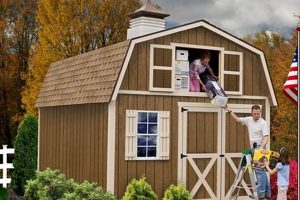
Structures provided as unassembled components, designed for owner construction, offer a practical solution for individuals seeking supplementary storage or workspace. These sets typically include pre-cut lumber, hardware, and detailed instructions, enabling individuals to erect a functional outbuilding without extensive carpentry experience. For example, a homeowner might choose such a set to create a garden shed for storing tools and equipment.
The advantages of these building systems lie in their cost-effectiveness and customizability. They often present a more economical alternative to hiring professional contractors for complete shed construction. Furthermore, individuals can often modify the basic design to better suit their specific needs and aesthetic preferences. Historically, the availability of such kits has democratized access to outbuildings, allowing a broader range of individuals to enhance their property with functional structures.
This discussion will explore the various types of available offerings, factors to consider when selecting a suitable option, and best practices for successful assembly, ensuring the final product meets expectations for durability and functionality.
Essential Considerations for Shed Assembly
The successful construction of a prefabricated storage building hinges on careful planning and execution. The following guidelines are designed to optimize the building process and ensure structural integrity.
Tip 1: Site Preparation is Paramount. A level and properly prepared foundation is critical. Uneven ground can compromise the structure’s stability and lead to premature deterioration. Consider using gravel, concrete pads, or a constructed foundation depending on the shed size and local soil conditions.
Tip 2: Inventory All Components. Before commencing assembly, meticulously inventory all included parts against the provided parts list. This proactive step prevents delays and frustration later in the building process.
Tip 3: Adhere to the Instructions Precisely. Manufacturers provide detailed instructions for a reason. Deviating from these instructions can compromise the structural integrity and void any warranty. Ensure all steps are followed sequentially.
Tip 4: Use Appropriate Tools. Employing the correct tools, such as levels, squares, power drills, and impact drivers, is essential for efficient and accurate assembly. Avoid using tools that are inadequate for the task, as this can lead to errors and potential injury.
Tip 5: Ensure Proper Fastening. Secure all connections with the specified hardware, ensuring proper torque and tightness. Over-tightening can strip screws or damage the wood, while under-tightening can lead to instability.
Tip 6: Prioritize Weatherproofing. Apply sealant to all joints and seams to protect the structure from water damage. Ensure proper drainage around the base of the shed to prevent water accumulation.
Tip 7: Comply with Local Regulations. Prior to construction, verify and comply with all local building codes and permit requirements. Failure to do so can result in fines or mandatory removal of the structure.
By diligently adhering to these recommendations, the construction of a durable and functional outbuilding is significantly enhanced, providing long-term value and utility.
The subsequent sections will delve into specific maintenance procedures designed to prolong the lifespan of the newly constructed shed.
1. Pre-cut lumber

Pre-cut lumber forms a foundational element of prefabricated storage buildings. Its precise dimensions and preparation streamline the assembly process, differentiating such sets from traditional construction methods.
- Dimensional Accuracy
Pre-cut lumber undergoes a manufacturing process to ensure accurate dimensions according to the shed design. This precision eliminates the need for on-site cutting and reduces the potential for errors that could compromise structural integrity. Real-world examples include accurately sized wall studs and roof rafters that fit together seamlessly, creating a stable framework.
- Material Grade and Treatment
The lumber provided is typically graded for structural use and often treated to resist rot, decay, and insect infestation. This treatment is critical for extending the lifespan of the shed. For instance, pressure-treated lumber is common in areas susceptible to moisture, mitigating the risk of premature failure due to fungal growth or insect damage.
- Simplified Assembly
The pre-cut nature of the lumber greatly simplifies the assembly process, even for individuals with limited carpentry experience. Clear markings and instructions guide users in connecting the components. An example is pre-drilled holes for screws or nails, facilitating faster and more secure connections.
- Reduced Waste and Costs
Pre-cut lumber minimizes material waste compared to traditional building methods, as only the necessary dimensions are provided. This efficiency translates to lower overall material costs. For example, purchasing individual lumber boards often results in unused offcuts, whereas prefabricated sets provide only what is required for the specified design.
The quality and preparation of the lumber directly impacts the durability and longevity of the completed structure. Careful selection and processing enhance the ease of construction and ensure structural soundness, offering a cost-effective and time-efficient solution for erecting storage or workspace facilities.
2. Hardware included

The provision of appropriate hardware represents a critical aspect of prefabricated storage structure systems. The inclusion of necessary fasteners, connectors, and supplementary components directly influences the structural integrity and ease of assembly. Absent or inadequate hardware can lead to construction delays, compromised structural soundness, and potential safety hazards. For instance, a typical set will include screws, nails, hinges, latches, and potentially specialized brackets designed specifically for connecting pre-cut lumber elements. The quality and type of hardware provided are directly correlated with the intended application and the overall durability of the completed structure. Substandard fasteners may fail under stress, leading to structural weaknesses and potential collapse, particularly under adverse weather conditions.
The inclusion of hardware streamlines the construction process by eliminating the need for separate procurement, thereby reducing the time and effort required to complete the project. Detailed instructions typically specify the exact hardware to be used at each stage of assembly, minimizing ambiguity and reducing the likelihood of errors. A clear example is the provision of specialized roofing nails designed to prevent leak
s, or the inclusion of heavy-duty hinges for doors that will withstand frequent use. These components are often selected to complement the pre-cut lumber, ensuring compatibility and optimal performance. Moreover, some sets may include pre-drilled holes and pilot holes, further simplifying the assembly process and reducing the risk of splitting or damaging the lumber.
In summary, the comprehensive inclusion of appropriate hardware is paramount to the successful construction and long-term performance of prefabricated storage structures. The quality, type, and quantity of hardware provided directly impact the structural integrity, ease of assembly, and overall durability of the completed structure. Careful consideration of this factor is essential when evaluating the suitability of a given prefabricated building system, as deficiencies in this area can undermine the entire project and necessitate costly repairs or replacements.
3. Detailed instructions

The provision of comprehensive instructions is critical to the successful assembly of prefabricated storage structures. These instructions serve as a roadmap, guiding individuals through each step of the construction process, from initial site preparation to final finishing. Without clear and accurate guidance, the likelihood of errors increases significantly, potentially compromising the structural integrity and longevity of the finished product. For example, instructions typically outline the correct sequence for assembling wall panels, attaching roofing materials, and installing doors and windows. Deviations from these instructions can lead to misalignment, weakened connections, and water intrusion.
The effectiveness of instructions is often measured by their clarity, completeness, and ease of understanding. Instructions should include detailed diagrams, step-by-step procedures, and a comprehensive parts list. Well-designed instructions anticipate potential challenges and provide solutions for overcoming them. Real-world examples include instructions that specify the correct torque settings for fasteners, the proper techniques for weatherproofing joints, and the recommended methods for anchoring the structure to its foundation. Poorly written or incomplete instructions, conversely, can lead to frustration, delays, and ultimately, a substandard outcome. A missing diagram or a vague description of a critical assembly step can render the entire process unmanageable for those without extensive construction experience.
In summary, comprehensive and understandable instructions are a non-negotiable component of quality prefabricated storage structure systems. They provide the necessary guidance to ensure proper assembly, promote structural integrity, and maximize the lifespan of the completed structure. The absence of detailed instructions significantly increases the risk of errors, compromises the overall quality, and undermines the value proposition of the entire system. Attention to instruction clarity and completeness represents a critical investment in the success of any prefabricated building project.
4. Foundation requirements

Adequate foundation preparation is a non-negotiable element of any successful prefabricated storage structure project. The foundation serves as the load-bearing base for the entire structure, influencing its stability, longevity, and resistance to environmental factors. Inadequate foundation preparation can lead to structural instability, premature deterioration, and potential safety hazards.
- Load-Bearing Capacity
The foundation must possess sufficient load-bearing capacity to support the weight of the structure and its contents. Soil type, drainage, and compaction significantly affect load-bearing capacity. For example, sandy or clay soils may require additional stabilization measures, such as gravel compaction or concrete footings, to prevent settling and shifting over time. Failure to account for soil conditions can result in uneven settling, causing structural stress and potential collapse.
- Leveling and Alignment
A level and properly aligned foundation is essential for maintaining the structural integrity of a storage structure. Uneven surfaces can induce stress on the framing members, leading to warping, cracking, and potential failure. Proper leveling techniques, such as using a laser level or spirit level, are critical for ensuring that the structure is plumb and square. Adjustments to the foundation may be necessary to compensate for irregularities in the terrain.
- Drainage and Moisture Control
Effective drainage is paramount for preventing water damage and prolonging the lifespan of storage structures. Poor drainage can lead to moisture accumulation beneath the structure, creating an environment conducive to rot, mold, and insect infestation. Implementing proper drainage solutions, such as grading the surrounding terrain away from the structure and installing drainage systems, is crucial for maintaining a dry and stable foundation. Concrete or gravel bases can elevate the structure above ground level, further minimizing moisture exposure.
- Compliance with Building Codes
Local building codes often specify minimum requirements for foundations, including depth, material specifications, and anchoring methods. Failure to comply with these codes can result in fines, delays, and potential legal liabilities. It is essential to consult with local building officials or qualified contractors to ensure that the foundation meets all applicable requirements. Proper permitting and inspection processes are critical for verifying compliance and ensuring the safety and integrity of the structure.
The connection between robust foundation preparation and the durability of prefabricated storage structures cannot be overstated. Addressing foundation requirements with rigor minimizes risks, extends the lifespan of structures, and safeguards stored contents, thereby maximizing utility and cost-effectiveness.
5. Permit compliance

Adherence to local regulations is paramount for prefabricated storage structure projects. Permit compliance ensures that the structure meets established safety standards, zoning regulations, and environmental guidelines, thereby mitigating potential legal and financial risks.
- Zoning Regulations
Zoning ordinances dictate the permissible uses of land within a municipality. Erecting a storage structure without adhering to zoning regulations can result in fines, legal action, or mandatory removal of the structure. Example: Setback requirements define the minimum distance a structure must be from property lines, roads, or other buildings. Ignoring these setbacks can lead to disputes with neighbors and violations of local codes. Zoning can also regulate the size of the shed, limiting total square footage based on lot size.
- Building Codes
Building codes establish minimum standards for structural integrity, fire safety, and accessibility. Compliance with building codes ensures that the structure is safe for its intended use and minimizes the risk of accidents or injuries. Example: Building codes ma
y specify the type and grade of lumber required for framing, the proper methods for anchoring the structure to its foundation, and the necessary fire-resistant materials for walls and roofing. Failure to meet these standards can compromise the structural integrity of the shed and endanger occupants or neighbors. - Environmental Regulations
Environmental regulations aim to protect natural resources and prevent pollution. Construction activities, including the erection of a storage structure, may be subject to environmental regulations regarding stormwater management, erosion control, and waste disposal. Example: Stormwater management regulations may require the installation of drainage systems to prevent runoff from construction sites from polluting nearby waterways. Erosion control measures, such as silt fences and vegetation, may be necessary to prevent soil erosion. Improper disposal of construction debris can result in fines and environmental damage.
- Inspection Requirements
Local building departments typically require inspections at various stages of construction to ensure compliance with applicable codes and regulations. These inspections serve as a quality control mechanism, verifying that the structure is being built according to approved plans and specifications. Example: Inspections may be required for foundation preparation, framing, electrical wiring, and plumbing. Failure to obtain necessary inspections can result in delays, fines, and potential legal liabilities.
The integration of permit compliance into the construction of prefabricated storage structures is fundamental to achieving a safe, legal, and durable outcome. Adherence to regulations safeguards both the individual and the community while maximizing the long-term value and utility of the structure. Neglecting this crucial aspect can lead to significant consequences and negate the benefits of utilizing a prefabricated building system.
6. Assembly complexity

The assembly complexity inherent in prefabricated storage structures significantly influences their practicality and accessibility. Variations in design, component prefabrication, and instruction clarity directly correlate with the time, skill, and resources required for successful erection. Higher complexity translates to increased potential for errors, extended construction timelines, and a greater reliance on specialized tools or expertise. Conversely, reduced complexity broadens the appeal of these structures to a wider demographic, including individuals with limited construction experience. For instance, kits employing interlocking components and minimal fastening requirements present a lower barrier to entry compared to those requiring extensive cutting, drilling, and precise alignment. The economic advantage of these solutions can be undermined if assembly intricacies necessitate professional installation.
Understanding the assembly complexity is crucial for aligning the chosen structure with the user’s capabilities and resources. Manufacturers often categorize their products based on skill level, providing guidance on the anticipated time commitment and required tools. Visual aids, such as video tutorials and 3D renderings, can mitigate challenges associated with interpreting written instructions. Furthermore, component prefabrication plays a vital role in simplifying the assembly process. Kits with pre-assembled doors, windows, and wall panels reduce the number of individual steps and minimize the potential for misalignment or incorrect installation. The impact of assembly complexity extends beyond initial construction, affecting the ease of future repairs, modifications, or disassembly.
In conclusion, the degree of assembly complexity associated with prefabricated storage structures represents a critical factor in their overall value proposition. Careful consideration of one’s skills, resources, and desired outcome is essential for selecting a system that balances affordability, ease of construction, and long-term functionality. Manufacturers who prioritize clarity, prefabrication, and user-friendly design enhance the accessibility and appeal of their products, promoting successful construction and maximizing customer satisfaction.
7. Weather resistance

Effective protection from the elements is a fundamental requirement for prefabricated storage structures. The ability to withstand diverse weather conditions, including rain, snow, wind, and sun, directly impacts the longevity, structural integrity, and functional utility of these structures. Inadequate weather resistance can lead to premature deterioration, compromised structural soundness, and damage to stored contents. Consequently, the selection of materials, design features, and construction techniques that promote weather resistance is paramount.
- Material Selection and Durability
The choice of materials directly affects the structure’s ability to withstand the elements. Pressure-treated lumber, known for its resistance to rot and insect infestation, is frequently employed for framing members. Roofing materials, such as asphalt shingles, metal panels, or composite materials, provide a protective barrier against rain and snow. The selection of weather-resistant siding, such as vinyl, wood composite, or pre-painted metal, further enhances the structure’s ability to withstand the elements. Example: A structure constructed with untreated lumber and non-weatherproof roofing will experience accelerated decay and water damage compared to one built with weather-resistant materials.
- Design Features for Water Management
Effective water management is critical for preventing water damage and maintaining the structural integrity of the structure. Design features such as overhanging eaves, drip edges, and properly sloped roofing facilitate the efficient runoff of rainwater and snowmelt. Sealants and flashing are used to prevent water intrusion at joints, seams, and penetrations. Example: Overhanging eaves protect the walls from direct exposure to rain, while drip edges prevent water from running back under the roofing material. Proper sealing around windows and doors prevents leaks and moisture buildup.
- Structural Integrity and Wind Resistance
The structural design of the structure must be capable of withstanding wind loads and preventing damage from high winds. Adequate bracing, reinforced connections, and proper anchoring to the foundation are essential for maintaining structural integrity during windstorms. Example: Hurricane straps or clips can be used to secure the roof to the walls, preventing wind uplift. Properly sized and spaced framing members can withstand wind pressures and prevent collapse. Anchoring the structure to a concrete foundation provides additional resistance to wind forces.
- UV Protection and Longevity
Prolonged exposure to ultraviolet (UV) radiation can degrade materials and reduce the lifespan of storage structures. UV-resistant coatings, paints, and materials help to protect against fading, cracking, and other forms of degradation. Example: UV-resistant paints can extend the lifespan of wooden siding by preventing fading and cracking. UV-stabilized plastics can be used for windows and skylights to prevent yellowing and brittleness. Selecting materials with inherently high UV resistance minimizes the need for frequent maintenance and extends the ove
rall lifespan of the structure.
The integration of weather-resistant materials, design features, and construction techniques is essential for ensuring the long-term durability and functionality of prefabricated storage structures. Prioritizing weather resistance minimizes the risk of damage, reduces maintenance requirements, and protects stored contents from the elements, thereby maximizing the value and utility of the structure.
Frequently Asked Questions
This section addresses common inquiries regarding prefabricated storage structures, providing factual and objective responses to assist in informed decision-making.
Question 1: Are prefabricated storage structures structurally sound?
The structural integrity of these structures depends on several factors, including the quality of materials, adherence to assembly instructions, and proper foundation preparation. Structures built according to manufacturer specifications and local building codes can provide adequate structural support for intended purposes. However, it is crucial to select a system appropriate for the anticipated environmental conditions and intended load.
Question 2: Can prefabricated storage structures be customized?
The degree of customization varies depending on the specific system. Some manufacturers offer options for modifying dimensions, adding windows or doors, and selecting different siding or roofing materials. However, extensive modifications may require professional engineering review to ensure structural integrity and code compliance. Pre-designed modifications are generally preferable to ensure safety and minimize construction challenges.
Question 3: What type of foundation is required for a prefabricated storage structure?
Foundation requirements depend on the size and weight of the structure, soil conditions, and local building codes. Common foundation options include gravel pads, concrete slabs, and pier foundations. A stable and level foundation is crucial for preventing settling, warping, and other structural problems. Proper drainage should be integrated into the foundation design to prevent moisture accumulation.
Question 4: Do prefabricated storage structures require building permits?
Permit requirements vary depending on local regulations. In many jurisdictions, a building permit is required for structures exceeding a certain size or height. It is the responsibility of the property owner to verify and comply with all applicable permit requirements. Failure to obtain necessary permits can result in fines, legal action, or mandatory removal of the structure.
Question 5: How long does it take to assemble a prefabricated storage structure?
Assembly time depends on the size and complexity of the structure, as well as the skill level of the installer. Smaller, simpler structures may be assembled in a few hours, while larger, more complex structures may take several days. Thoroughly reviewing the assembly instructions and preparing the site beforehand can significantly reduce assembly time. Seeking assistance from experienced individuals may also be beneficial.
Question 6: What maintenance is required for a prefabricated storage structure?
Regular maintenance is essential for prolonging the lifespan of the structure and preventing deterioration. This may include inspecting and repairing any damage to the roofing, siding, or foundation; applying sealant to joints and seams; cleaning gutters and downspouts; and treating wood surfaces to prevent rot and insect infestation. Proactive maintenance can prevent costly repairs and ensure the long-term functionality of the structure.
Careful planning and a thorough understanding of the factors discussed are essential for maximizing the benefits of prefabricated storage structures.
The subsequent section will discuss specific maintenance procedures designed to prolong the lifespan of the newly constructed shed.
Conclusion
The preceding analysis has explored various facets of shed diy kits, encompassing design considerations, assembly methodologies, and long-term maintenance protocols. Key findings underscore the importance of meticulous planning, adherence to assembly instructions, and proactive maintenance practices. The selection of appropriate materials, compliance with local regulations, and the implementation of sound structural principles remain paramount for ensuring the durability and functionality of these structures.
Ultimately, the successful deployment of shed diy kits hinges on a comprehensive understanding of their inherent complexities and a commitment to diligent execution. The insights presented herein serve to inform prospective users, empowering them to make judicious decisions and maximize the utility of their investment. Future advancements in materials science and prefabrication techniques are poised to further enhance the accessibility and performance of these building systems, solidifying their role as a viable solution for diverse storage and workspace needs.