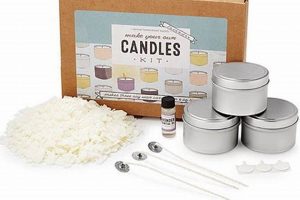
A set of materials and instructions designed to enable individuals to create their own lip care product at home. These collections typically include ingredients such as beeswax, shea butter, coconut oil, and essential oils, along with containers for storing the finished product. An example might be a box containing pre-measured amounts of wax pellets, flavoring oils like peppermint or vanilla, small jars, and a printed guide outlining the crafting process.
The appeal of such sets lies in their ability to provide a personalized approach to personal care. Utilizing these allows users to control the ingredients, avoiding potential allergens or unwanted additives found in commercially produced alternatives. Historically, crafting one’s own cosmetics has been a practice rooted in resourcefulness and a desire for natural solutions; these kits offer a modern, convenient iteration of that tradition. The use of these kits can lead to cost savings when compared to purchasing similar, pre-made products regularly.
The following sections will delve into the specific components often found within these collections, exploring variations in ingredients, methods of production, and considerations for achieving optimal results. This includes addressing safety precautions and exploring advanced techniques for customization.
Crafting Excellence
Achieving optimal results when utilizing a collection for home lip care product formulation requires careful consideration of several key aspects. Attention to detail and adherence to best practices will enhance the quality and safety of the final product.
Tip 1: Ingredient Sourcing Matters: Prioritize the selection of high-quality, cosmetic-grade ingredients. Opt for unrefined shea butter and pure beeswax to minimize the presence of impurities that can affect product texture and stability.
Tip 2: Precise Measurement is Paramount: Employ accurate measuring tools, such as digital scales, to ensure correct ingredient ratios. Deviations from recommended proportions can alter the balm’s consistency and performance, leading to a product that is either too hard or too soft.
Tip 3: Controlled Heating is Crucial: Utilize a double boiler or a heat-safe bowl placed over a pot of simmering water to melt ingredients. Direct heat can cause scorching and degradation of sensitive components like essential oils, compromising their therapeutic benefits.
Tip 4: Thorough Mixing is Essential: Ensure all ingredients are completely incorporated during the melting process. Incomplete mixing can result in an uneven distribution of oils and waxes, affecting the product’s overall texture and consistency.
Tip 5: Sanitation Prevents Contamination: Sterilize all equipment, including containers, mixing utensils, and work surfaces, before commencing the formulation process. This minimizes the risk of microbial contamination, which can shorten the product’s shelf life and potentially cause irritation.
Tip 6: Proper Cooling Enhances Texture: Allow the freshly made product to cool slowly at room temperature. Rapid cooling in the refrigerator can cause graininess in the final product due to uneven crystallization of the waxes.
Tip 7: Precise Labeling Is Advised: Create clear and informative labels that include the date of manufacture and a complete list of ingredients. This practice promotes transparency and assists in tracking product freshness.
By following these guidelines, individuals can increase the likelihood of creating a safe, effective, and enjoyable product. Attention to sourcing, precision, hygiene, and proper handling of ingredients is key to a successful formulation experience.
The subsequent section will address common issues encountered during the creation process and offer solutions for troubleshooting various challenges.
1. Ingredient Purity
The quality and safety of a do-it-yourself lip balm hinge directly on the purity of the constituent ingredients. Impurities present within components such as beeswax, shea butter, or essential oils can introduce contaminants that compromise the integrity and performance of the final product. As an example, beeswax that has not been adequately filtered may contain remnants of hive debris or pesticides, which, when incorporated into lip balm, can cause irritation or allergic reactions.
The effect of ingredient purity extends beyond potential skin reactions. Impurities can also affect the product’s texture, stability, and shelf life. For instance, the presence of water in anhydrous ingredients can promote microbial growth, leading to spoilage and rendering the lip balm unusable. In extreme cases, contaminated ingredients can introduce harmful bacteria or fungi, posing a health risk to the user. Commercial manufacturers adhere to strict quality control standards to ensure that raw materials meet specific purity criteria. Therefore, individuals utilizing a “diy lip balm kit” should exercise due diligence in sourcing ingredients from reputable suppliers who provide detailed information about product composition and quality testing procedures. Choosing certified organic or ethically sourced ingredients can further mitigate the risk of contamination and promote responsible production practices.
In summary, ingredient purity is not merely a cosmetic concern but a fundamental determinant of the safety and efficacy of homemade lip care products. Careful ingredient selection, combined with appropriate handling and storage practices, is essential for minimizing risks and maximizing the benefits of creating one’s own lip balm.
2. Formulation Ratios
The efficacy and physical characteristics of any lip balm created with a “diy lip balm kit” are intrinsically linked to the precise ratios of its constituent ingredients. Deviations from recommended proportions can significantly alter the final product’s consistency, stability, and therapeutic properties, potentially rendering it ineffective or even unsuitable for use.
- Wax-to-Oil Balance
The ratio of wax, typically beeswax or candelilla wax, to oils, such as coconut oil or shea butter, dictates the balm’s hardness and spreadability. An excess of wax results in a rigid, difficult-to-apply product, while an insufficient amount yields a soft, greasy balm that melts easily and lacks staying power. A typical ratio might be 1:3 (wax:oil), but this varies with specific ingredient selection.
- Emollient Concentration
Emollients, including shea butter, cocoa butter, and various plant-derived oils, contribute to the balm’s moisturizing and softening properties. The concentration of these ingredients must be carefully balanced to prevent a greasy or sticky texture. High concentrations of certain emollients can also decrease the product’s stability, leading to separation or rancidity.
- Essential Oil Dilution
Essentia
l oils, often added for fragrance and potential therapeutic benefits, require precise dilution. Overuse can cause skin irritation or allergic reactions, particularly in sensitive individuals. The recommended concentration typically ranges from 0.5% to 2% of the total formulation, depending on the specific oil and its potential for sensitization. Inadequate mixing can cause spots of concentrated oil. - Preservative Inclusion (Optional)
While anhydrous lip balms are less susceptible to microbial growth, the inclusion of water-based ingredients or frequent contamination during use can necessitate the addition of a preservative, such as vitamin E oil. The concentration must be carefully controlled to ensure efficacy without causing irritation. Preservative requirements can vary widely with environment and water activity.
Therefore, strict adherence to recommended formulation ratios, provided within a “diy lip balm kit” or sourced from reliable recipes, is paramount. Accurate measurement and thorough mixing are essential for achieving a safe, effective, and aesthetically pleasing lip balm. Experimentation with ratios is possible, but requires careful observation and documentation of the effects on product characteristics.
3. Heating Protocols

The efficacy and safety of a “diy lip balm kit” are inextricably linked to the heating protocols employed during the formulation process. Incorrect heating can cause ingredient degradation, affect product texture, and, in some cases, pose safety risks. The most common method involves melting solid fats and waxes, such as beeswax and shea butter, along with liquid oils to create a homogenous mixture. Applying excessive heat can denature heat-sensitive ingredients, diminishing their beneficial properties. For instance, overheating essential oils can cause them to lose their aroma and therapeutic value. An example of poor protocol is directly heating beeswax over an open flame, which risks scorching and releasing acrolein, a toxic gas. Similarly, improper temperature control can result in a grainy texture due to uneven cooling and crystallization of the waxes.
Safe and effective heating typically involves indirect heat sources such as a double boiler or a heat-safe bowl placed over simmering water. These methods provide a more controlled environment, reducing the likelihood of overheating. Precise temperature monitoring is crucial, often requiring a thermometer to ensure ingredients are heated to the minimum temperature necessary for melting and blending. Specific temperature ranges vary depending on the ingredients used; however, a general guideline is to maintain temperatures below 185F (85C) to prevent degradation. Another important aspect is the order in which ingredients are added to the heating vessel. Adding essential oils or other volatile compounds too early can cause them to evaporate, reducing their concentration in the final product. Instead, these ingredients should be incorporated after the melted mixture has been removed from the heat source and allowed to cool slightly.
In conclusion, meticulous adherence to proper heating protocols is essential for the successful creation of high-quality lip balm from a “diy lip balm kit”. The potential consequences of improper heating range from undesirable textural changes to the loss of beneficial ingredient properties and, in extreme cases, the creation of hazardous conditions. By using controlled heating methods, monitoring temperatures carefully, and adding ingredients in the correct sequence, individuals can maximize the safety and effectiveness of their homemade lip balm. Subsequent discussions will focus on sanitation practices and their importance for preventing contamination and ensuring product longevity.
4. Sanitation Practices

The integrity and safety of lip balm created using a “diy lip balm kit” are profoundly influenced by the rigor of sanitation practices employed during the formulation process. Microbial contamination introduced via unsterilized equipment, unclean work surfaces, or the introduction of foreign substances into the ingredients can compromise the product’s quality and pose potential health risks to the user. For example, the presence of bacteria, fungi, or mold can lead to skin irritation, allergic reactions, or, in more severe cases, infections. A scenario where a batch of lip balm becomes contaminated with Staphylococcus aureus due to unsanitized mixing tools could result in painful sores and inflammation on the lips of the user. Therefore, strict adherence to sanitation protocols is paramount for ensuring a safe and effective end product.
Implementing robust sanitation measures entails several key steps. All equipment, including mixing bowls, spoons, spatulas, and containers, must be thoroughly cleaned and disinfected prior to use. Washing with hot, soapy water followed by sterilization with isopropyl alcohol (70% concentration or higher) is recommended. Work surfaces should be wiped down with a disinfectant solution to eliminate potential contaminants. It is also crucial to minimize the risk of introducing foreign substances into the ingredients. This can be achieved by wearing gloves, avoiding touching the ingredients directly with bare hands, and working in a clean, well-ventilated area. Furthermore, it is advisable to use distilled or purified water if water-based ingredients are incorporated into the formulation to reduce the risk of introducing microorganisms. After production, sealing the final product in sterilized, airtight containers prevents environmental contamination.
In summary, sanitation practices are an indispensable component of successful and safe lip balm creation from a “diy lip balm kit.” Neglecting these protocols significantly increases the risk of microbial contamination, compromising product quality and potentially endangering the user’s health. Therefore, meticulous attention to cleanliness and disinfection throughout the entire formulation process is critical for achieving a lip balm that is both effective and safe to use. Subsequent discussions will explore considerations for storage conditions to further maintain product integrity and longevity.
5. Storage Conditions

The longevity and efficacy of a lip balm produced from a “diy lip balm kit” are significantly influenced by the environmental conditions under which it is stored. Suboptimal storage can lead to degradation of ingredients, alteration of texture, and, in extreme cases, the proliferation of harmful microorganisms, rendering the product unusable or even hazardous. For instance, exposure to high temperatures can melt the balm, causing separation of oils and waxes and resulting in an inconsistent product. Conversely, exposure to direct sunlight can accelerate oxidation processes, leading to rancidity and an unpleasant odor. Furthermore, fluctuating temperatures can cause the formation of unsightly crystals, affecting the smoothness and aesthetic appeal of the balm.
Optimal storage conditions involve maintaining a cool, dark, and dry environment. A stable temperature between 60F and 75F (15C and 24C) is generally recommended. Avoiding direct sunlight and storing the balm in an opaque container can further mitigate the risk of oxidation. Humidity
should also be minimized, as excessive moisture can promote microbial growth, especially if the balm contains water-based ingredients or has been contaminated during use. A practical example is storing a lip balm made with a “diy lip balm kit” in a purse or pocket during the summer. Exposure to high ambient temperatures in these environments can cause the balm to melt and become misshapen, ultimately compromising its usability and necessitating replacement. Similarly, storing the balm in a humid bathroom environment can increase the risk of microbial contamination, even if the initial formulation was conducted under sterile conditions.
In conclusion, proper storage conditions are an essential element in preserving the quality and safety of lip balm created from a “diy lip balm kit”. Adhering to guidelines regarding temperature, light exposure, and humidity is crucial for preventing degradation, maintaining texture, and minimizing the risk of microbial contamination. This understanding underscores the importance of considering storage conditions as an integral aspect of the entire DIY lip balm creation process, from ingredient selection to final application. The next section will address appropriate application techniques in ensuring both effectiveness and hygiene.
6. Application Techniques

The effectiveness of a lip balm, even one meticulously crafted from a high-quality “diy lip balm kit,” is significantly influenced by the application methods employed. Improper application can negate the benefits of the carefully selected ingredients and compromise the product’s overall performance. For example, applying lip balm to lips that are not clean can trap dirt and bacteria, exacerbating dryness or even leading to infection. Furthermore, using a finger directly from an unsanitized container introduces contaminants, potentially degrading the lip balm’s composition and shortening its shelf life. The selection of ingredients and creation process in a “diy lip balm kit” become less impactful if the final step of application is not carefully considered.
Appropriate application techniques involve several key considerations. Lips should be clean and dry before applying the balm. Using a clean fingertip or a dedicated applicator minimizes the transfer of bacteria and debris. The amount of lip balm applied should be sufficient to cover the entire surface of the lips without being excessive, as thick layers can create a sticky or greasy sensation. Regular reapplication throughout the day, especially after eating or drinking, helps maintain hydration and protection. For individuals prone to cold sores, it is advisable to use a separate applicator to prevent the spread of the virus. Additionally, gentle exfoliation of the lips, using a soft brush or a damp cloth, can remove dead skin cells and improve the balm’s absorption.
In conclusion, optimal application techniques are integral to maximizing the benefits of lip balm produced from a “diy lip balm kit.” By adhering to principles of cleanliness, moderation, and proper timing, individuals can ensure that their homemade lip balm effectively hydrates and protects their lips. The value derived from the kit is directly linked to the attention paid to the method of application, underscoring its importance as a critical component of the entire lip care process. Further discussions will consider shelf life and factors affecting the duration of product usability.
7. Shelf Life

The duration of usability, or shelf life, of a lip balm created from a “diy lip balm kit” is a critical factor determining its long-term value and safety. The finite period for which the product remains effective is influenced by several variables, primarily the stability of the constituent ingredients and the potential for microbial contamination. The absence of synthetic preservatives, common in commercially produced lip balms, often results in a shorter shelf life for those crafted at home. For instance, natural oils, such as unrefined shea butter or coconut oil, are susceptible to oxidation, leading to rancidity and a decline in product quality. The presence of even trace amounts of water, whether from external introduction or as a component of certain ingredients, can create an environment conducive to bacterial or fungal growth, further reducing the usable lifespan.
Determining the appropriate timeframe for a homemade lip balm’s efficacy necessitates careful consideration of ingredient selection, production methods, and storage conditions. Kits that incorporate ingredients with known stability issues, such as essential oils prone to oxidation, will inherently yield a product with a limited shelf life. Rigorous sanitation practices during formulation, including sterilizing equipment and minimizing contact with contaminants, can mitigate the risk of microbial growth and extend the period of usability. Similarly, proper storage in a cool, dark, and dry environment minimizes the rate of oxidation and prevents the proliferation of microorganisms. A practical example is a lip balm containing unrefined coconut oil stored in a warm, humid bathroom. The elevated temperature and moisture levels would accelerate rancidity and potentially introduce bacteria, significantly reducing its shelf life compared to an identical balm stored in a cool, dry location.
In summary, the shelf life of a lip balm sourced from a “diy lip balm kit” is a dynamic property influenced by multiple factors, necessitating vigilant attention to detail throughout the creation and storage process. While precise timelines can vary depending on specific ingredients and environmental conditions, understanding the underlying principles of ingredient stability and contamination prevention is essential for maximizing the product’s usable lifespan and ensuring its continued safety and efficacy. Recognizing these limitations allows users to proactively monitor their homemade lip balms for signs of degradation and to discard them appropriately when their shelf life has expired, mitigating potential risks associated with using compromised products.
Frequently Asked Questions Regarding DIY Lip Balm Kits
The following section addresses common inquiries and concerns regarding the use, composition, and safety of these collections.
Question 1: How can one determine the freshness and viability of ingredients within a “diy lip balm kit” prior to use?
Expiration dates, if provided, should be the primary indicator. However, a visual and olfactory inspection for signs of degradation, such as discoloration, unusual odors, or changes in texture, is also recommended. Any ingredient exhibiting these characteristics should be discarded.
Question 2: What are the potential risks associated with improper heating of ingredients during the lip balm creation process?
Overheating can lead to the degradation of heat-sensitive components like essential oils, reducing their therapeutic benefits and potentially creating harmful byproducts. It can also affect the final product’s texture, resulting in a grainy or uneven consistency.
Question 3: What steps should be taken to ensure adequate sanitation when using a “diy lip balm kit”?
All equipment, including mixing bowls, utensils, and containers, should be thoroughly cleaned and sterilized prior to use. Surfaces must be disinfected, and direct contact with ingredients should be minimized through the use of gloves.
Question 4:
How should a homemade lip balm be stored to maximize its shelf life?
The finished product should be stored in a cool, dark, and dry environment, away from direct sunlight and fluctuating temperatures. An airtight container is recommended to minimize exposure to air and moisture.
Question 5: Can essential oils in a “diy lip balm kit” cause allergic reactions, and if so, how can this be mitigated?
Yes, essential oils can cause allergic reactions in sensitive individuals. A patch test, applying a small amount of the diluted essential oil to a discreet area of skin, is recommended prior to widespread use. It is also advisable to start with a low concentration and gradually increase as tolerated.
Question 6: What is the typical shelf life of a lip balm made from a “diy lip balm kit,” and how can one determine if it has expired?
The shelf life typically ranges from 3 to 6 months, depending on the ingredients and storage conditions. Signs of expiration include changes in color, odor, or texture, as well as the appearance of mold or other contaminants. A rancid or unpleasant smell is a strong indicator of spoilage.
In summary, careful attention to ingredient quality, sanitation, and storage is essential for ensuring the safety and efficacy of homemade lip balm. Recognizing potential risks and implementing appropriate preventative measures can significantly enhance the overall experience.
The concluding section provides a summary of key considerations and resources for further exploration.
Conclusion
The preceding exploration has illuminated critical aspects related to “diy lip balm kit” utilization. Understanding ingredient selection, formulation ratios, heating protocols, sanitation practices, appropriate storage conditions, application techniques, and factors influencing shelf life are paramount for successful product creation. Adherence to these principles ensures a safe and effective outcome, maximizing the benefits of crafting homemade lip care.
The endeavor of creating one’s own lip balm from a “diy lip balm kit” represents a commitment to personalized care and ingredient awareness. Further research and meticulous attention to detail will contribute to the sustained quality and integrity of these self-made products. Responsible sourcing and conscientious formulation practices are essential to uphold both individual well-being and environmental stewardship within the realm of DIY cosmetics.