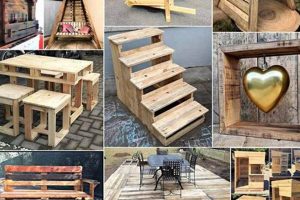
The construction of shelving units from timber, undertaken by individuals, allows for customization of storage solutions. This contrasts with purchasing pre-fabricated units, affording the constructor greater control over dimensions, aesthetics, and material selection. For example, an individual might construct a set of shelves to precisely fit an alcove, using reclaimed wood for a rustic aesthetic.
Engaging in such projects yields several benefits. Economically, it can reduce expenses compared to purchasing retail options, particularly when utilizing repurposed materials. Functionally, bespoke shelving addresses specific storage needs, optimizing space utilization. Historically, the practice reflects a tradition of self-sufficiency and craftsmanship, evolving alongside advancements in woodworking techniques and the availability of tools.
Subsequent sections will address material selection, construction techniques, finishing options, and considerations for weight-bearing capacity in the creation of customized storage systems.
Essential Guidance for Timber Shelving Construction
The following constitutes a collection of practical recommendations for those undertaking the construction of shelving from timber. Adherence to these guidelines contributes to a stable, aesthetically pleasing, and durable final product.
Tip 1: Material Selection: Employ kiln-dried timber of appropriate thickness to mitigate warping and ensure structural integrity. Softwoods, such as pine, are cost-effective but may require additional support for heavy loads. Hardwoods, like oak or maple, offer greater strength and resistance to wear.
Tip 2: Precise Measurement: Accurate measurements are paramount. Employ a steel rule or measuring tape and transfer dimensions directly onto the timber. Double-check all measurements before cutting to minimize errors.
Tip 3: Secure Fastening: Utilize appropriate fasteners for the type of timber and intended load. Wood screws offer superior holding power compared to nails. Consider using pocket hole joinery for concealed and robust connections.
Tip 4: Level Installation: Ensure shelves are perfectly level during installation. Use a spirit level to verify horizontal alignment. Shims may be necessary to compensate for uneven wall surfaces.
Tip 5: Adequate Support: Calculate the anticipated weight load and provide sufficient support. Shelf brackets should be rated for the intended weight capacity. Consider adding additional brackets for longer shelves to prevent sagging.
Tip 6: Protective Finish: Apply a protective finish to the timber to enhance durability and resistance to moisture. Options include varnish, polyurethane, or oil-based finishes. Sand the timber smoothly before applying the finish.
Tip 7: Safety Precautions: Prioritize safety throughout the construction process. Wear appropriate personal protective equipment, including safety glasses, hearing protection, and a dust mask. Use power tools responsibly and in accordance with manufacturer’s instructions.
Adherence to these recommendations will contribute to a robust and aesthetically pleasing storage solution. Careful planning and execution are essential for successful implementation.
The subsequent section will delve into specific design considerations, exploring the impact of aesthetics on overall room ambiance.
1. Wood Species

The selection of wood species exerts a significant influence on the performance and aesthetics of shelving units created through do-it-yourself (DIY) methods. The inherent properties of each species dictate its suitability for specific applications, affecting load-bearing capacity, susceptibility to warping, and visual appeal. For instance, a DIY project intended to support heavy books would necessitate the selection of a dense hardwood, such as oak or maple, due to their superior strength compared to softer woods like pine or fir. Conversely, a decorative shelf intended for lightweight items might benefit from the aesthetic qualities of cedar, known for its aromatic scent and natural resistance to insects, or the easily workable nature of pine.
The economic aspect also intertwines with the choice of wood species. Softwoods, generally more readily available and therefore less expensive, represent a viable option for budget-conscious projects. However, their lower density often requires modifications to the design, such as closer bracket spacing or the incorporation of reinforcing elements, to achieve the desired load capacity. Hardwoods, while offering greater structural integrity, come at a higher cost, potentially influencing the overall budget of the DIY project. Furthermore, the ease with which a particular species can be workedsawn, sanded, and fastenedplays a critical role in the construction process, affecting the time and skill required for completion. A novice woodworker might find a softer wood more forgiving, while an experienced individual might prefer the precision afforded by a denser hardwood.
In summary, the informed selection of wood species is paramount to the success of DIY shelving projects. It represents a crucial decision that balances considerations of structural integrity, aesthetic preferences, economic constraints, and the skill level of the constructor. Failure to adequately consider these factors can lead to structural instability, premature degradation, or an unsatisfactory aesthetic outcome. The selection process is thus an integral component of the DIY shelving endeavor, demanding careful evaluation and planning.
2. Shelf Depth

Shelf depth, a critical dimension in the design and construction of timber shelving, directly influences the functionality and usability of do-it-yourself (DIY) shelving projects. The chosen depth dictates the types and sizes of items that can be accommodated, affecting the overall storage capacity and suitability for the intended purpose. Insufficient depth restricts storage options, rendering the shelving less effective, while excessive depth can waste space and disrupt the aesthetic balance of the room. For example, a shelf intended to house large books requires a greater depth than one designed for displaying smaller decorative items. Failure to consider the specific storage needs results in a compromised final product.
The relationship between shelf depth and structural support is also paramount. Deeper shelves, due to increased leverage, necessitate stronger support structures to prevent sagging or failure. This may involve using thicker timber, closer bracket spacing, or incorporating additional support elements such as vertical dividers. The choice of material, construction techniques, and bracket type must be carefully considered in relation to the chosen depth to ensure adequate weight-bearing capacity. Consider a scenario where a homeowner constructs a deep shelf using thin plywood and inadequate bracket support; the shelf is likely to bow under even moderate loads, necessitating costly repairs or complete replacement. The selection of appropriate materials and construction methods mitigates these risks.
In conclusion, shelf depth is an inextricable component of the DIY shelving construction process. Its selection requires a thorough understanding of intended use, material properties, and structural considerations. A well-considered shelf depth optimizes storage capacity, maintains structural integrity, and contributes to the overall aesthetic appeal of the shelving unit. Overlooking this critical dimension compromises the functionality and longevity of the entire DIY project.
3. Bracket spacing

Bracket spacing constitutes a critical factor in the successful construction of timber shelving units, directly influencing load-bearing capacity and preventing structural failure. The distance between support brackets along the span of a shelf determines the degree to which the shelf will deflect under load. Excessive spacing increases the stress on the timber, leading to sagging, warping, or catastrophic breakage. Conversely, insufficient spacing, while enhancing stability, may be aesthetically undesirable or increase material costs unnecessarily. A practical example involves a long shelf intended to hold heavy books. Widely spaced brackets will likely result in a visible sag in the middle of the shelf, whereas closely spaced brackets will distribute the weight more effectively, maintaining a level surface. Accurate determination of bracket spacing requires consideration of wood species, shelf depth, anticipated load, and bracket strength.
The calculation of appropriate bracket spacing typically involves engineering principles, although simplified guidelines can be employed for common applications. Factors such as the modulus of elasticity of the wood, the shelf’s moment of inertia, and the maximum allowable deflection must be considered. Online calculators and reference tables provide assistance in estimating appropriate spacing based on these variables. It is imperative to err on the side of caution, particularly when dealing with heavy loads or less robust timber species. Real-world applications demonstrate the validity of these calculations; shelving units constructed with inadequate bracket support are prone to premature failure, resulting in property damage and potential safety hazards. Consistent and accurate bracket placement, achieved using measuring tools and levels, ensures uniform weight distribution and maximizes the shelf’s overall strength.
In summary, bracket spacing is an integral aspect of timber shelving construction, directly impacting its structural integrity and longevity. Accurate determination of spacing, based on load calculations and material properties, is crucial for preventing deflection and ensuring safe operation. While simplified guidelines exist, a thorough understanding of the underlying principles and a conservative approach are recommended. The challenges associated with inadequate bracket spacing highlight the importance of careful planning and execution in DIY wood shelving projects.
4. Load Capacity

Load capacity represents a critical parameter in the design and construction of DIY wood shelving. The ability of a shelf to safely support a given weight is paramount to its functionality and longevity. Underestimation of load capacity can result in structural failure, property damage, and potential injury. Therefore, accurate assessment and implementation of appropriate support mechanisms are essential.
- Material Selection and Load Capacity
The inherent strength of the chosen wood species directly influences the shelf’s load capacity. Hardwoods, such as oak or maple, possess greater density and resistance to bending compared to softwoods like pine or fir. Consequently, hardwood shelves can support heavier loads with less deflection. Consideration of the wood’s modulus of elasticity is crucial in determining its suitability for a specific application. Inadequate material selection can lead to premature sagging or catastrophic failure under load.
- Shelf Depth and Load Capacity
Shelf depth exhibits an inverse relationship with load capacity. As shelf depth increases, the leverage exerted on the supporting structure also increases, reducing the maximum weight the shelf can safely bear. Deeper shelves require increased support, either through thicker material or closer bracket spacing. Neglecting the impact of shelf depth on load capacity can result in instability and potential collapse, particularly when storing heavy items.
- Bracket Spacing and Load Capacity
The distance between support brackets dictates the distribution of weight along the shelf’s span. Reduced bracket spacing enhances load capacity by minimizing the unsupported length of the shelf. Closer bracket spacing distributes the load more evenly, reducing stress on the timber. Conversely, excessive bracket spacing concentrates the load, increasing the risk of sagging or breakage. Proper bracket selection and placement are crucial for optimizing load capacity.
- Fastener Strength and Load Capacity
The type and quantity of fasteners used to secure the shelf to the supporting structure directly affect its load capacity. Inadequate fasteners can compromise the shelf’s ability to withstand applied weight. Wood screws offer superior holding power compared to nails. Proper screw length and diameter are essential for ensuring a secure connection. Weak or improperly installed fasteners represent a significant vulnerability, potentially leading to shelf detachment and subsequent failure.
The interplay of material selection, shelf depth, bracket spacing, and fastener strength collectively determines the load capacity of DIY wood shelving. Careful consideration of these factors, coupled with adherence to established engineering principles, is necessary to ensure a safe and functional storage solution. A holistic approach, encompassing all aspects of design and construction, is paramount for achieving the desired load-bearing performance and maximizing the lifespan of the shelving unit.
5. Surface Finish
The application of a surface finish to timber shelving constructed through do-it-yourself (DIY) methods serves to protect the underlying material and enhance its aesthetic properties. The choice of finish directly impacts the longevity and maintenance requirements of the shelving unit. Unfinished wood is susceptible to moisture absorption, leading to warping, swelling, and the development of mold or mildew. A properly applied finish creates a barrier against these environmental factors, preserving the structural integrity of the shelf. For instance, shelving units installed in damp environments, such as bathrooms or basements, necessitate water-resistant finishes like polyurethane or epoxy resin to prevent moisture damage. Conversely, shelving intended for dry indoor environments may benefit from oil-based finishes, which penetrate the wood and enhance its natural grain. The selection of finish is therefore a crucial decision, influencing both the functionality and appearance of the completed DIY wood shelves project.
Beyond protection, surface finishes contribute significantly to the visual appeal of DIY wood shelves. The finish can alter the color, sheen, and texture of the wood, allowing for customization to match existing dcor or achieve a desired aesthetic. Stains, for example, can darken or enhance the wood grain, creating a richer and more visually appealing surface. Clear finishes, such as varnish or lacquer, preserve the natural color of the wood while providing a protective coating. Milk paint offers a durable, matte finish with a wide range of color options. The application technique also influences the final appearance; multiple coats, sanding between coats, and proper drying times are essential for achieving a smooth and consistent finish. The transformative power of surface finishes allows individuals to personalize their DIY wood shelves projects, creating unique and functional storage solutions.
In summary, the selection and application of a surface finish are integral components of DIY wood shelves construction. The finish provides essential protection against environmental damage, extends the lifespan of the shelving unit, and enhances its aesthetic properties. Careful consideration of the intended use, environmental conditions, and desired appearance is necessary to select the appropriate finish. While challenges may arise in achieving a professional-quality finish, the benefits of a well-executed surface treatment far outweigh the effort involved. A thoughtfully chosen and properly applied finish is a hallmark of a successful and enduring DIY wood shelving project.
6. Wall anchoring
Wall anchoring, in the context of do-it-yourself (DIY) wood shelves, is the process of securely attaching the shelving unit to the supporting wall structure. This procedure is essential for ensuring the stability and safety of the shelves, particularly when subjected to significant loads. Improper or inadequate wall anchoring can result in shelf collapse, potentially causing damage to property and posing a risk of injury.
- Load Distribution and Anchor Selection
The primary function of wall anchors is to distribute the weight of the shelving unit and its contents across a wider area of the wall. Different types of anchors are designed to accommodate varying load capacities and wall materials. For instance, drywall anchors are suitable for lighter loads in drywall walls, while masonry anchors are required for heavier loads in brick or concrete walls. Selection of the appropriate anchor type based on anticipated load and wall construction is critical for preventing anchor failure and ensuring long-term stability.
- Anchor Placement and Structural Integrity
The placement of wall anchors directly impacts the structural integrity of the shelving unit. Anchors should be strategically positioned to coincide with wall studs whenever possible. Wall studs provide a solid anchoring point, offering superior holding power compared to drywall alone. When stud alignment is not feasible, anchors should be spaced appropriately to distribute the load evenly. Inadequate anchor placement can concentrate stress on specific points, leading to drywall cracking or anchor pull-out.
- Anchor Installation Techniques
Proper installation techniques are paramount for maximizing the effectiveness of wall anchors. Each anchor type requires specific installation procedures, which must be followed meticulously. Over-tightening anchors can damage the wall, while under-tightening can compromise their holding power. The use of appropriate tools, such as drills and screwdrivers, is essential for achieving a secure and reliable connection. Neglecting proper installation techniques can significantly reduce the load-bearing capacity of the anchors, increasing the risk of shelf failure.
- Compliance with Building Codes
Adherence to local building codes and regulations is crucial for ensuring the safety and legality of DIY wood shelving installations. Building codes often specify minimum requirements for wall anchoring, particularly in areas prone to seismic activity. Failure to comply with these codes can result in fines or legal liabilities. Consulting with a qualified building inspector or structural engineer may be necessary to ensure compliance with all applicable regulations.
In summary, wall anchoring is a fundamental aspect of DIY wood shelves construction, directly impacting the safety and stability of the shelving unit. Proper anchor selection, strategic placement, meticulous installation techniques, and compliance with building codes are all essential for achieving a secure and reliable connection. Neglecting these considerations can have serious consequences, underscoring the importance of prioritizing wall anchoring in all DIY shelving projects.
7. Joint strength

Joint strength is a critical determinant of the structural integrity and longevity of shelving constructed through do-it-yourself methods. The method by which individual pieces of timber are connected directly impacts the overall load-bearing capacity and stability of the resulting shelving unit. Inadequate joint strength can manifest as shelf sagging, racking (lateral instability), or complete structural failure, rendering the unit unusable or even hazardous. For instance, a shelving unit assembled using only butt joints and nails will invariably exhibit lower strength and stability compared to one utilizing mortise-and-tenon joints or pocket-hole joinery with screws. The choice of joinery technique must align with the anticipated load and the inherent properties of the timber used.
Various factors influence the strength of a joint, including the type of joint employed, the adhesive used (if any), the species of wood, and the precision of the cut. More complex joints, such as dovetails or rabbets, offer greater surface area for adhesive bonding and increased mechanical interlock, resulting in superior strength compared to simpler joints like butt joints. The selection of an appropriate adhesive, matched to the specific wood species, further enhances joint strength. Furthermore, precise cuts and tight-fitting joints minimize gaps and ensure optimal adhesive contact, maximizing the effectiveness of the joint. A practical application of this understanding involves constructing bookshelves intended to house heavy volumes. In such a scenario, reinforcing joints with glue blocks or metal fasteners can significantly increase their load-bearing capacity and prevent premature failure.
In summary, joint strength is an indispensable consideration in the construction of shelving, directly impacting its structural integrity and overall performance. The selection of appropriate joinery techniques, combined with proper adhesive selection and meticulous execution, is paramount for ensuring the longevity and safety of the shelving unit. Neglecting the importance of joint strength can lead to compromised structural stability and reduced lifespan, ultimately undermining the value and utility of the entire DIY project.
Frequently Asked Questions
The following constitutes a compilation of common inquiries pertaining to the construction and installation of timber shelving units. These questions and answers aim to clarify potential points of confusion and provide practical guidance for those undertaking such projects.
Question 1: What is the optimal wood species for constructing shelving intended to support heavy loads?
Hardwood species, such as oak, maple, or walnut, are generally recommended due to their superior density and compressive strength. These species exhibit a greater resistance to bending and deflection under load compared to softwoods. Kiln-dried lumber is also advised to minimize warping or cracking.
Question 2: How does shelf depth affect load capacity?
Shelf depth exhibits an inverse relationship with load capacity. As depth increases, the leverage exerted on the supporting structure also increases, reducing the maximum weight the shelf can safely support. Shallower shelves inherently possess a greater load-bearing capacity than deeper shelves constructed from the same material.
Question 3: What factors should influence bracket spacing decisions?
Bracket spacing is determined by a combination of shelf length, shelf depth, wood species, and anticipated load. Closer spacing enhances support and minimizes deflection, while wider spacing reduces material costs but may compromise structural integrity. Engineering guidelines or online calculators can assist in determining appropriate spacing.
Question 4: What type of wall anchors are appropriate for drywall?
Several types of wall anchors are suitable for drywall, including toggle bolts, molly bolts, and self-drilling anchors. Toggle bolts offer the highest load capacity, while self-drilling anchors are easier to install but provide less support. The choice depends on the weight of the shelving unit and its contents.
Question 5: How can warping be prevented in timber shelving?
Warping can be mitigated by utilizing kiln-dried lumber, applying a sealant or finish to all surfaces, and properly supporting the shelf with adequate brackets or dividers. Selecting thicker timber can also reduce the likelihood of warping. Avoid exposing the shelving to excessive moisture or extreme temperature fluctuations.
Question 6: What safety precautions should be observed during the construction process?
Safety glasses, hearing protection, and a dust mask are essential when working with power tools. Ensure adequate ventilation when applying finishes or adhesives. Exercise caution when operating saws, drills, and other equipment. Adhere to manufacturer’s instructions for all tools and materials.
These responses provide a foundation for understanding key aspects of constructing timber shelving units. Adherence to these guidelines enhances the likelihood of a successful and durable outcome.
The subsequent section will explore advanced construction techniques, including methods for incorporating lighting and cable management solutions into shelving designs.
Conclusion
The preceding discussion has delineated essential considerations pertaining to DIY wood shelves. Material selection, structural support, surface treatments, and adherence to established construction principles constitute critical determinants of a successful outcome. Neglecting these factors increases the probability of structural failure, diminished aesthetic appeal, and reduced longevity of the finished product. DIY wood shelves represents a convergence of design acumen, woodworking proficiency, and a commitment to quality execution.
Ultimately, the realization of durable and aesthetically pleasing DIY wood shelves necessitates a dedication to informed planning and rigorous implementation. The pursuit of excellence in craftsmanship, combined with a thorough understanding of material properties and construction techniques, will yield shelving units that serve as both functional storage solutions and enduring testaments to individual skill.