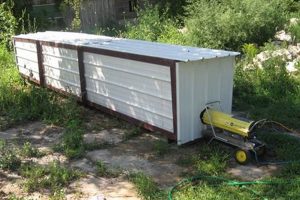
A self-constructed chamber designed to accelerate the reduction of moisture content in timber represents a cost-effective solution for woodworkers and craftspeople. This apparatus facilitates the controlled removal of water from freshly cut or green lumber, mitigating warping, cracking, and fungal growth that can compromise the structural integrity and aesthetic appeal of wood products. Its functionality mirrors that of industrial-scale drying facilities, albeit on a smaller, more manageable scale.
Employing a personal system for desiccating lumber offers several advantages. Users gain independence from commercial drying services, reducing reliance on external vendors and minimizing associated expenses. The ability to regulate temperature, humidity, and airflow allows for tailored drying schedules, optimizing outcomes for various wood species and thicknesses. Historically, air drying was the primary method, but this is a slow process vulnerable to weather. Utilizing a dedicated chamber provides significantly faster and more predictable results, enhancing project timelines and reducing material waste.
The following sections will detail the fundamental principles of wood drying, explore diverse construction methods for building a personal system, discuss appropriate monitoring and control strategies, and address potential challenges associated with operating such a system.
Tips for Effective Lumber Desiccation
Maximizing the effectiveness and safety of a self-built lumber drying chamber requires careful planning and execution. The following tips offer guidance on optimizing performance and minimizing potential issues.
Tip 1: Site Selection is Critical. The location of the chamber should be level, well-drained, and protected from extreme weather. Consider proximity to a power source and ease of access for loading and unloading lumber.
Tip 2: Precise Temperature and Humidity Control are Essential. Incorporate reliable sensors and automated control systems to maintain optimal drying conditions. Deviations can lead to uneven drying, warping, or cracking.
Tip 3: Airflow Management Significantly Impacts Drying Rate. Implement a fan system that promotes consistent air circulation throughout the stack of lumber. Baffles may be necessary to direct airflow and prevent stagnant zones.
Tip 4: Proper Stacking Techniques Maximize Efficiency. Lumber should be stickered with uniform spacing to allow air to circulate between each board. Ensure stickers are aligned vertically to prevent bending under the weight of the stack.
Tip 5: Gradual Adjustment of Conditions Prevents Damage. Implement a drying schedule that gradually increases temperature and decreases humidity over time. Rapid changes can cause undue stress on the wood fibers.
Tip 6: Regular Monitoring Detects Potential Problems. Regularly inspect the lumber for signs of checking, warping, or mold growth. Adjust the drying schedule as needed based on these observations.
Tip 7: Data Logging Provides Valuable Insights. Implementing a data logging system can enable the recording of temperature and humidity levels, creating a valuable reference point and assisting in optimizing future schedules. The collected information allows for improved control and greater efficiency.
Tip 8: Safety Precautions are Paramount. Exercise caution when working with electrical components and high temperatures. Ensure proper ventilation to prevent the buildup of moisture and fumes.
Adhering to these guidelines increases the likelihood of achieving successful and cost-effective lumber drying, producing high-quality material for various woodworking projects.
The subsequent sections will further elaborate on specific construction methods and advanced control strategies for enhancing performance.
1. Structural Integrity

The structural integrity of a self-constructed lumber drying chamber is paramount to its safe and effective operation. The chamber must endure sustained periods of elevated temperature and humidity, as well as the weight of the lumber stack. Compromised structural elements can lead to chamber collapse, resulting in material loss, equipment damage, and potential personal injury. Therefore, robust design and construction practices are non-negotiable aspects of any successful self-built system. Consider the impact of long-term high heat exposure of different materials such as wood or metal, and the related structural implications.
The choice of building materials directly affects structural performance. Pressure-treated lumber, steel framing, or concrete blocks provide superior resistance to moisture and decay compared to untreated wood. Reinforcement measures, such as cross-bracing and gusset plates, enhance the chamber’s ability to withstand external forces. For example, a chamber constructed solely from thin plywood without adequate framing is highly susceptible to deformation and eventual failure under the combined stress of weight and humidity. In contrast, a well-engineered frame utilizing robust materials ensures stability and longevity.
Maintaining structural soundness requires ongoing inspection and maintenance. Periodic checks for signs of corrosion, rot, or structural weakness allow for timely repairs, preventing catastrophic failures. Attention to detail during construction and proactive maintenance are critical for ensuring the long-term viability of a do-it-yourself lumber drying chamber. Neglecting these aspects undermines the overall functionality and safety of the system, potentially negating any cost savings achieved through self-construction.
2. Airflow Dynamics

Effective lumber drying hinges critically on airflow dynamics within a self-constructed chamber. Controlled and consistent air movement is essential for uniformly removing moisture from the wood, preventing defects, and optimizing the drying process.
- Air Velocity and Uniformity
Air velocity within the chamber directly impacts the rate of moisture evaporation from the lumber. Insufficient airflow results in slow drying and potential for mold growth, while excessive airflow can lead to surface hardening and case hardening. Uniformity of airflow is equally crucial. Pockets of stagnant air can create localized areas of high moisture content, resulting in uneven drying and warping. Proper fan selection and placement are necessary to ensure consistent air velocity throughout the lumber stack.
- Stacking Configuration and Sticker Placement
The configuration of the lumber stack and the placement of stickers (spacers) between boards significantly influence airflow patterns. Stickers should be of uniform thickness and aligned vertically to create consistent air channels. Improper sticker placement can obstruct airflow, leading to uneven drying and potential for bending or twisting. A well-spaced and aligned stack promotes uniform airflow across all surfaces of the lumber.
- Ventilation and Air Exchange
Controlled ventilation allows for the exchange of moisture-laden air within the chamber with drier air from the external environment. The rate of air exchange must be carefully regulated to maintain appropriate humidity levels. Inadequate ventilation leads to a buildup of humidity, slowing the drying process. Excessive ventilation can cause overly rapid drying and potential for checking or splitting. Adjustable vents and automated control systems provide the necessary flexibility to manage air exchange effectively.
- Baffle Design and Airflow Direction
Baffles can be strategically positioned within the chamber to direct airflow and prevent short-circuiting. Short-circuiting occurs when air flows directly from the fan to the exhaust vent without circulating through the lumber stack. Baffles force the air to travel through the stack, maximizing its contact with the lumber surfaces. The direction of airflow (horizontal or vertical) also influences drying efficiency. Horizontal airflow is generally preferred for its ability to distribute air more evenly across the width of the lumber stack.
In summary, airflow dynamics are integral to the successful operation of a personal lumber drying chamber. The careful consideration of air velocity, stacking configuration, ventilation, and baffle design enables users to achieve uniform and controlled drying, producing high-quality lumber for various woodworking applications.
3. Temperature Regulation

Temperature regulation within a self-built lumber drying chamber is critical to achieving optimal drying rates, preventing wood degradation, and ensuring the overall efficiency of the process. Maintaining precise temperature control allows for consistent moisture removal without inducing defects that compromise the lumber’s structural integrity and aesthetic qualities.
- Impact on Drying Rate
Elevated temperatures accelerate the rate of moisture evaporation from the lumber. However, excessively high temperatures can cause rapid surface drying, leading to case hardening, where the outer layers of the wood dry and shrink before the inner layers, creating internal stresses and potential cracking. Conversely, insufficient temperatures result in prolonged drying times and increased risk of fungal growth. A carefully regulated temperature profile optimizes the drying rate while mitigating the risk of damage.
- Role in Preventing Wood Degradation
Maintaining appropriate temperatures is crucial for preventing various forms of wood degradation. High temperatures can denature certain wood components, leading to discoloration and reduced strength. Furthermore, excessively high humidity levels combined with elevated temperatures create an ideal environment for fungal growth, which can stain or weaken the wood. Precise temperature control helps to minimize these risks, preserving the quality of the lumber.
- Heating Systems and Control Mechanisms
Various heating systems can be implemented in a self-built chamber, including electric resistance heaters, propane heaters, or solar collectors. Electric resistance heaters offer precise temperature control but can be energy-intensive. Propane heaters provide higher heating capacity but require careful ventilation to prevent the buildup of hazardous gases. Solar collectors offer a sustainable alternative but may be subject to weather conditions. Regardless of the chosen heating system, a reliable temperature control mechanism, such as a thermostat or PID controller, is essential for maintaining the desired temperature profile.
- Sensor Placement and Data Logging
Accurate temperature sensing is crucial for effective temperature regulation. Multiple temperature sensors should be strategically placed within the chamber to monitor temperature gradients and ensure uniform heating. Data logging systems can be incorporated to record temperature readings over time, providing valuable insights into the drying process and enabling optimization of the temperature control strategy. This data can also be used to troubleshoot potential problems and refine future drying schedules.
These facets illustrate the integral connection between temperature regulation and the successful operation of a self-built lumber drying chamber. Employing appropriate heating systems, implementing reliable control mechanisms, and carefully monitoring temperature variations enable users to achieve consistent and high-quality drying results, maximizing the value of their lumber resources.
4. Humidity Control
Humidity control is an indispensable element within a self-constructed lumber drying chamber, profoundly affecting the rate of moisture removal and the ultimate quality of the dried wood. Effective management of humidity levels prevents defects such as warping, cracking, and fungal growth, ensuring that the lumber retains its structural integrity and desired properties.
- Impact on Drying Rate and Stress Reduction
Humidity levels directly influence the speed at which moisture evaporates from lumber. Low humidity accelerates drying, but if too low, it can induce excessive stress within the wood fibers, leading to surface checks and internal fractures. Conversely, high humidity retards drying, increasing the risk of fungal proliferation and prolonging the overall process. Precise control allows for a gradual reduction in moisture content, minimizing stress and preventing irreversible damage. Consider, for example, a delicate hardwood like cherry, which requires a slower, more controlled drying process than a softwood like pine.
- Methods for Humidity Regulation
Various methods can be employed to regulate humidity within a personal system. These include ventilation control, dehumidification systems, and humidification systems. Ventilation involves adjusting the airflow to introduce drier air into the chamber or exhaust moisture-laden air. Dehumidifiers actively remove moisture from the air, while humidifiers add moisture if the air becomes too dry. The selection of an appropriate method depends on the climate, chamber design, and desired drying rate. For instance, in arid climates, humidification may be necessary to prevent overly rapid drying.
- Importance of Sensor Accuracy and Feedback Loops
Accurate humidity sensors are critical for monitoring conditions within the chamber. These sensors provide feedback to a control system, which then adjusts the ventilation, dehumidification, or humidification systems to maintain the desired humidity level. The precision of these sensors directly influences the effectiveness of the control system. A closed-loop feedback system continuously monitors and adjusts humidity based on sensor readings, ensuring consistent and optimal conditions. Inaccurate sensors can lead to incorrect adjustments, resulting in either excessive or insufficient drying.
- Mitigation of Mold and Fungal Growth
Maintaining appropriate humidity levels is essential for preventing mold and fungal growth within the chamber. High humidity creates an environment conducive to microbial proliferation, which can stain and weaken the lumber. By keeping humidity below critical thresholds, the risk of fungal attack is significantly reduced. Regular monitoring and proactive adjustments are necessary to prevent outbreaks. Furthermore, proper air circulation within the chamber helps to inhibit mold growth by preventing the formation of stagnant, moisture-rich pockets.
In summary, humidity control is an integral aspect of operating a self-constructed lumber drying chamber. By carefully managing humidity levels, users can optimize the drying process, prevent defects, and ensure the production of high-quality, stable lumber for a variety of woodworking applications. The selection of appropriate control methods, accurate sensors, and proactive monitoring strategies are all essential for achieving successful and consistent results.
5. Operational Safety
Operational safety constitutes a critical, non-negotiable element in the design, construction, and operation of any self-built lumber drying chamber. The inherent combination of electrical systems, elevated temperatures, and potentially confined spaces presents a spectrum of hazards necessitating careful consideration and mitigation. Failure to prioritize safety measures can result in severe injury, property damage, or even fatal incidents.
The risks associated with these chambers stem from several sources. Faulty electrical wiring can lead to fires or electrocution. High temperatures can cause burns or ignite combustible materials. Confined spaces may accumulate hazardous fumes or create oxygen-deficient atmospheres. Improper handling of lumber can result in strains, sprains, or crushing injuries. Consider a scenario where a heating element malfunctions due to substandard wiring, causing a fire within the chamber. This fire could spread to surrounding structures, resulting in significant financial loss and potential endangerment of occupants. Alternatively, inadequate ventilation could lead to a buildup of carbon monoxide from a propane-fueled heating system, posing a serious health risk to anyone entering the chamber.
Mitigating these hazards requires a multifaceted approach. All electrical work must conform to applicable codes and standards, performed by qualified personnel. Heating systems should incorporate redundant safety features, such as over-temperature shutoffs and flame detectors. Proper ventilation is essential to prevent the accumulation of hazardous fumes and maintain adequate oxygen levels. Personnel operating the chamber should receive comprehensive training on safety procedures and emergency protocols. Regular inspections and maintenance are crucial for identifying and rectifying potential hazards before they escalate. Prioritizing these safety measures transforms a potentially dangerous endeavor into a manageable and productive process, safeguarding both individuals and property.
6. Cost-effectiveness

Evaluating the economic viability of a self-constructed lumber drying chamber is a crucial step in determining its long-term value. The initial investment in materials and labor must be carefully weighed against the potential savings realized through reduced lumber costs and improved project efficiency. A comprehensive analysis reveals the true cost-effectiveness of such a system.
- Material Acquisition Strategies
Sourcing materials judiciously significantly impacts the overall cost. Repurposing salvaged materials, such as used lumber or discarded metal framing, can drastically reduce expenses compared to purchasing new components. However, the structural integrity and suitability of reclaimed materials must be thoroughly assessed to ensure safety and performance. Example: Utilizing a recycled shipping container as the chamber’s shell provides a readily available, weather-resistant enclosure, minimizing construction costs, while requiring rigorous inspection for contaminants or structural weaknesses.
- Energy Consumption Optimization
Energy costs represent a significant operational expense. Implementing energy-efficient heating and ventilation systems minimizes electricity or fuel consumption. Insulation plays a vital role in reducing heat loss, thereby lowering energy demands. Example: Employing a solar-assisted heating system, combined with a well-insulated chamber, can significantly reduce reliance on conventional energy sources, leading to substantial long-term cost savings. However, the initial investment in solar equipment must be factored into the overall cost analysis.
- Labor Investment and Skill Requirements
The time and effort required for construction and operation directly affect the cost-effectiveness. Projects involving complex designs or requiring specialized skills may necessitate hiring professional assistance, increasing expenses. Streamlining the construction process and simplifying operational procedures can reduce labor costs. Example: A simple, passively ventilated chamber requires minimal construction expertise and operational oversight, making it a more cost-effective option for individuals with limited skills and resources, although the drying time will be extended.
- Reduced Lumber Waste and Improved Quality
Controlled drying minimizes warping, cracking, and other defects, reducing lumber waste and improving the quality of the finished product. This translates to cost savings by reducing the need to purchase additional materials or rework damaged pieces. Example: By precisely controlling temperature and humidity, a self-built chamber can significantly reduce defects in expensive hardwoods, such as walnut or cherry, resulting in substantial savings compared to air-drying or purchasing kiln-dried lumber.
The components mentioned above highlights the multifaceted nature of cost-effectiveness in the context of personal drying systems. By carefully considering material sourcing, energy consumption, labor requirements, and lumber quality, users can optimize the economic viability of their self-built systems, ensuring a worthwhile investment that yields tangible benefits over time.
Frequently Asked Questions
The following addresses common inquiries regarding the construction and operation of self-built lumber drying chambers, offering clarity and dispelling prevalent misconceptions.
Question 1: What is the minimum lumber volume for a personal drying system to be economically viable?
The economic viability depends on multiple factors, including lumber species, market prices, and system efficiency. In general, processing valuable hardwoods or large quantities of lumber makes a personal system more justifiable. A detailed cost-benefit analysis is recommended before construction.
Question 2: What is the optimal temperature range for drying most wood species?
While specific temperatures vary depending on the wood type and desired drying rate, a general range of 100-130F (38-54C) is typical. Higher temperatures can accelerate drying but increase the risk of damage. Gradual temperature increases are recommended.
Question 3: How critical is airflow control in a self-built chamber?
Airflow control is paramount for uniform moisture removal and preventing defects. Inadequate airflow leads to uneven drying and potential mold growth. Consistent and controlled airflow is essential for optimal results.
Question 4: What are the primary safety concerns associated with operating a personal system?
The primary safety concerns include electrical hazards, fire risks, and exposure to hazardous fumes. Proper wiring, ventilation, and adherence to safety protocols are essential for mitigating these risks.
Question 5: How can humidity levels be effectively managed in a small-scale setup?
Humidity levels can be managed through ventilation control, dehumidification systems, or a combination of both. Accurate humidity sensors and automated control systems are recommended for maintaining consistent conditions.
Question 6: What is the typical drying time for lumber in a self-built chamber?
Drying time varies depending on the wood species, thickness, initial moisture content, and chamber conditions. Expect drying times ranging from several weeks to several months, significantly faster than air-drying but slower than commercial systems.
These FAQs offer essential insights into fundamental aspects of self-built lumber drying chambers. Careful consideration of these points enhances the likelihood of success and mitigates potential challenges.
The subsequent sections will explore advanced topics related to system optimization and troubleshooting.
Conclusion
The preceding discussion has examined various facets of the self-constructed lumber drying chamber, emphasizing the critical aspects of design, construction, operation, safety, and economic viability. Effective implementation of these principles is essential for achieving optimal drying performance and producing high-quality lumber suitable for diverse applications. Success depends on meticulous attention to detail, informed decision-making, and a comprehensive understanding of the underlying scientific principles.
Therefore, those undertaking the construction and operation of such a system must prioritize safety, accuracy, and continuous monitoring. Diligent adherence to established protocols and a commitment to ongoing learning are paramount for maximizing the benefits and minimizing the risks associated with this endeavor. Further research and adaptation to specific environmental conditions will continue to refine this practice, contributing to more sustainable and efficient wood utilization.