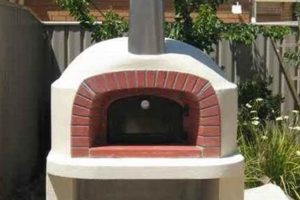
A prepared collection of materials and instructions that enables individuals to construct their own outdoor baking structure using wood as the primary fuel source. These assemblies typically include refractory bricks or other heat-resistant components, insulation, and a detailed guide for assembly. An example might involve a set containing pre-cut fire bricks, ceramic fiber insulation, mortar, and a step-by-step manual designed for creating a dome-shaped oven capable of reaching high temperatures.
The concept offers a cost-effective alternative to purchasing a fully assembled unit, facilitating accessible culinary experiences. This approach empowers individuals to customize the structure to suit specific spatial constraints and aesthetic preferences. Historically, the construction of such ovens was a communal activity, relying on locally sourced materials and shared expertise. Modern kits simplify this process, providing readily available resources and minimizing the need for extensive prior knowledge.
The subsequent sections will delve into the specific components included in such an offering, the recommended construction techniques, and the operational considerations required for optimal performance and longevity. It will further address common challenges encountered during assembly and offer solutions for ensuring a safe and efficient baking environment.
Construction and Operational Recommendations
The following recommendations are intended to optimize the assembly and utilization of a self-constructed, wood-fueled baking structure. Adherence to these guidelines will contribute to enhanced structural integrity, improved thermal efficiency, and safer operation.
Tip 1: Foundation Integrity: Ensure a solid and level foundation. Uneven settling can compromise the structural integrity of the oven, leading to cracks and reduced lifespan. A reinforced concrete slab is generally recommended.
Tip 2: Mortar Selection: Employ a high-temperature refractory mortar specifically designed for oven construction. Standard mortar will degrade under extreme heat, weakening the bond between bricks.
Tip 3: Insulation Adequacy: Prioritize thorough insulation around the oven dome. Adequate insulation minimizes heat loss, allowing the oven to reach and maintain high temperatures more efficiently, reducing fuel consumption.
Tip 4: Chimney Placement: Position the chimney strategically to ensure proper draft. An improperly placed chimney can result in poor combustion, excessive smoke, and difficulty maintaining a consistent temperature.
Tip 5: Curing Process: Implement a gradual curing process after construction. Rapid heating can cause thermal shock, leading to cracks in the mortar and bricks. Start with small fires and gradually increase the intensity over several days.
Tip 6: Temperature Monitoring: Utilize a thermometer to accurately monitor the internal oven temperature. This ensures optimal baking conditions and prevents overheating, which can damage the oven structure.
Tip 7: Wood Selection: Choose seasoned hardwood for fuel. Softwoods produce excessive smoke and creosote buildup, potentially posing a fire hazard and affecting the flavor of the baked goods.
Proper execution of these recommendations contributes to a durable, efficient, and safe wood-fired baking structure. Attention to detail during assembly and operation will maximize the oven’s performance and longevity.
The subsequent discussion will address troubleshooting common issues encountered during operation and provide guidance on maintaining the oven for years of reliable use.
1. Component Quality

Component quality is a critical determinant of the overall performance and longevity of a self-constructed, wood-fueled baking structure. The selection of appropriate materials directly impacts heat retention, structural integrity, and operational safety. Inferior components can lead to premature failure, increased maintenance, and potentially hazardous conditions.
- Refractory Materials
The composition and density of refractory bricks significantly affect their ability to withstand high temperatures and thermal cycling. Low-quality bricks may crack or crumble under extreme heat, compromising the oven’s structural integrity and reducing its heat retention capabilities. For instance, using standard construction bricks instead of genuine refractory bricks will result in significantly lower performance and a shorter oven lifespan.
- Insulation Materials
The type and thickness of insulation determine the oven’s thermal efficiency. Inadequate insulation leads to excessive heat loss, requiring more fuel to maintain the desired baking temperature. Example: Ceramic fiber blankets with a high R-value provide superior insulation compared to mineral wool, resulting in lower fuel consumption and more consistent baking temperatures.
- Mortar Composition
The mortar used to bind the bricks must be specifically formulated to withstand high temperatures. Standard mortar will degrade under extreme heat, weakening the bonds between bricks and potentially causing structural failure. Refractory mortar, designed for high-temperature applications, maintains its integrity and ensures a strong, durable structure.
- Metal Components
Any metal components, such as oven doors or chimney flues, should be constructed from materials that can withstand high temperatures and resist corrosion. Standard steel may warp or rust under prolonged exposure to heat and moisture, compromising the oven’s functionality and safety. Stainless steel or cast iron are more suitable choices for these components.
The selection of high-quality components is an investment in the long-term performance and reliability of the self-built baking structure. While potentially incurring a higher initial cost, superior materials offer enhanced durability, improved thermal efficiency, and greater operational safety, ultimately providing a more cost-effective and enjoyable baking experience.
2. Structural Integrity

Structural integrity is paramount to the successful construction and safe operation of a self-assembled, wood-fired baking structure. The ability of the oven to withstand sustained high temperatures, thermal cycling, and physical stresses directly depends on the quality of its construction and the inherent strength of its component materials. Compromised structural integrity can lead to cracking, deformation, and ultimately, catastrophic failure, rendering the oven unusable and potentially creating a safety hazard. For example, insufficient foundation support can cause the oven to settle unevenly, leading to cracks in the dome and reduced thermal efficiency.
Achieving adequate structural integrity necessitates careful attention to several key construction elements. The foundation must be level and capable of supporting the oven’s weight. The mortar used to bind the refractory bricks must be specifically designed for high-temperature applications and applied meticulously to ensure a strong bond. The dome’s geometry must be structurally sound, typically achieved through a catenary arch or similar design. Inadequate attention to these elements will inevitably result in structural weaknesses. A common mistake is using incorrect mortar, which crumbles and degrades under high heat, which diminishes the oven’s structural support.
In summary, structural integrity is not merely a desirable attribute but a fundamental requirement for a functional and safe self-built, wood-fired baking structure. Diligent planning, careful material selection, and adherence to sound construction principles are essential for achieving the necessary structural robustness. Addressing potential weaknesses preemptively is more cost-effective than repairing damage or rebuilding the entire oven after structural failure. Thus, prioritize structural integrity to ensure a long-lasting and enjoyable baking experience.
3. Thermal Efficiency

Thermal efficiency, in the context of a self-constructed, wood-fired baking structure, refers to the oven’s ability to retain heat and minimize energy loss. This characteristic directly impacts fuel consumption, baking performance, and overall operational cost. A thermally efficient oven requires less wood to reach and maintain optimal baking temperatures, resulting in reduced fuel expenses and a smaller environmental footprint. Insufficient thermal efficiency, conversely, necessitates higher fuel consumption, extended preheating times, and potential temperature fluctuations during the baking process. As an illustration, consider two ovens constructed with identical designs but differing insulation materials. The oven with superior insulation will reach its target temperature faster and maintain that temperature for a longer period, utilizing significantly less wood in the process.
Several factors contribute to the thermal efficiency of a wood-fired baking structure. Insulation plays a pivotal role, minimizing heat transfer through the oven walls and dome. The type and thickness of the insulation material are critical determinants of its effectiveness. The design of the oven, particularly the shape and dimensions of the cooking chamber and the placement of the chimney, influences heat distribution and retention. Air leaks through cracks or poorly sealed joints can significantly diminish thermal efficiency. To elaborate, a well-designed oven with a properly positioned chimney will maximize heat retention by directing the hot gases over the food before exiting, unlike an oven with an improperly placed chimney, which expels heat too quickly.
Achieving optimal thermal efficiency is crucial for maximizing the benefits of a self-built, wood-fired baking structure. By carefully selecting appropriate insulation materials, implementing sound construction techniques, and addressing potential sources of heat loss, individuals can significantly improve the oven’s performance and reduce its operational costs. Neglecting thermal efficiency compromises both the economic viability and the environmental sustainability of this cooking method. Therefore, prioritizing thermal efficiency ensures a cost-effective and ecologically responsible baking experience.
4. Safety Protocol

Safety protocols are of paramount importance when constructing and operating a self-assembled, wood-fired baking structure. The inherent risks associated with high-temperature environments and the use of combustible fuel sources necessitate strict adherence to established guidelines to mitigate potential hazards and ensure the well-being of operators and bystanders. Neglecting these precautions can result in burns, fires, structural damage, and other serious incidents.
- Ventilation Management
Adequate ventilation is crucial for proper combustion and to prevent the accumulation of carbon monoxide, a colorless and odorless gas that can be fatal. Ovens should be situated in well-ventilated areas or equipped with properly functioning chimney systems to ensure the safe expulsion of combustion byproducts. An enclosed space without adequate ventilation can quickly become saturated with carbon monoxide, posing a significant health risk.
- Fire Prevention Measures
Maintaining a clear area around the oven, free from combustible materials such as dry leaves, wood shavings, and flammable liquids, is essential to prevent the spread of fire. A readily accessible fire extinguisher, specifically designed for Class A fires (ordinary combustibles), should be kept nearby. Embers escaping from the oven can ignite nearby materials if these preventive measures are not implemented, resulting in a potentially uncontrolled fire.
- Burn Prevention Strategies
The external surfaces of a wood-fired baking structure can reach extremely high temperatures, posing a significant burn hazard. Protective measures, such as using heat-resistant gloves and long-handled tools, are necessary to prevent direct contact with hot surfaces. Clearly marking the oven’s hot zones and educating users about burn risks are also critical components of a comprehensive burn prevention strategy. Even brief contact with a superheated surface can result in severe burns, emphasizing the need for constant vigilance.
- Structural Integrity Monitoring
Regularly inspecting the oven’s structure for cracks, loose bricks, or other signs of deterioration is vital to prevent structural failure. A compromised oven can collapse unexpectedly, posing a serious safety risk. Addressing structural issues promptly ensures the continued stability and safe operation of the baking structure. Ignoring early warning signs of structural weakness can lead to a sudden and dangerous collapse of the oven.
The implementation of rigorous safety protocols is not merely a recommendation but a necessity for the responsible construction and operation of a self-built, wood-fired baking structure. A proactive approach to safety, encompassing ventilation management, fire prevention, burn prevention, and structural integrity monitoring, is crucial for mitigating risks and ensuring a safe and enjoyable culinary experience. Prioritizing safety at every stage, from initial construction to routine operation, protects individuals and property from potential harm.
5. Curing Process
The curing process represents a critical phase following the construction of a self-assembled, wood-fired baking structure. It is the gradual and controlled application of heat designed to stabilize the materials, strengthen the bonds between components, and prevent premature failure. This procedure is especially crucial for structures built from components provided in a set, as the varying expansion and contraction rates of different materials require careful management.
- Moisture Removal
The primary function of the curing process is to eliminate excess moisture trapped within the refractory materials and mortar. Rapid heating can cause this moisture to vaporize explosively, leading to cracking and structural damage. A slow, controlled curing schedule allows the moisture to evaporate gradually, minimizing stress on the oven’s components. For example, applying heat too quickly could result in steam pressure building within the brickwork, causing spalling or even complete separation of mortar joints.
- Mortar Hardening
The curing process facilitates the chemical reactions necessary for the mortar to achieve its full strength and hardness. Gradual heating allows the mortar to properly set and bond with the refractory bricks, creating a durable and heat-resistant structure. Premature firing of the oven before the mortar has adequately cured can result in a weak and unstable bond, potentially compromising the oven’s integrity and leading to premature failure. Improperly cured mortar can crumble and lose its adhesive properties under thermal stress.
- Stress Relief
The curing process helps to relieve internal stresses that may have been introduced during construction. The expansion and contraction of different materials due to temperature changes can create significant stress on the oven structure. A controlled curing schedule allows these stresses to gradually dissipate, minimizing the risk of cracking or deformation. For instance, refractory bricks expand at a different rate than the surrounding insulation. Gradual heating allows these materials to adjust without causing catastrophic failures.
- Material Acclimation
The process allows all the constituent materials used in construction to acclimate slowly to the high temperatures they will routinely endure in operation. This is particularly important as the materials gradually shift, expand, and settle into their final state within the finished structure. Without proper acclimation, certain elements of a build made with a self build oven kit might rapidly deteriorate.
The curing process, therefore, is an indispensable step in ensuring the longevity, structural integrity, and safe operation of a self-assembled, wood-fired baking structure. By carefully controlling the application of heat and allowing sufficient time for the materials to properly cure, individuals can significantly reduce the risk of premature failure and maximize the performance of their baking structure.
Frequently Asked Questions
The following questions address common inquiries and concerns regarding the construction and utilization of a self-assembled wood-fired baking structure. The information provided aims to offer clarity and guidance for individuals considering or currently engaged in such a project.
Question 1: What specific tools are required for the assembly of a do-it-yourself wood-fired oven package?
Essential tools typically include a mixing trowel, level, measuring tape, rubber mallet, angle grinder with a diamond blade for cutting refractory bricks (if necessary), and appropriate personal protective equipment such as gloves, safety glasses, and a dust mask.
Question 2: How critical is the foundation for a self-constructed wood-burning oven?
The foundation is of paramount importance. It must be structurally sound, level, and capable of supporting the considerable weight of the oven. An inadequate foundation can lead to settling, cracking, and ultimately, structural failure of the entire assembly.
Question 3: What type of wood is recommended for fuel, and why?
Seasoned hardwoods, such as oak, maple, or beech, are preferred. These woods burn cleanly and produce a high heat output with minimal smoke. Softwoods, conversely, tend to produce excessive smoke and creosote buildup, which can be hazardous.
Question 4: What measures should be taken to ensure proper insulation of the baking structure?
Employing high-quality ceramic fiber insulation, applied in sufficient thickness around the oven dome, is crucial. Pay particular attention to areas prone to heat loss, such as the oven entrance and chimney base. Proper insulation minimizes fuel consumption and ensures consistent baking temperatures.
Question 5: What is the appropriate method for curing a newly constructed wood-fueled oven?
A gradual curing process is essential. Begin with small fires, gradually increasing the intensity over several days. This allows moisture to escape slowly and prevents thermal shock, which can lead to cracking and structural damage.
Question 6: How often should the structure be cleaned, and what cleaning methods are advised?
Regular cleaning is recommended to remove ash and debris. A wire brush or scraper can be used to clean the cooking surface. Avoid using water or harsh chemicals, as these can damage the refractory materials. Consistent upkeep enhances the oven’s performance and longevity.
Successful construction and operation hinges on diligent planning, meticulous execution, and adherence to established safety protocols. Prioritizing these factors ensures a durable, efficient, and safe baking environment.
The subsequent section will focus on advanced operational techniques and culinary applications suitable for wood-fired baking structures.
Conclusion
This exposition has provided a comprehensive overview of the self-assembled, wood-fired baking structure. Key aspects examined include component quality, structural integrity, thermal efficiency, adherence to safety protocols, and the critical importance of the curing process. These elements collectively determine the performance, longevity, and safe operation of the aforementioned structure. The diligent application of these principles ensures a functional and reliable baking environment.
The successful implementation of the diy wood fired oven kit hinges on a thorough understanding of its constituent parts and a commitment to meticulous construction practices. The information herein serves as a foundational guide for those seeking to engage in this endeavor. Further research and adherence to local building codes are strongly encouraged to ensure a safe and rewarding culinary experience.