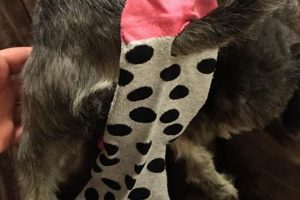
A homemade solution designed to manage canine incontinence or hygiene issues involves crafting absorbent undergarments for dogs using readily available materials. These handcrafted items serve as an alternative to commercially produced options and are typically constructed from fabrics such as flannel, cotton, or repurposed textiles, often incorporating absorbent padding from items like baby diapers or sanitary napkins.
The creation of custom canine undergarments offers economic advantages and promotes resourcefulness by utilizing existing materials. Beyond cost savings, these solutions provide a tailored fit, accommodating dogs of various sizes and breeds where standard-sized products may prove inadequate. Historically, owners have sought inventive ways to manage their pets’ needs, leading to the development of various homemade remedies, reflecting a dedication to animal care.
The following discussion will explore diverse methods for constructing effective absorbent garments for dogs, detailing material selection, construction techniques, and considerations for ensuring both comfort and functionality. The emphasis is on providing practical guidance for those seeking a personalized and cost-effective means of managing canine hygiene.
Guidance for Crafting Canine Absorbent Garments
The creation of effective absorbent garments for dogs demands careful consideration of several factors to ensure both functionality and comfort. The following tips provide guidance for constructing such items.
Tip 1: Material Selection: Opt for breathable, absorbent fabrics such as flannel, cotton, or fleece. Avoid materials that may cause irritation or trap moisture, potentially leading to skin issues.
Tip 2: Absorbent Core: Integrate highly absorbent materials like disposable baby diapers, sanitary napkins, or reusable absorbent pads into the garment’s core. The quantity and placement of these materials should correspond to the dog’s level of incontinence.
Tip 3: Accurate Measurement: Precise measurements are crucial for a secure and comfortable fit. Measure the dog’s waist circumference and the distance between the waist and the base of the tail to determine the appropriate dimensions.
Tip 4: Secure Fasteners: Utilize adjustable and secure fasteners such as Velcro, snaps, or elastic bands to ensure the garment remains in place. Avoid using pins or sharp objects that could pose a safety hazard.
Tip 5: Tail Hole Placement: Ensure the tail hole is appropriately sized and positioned to allow for comfortable tail movement and prevent obstruction of bowel movements.
Tip 6: Regular Cleaning: Frequent changes and thorough cleaning are essential to maintain hygiene and prevent infections. Wash reusable garments in hot water with a mild detergent.
Tip 7: Monitoring for Irritation: Regularly inspect the dog’s skin for any signs of irritation, redness, or chafing. Discontinue use if any adverse reactions occur.
These guidelines emphasize the importance of selecting appropriate materials, ensuring a proper fit, and maintaining meticulous hygiene practices when constructing and utilizing homemade absorbent garments for dogs.
The subsequent section will address potential challenges and troubleshooting strategies associated with the utilization of these garments, furthering the understanding of responsible canine care.
1. Absorbency Material Selection

Absorbency material selection constitutes a critical determinant in the functionality and effectiveness of a homemade canine absorbent garment. The capacity of the selected material to retain fluids directly impacts the garment’s ability to prevent leakage and maintain hygiene. For instance, the use of cotton flannel, known for its moderate absorbency, may prove adequate for managing mild urinary incontinence. Conversely, cases of significant urine leakage necessitate the incorporation of highly absorbent materials, such as those found in disposable baby diapers, to prevent saturation and subsequent skin irritation. The choice, therefore, represents a direct causal link to the success or failure of the solution.
Beyond pure capacity, material selection influences the health and comfort of the animal. Synthetic materials lacking breathability may trap moisture, creating a breeding ground for bacteria and potentially leading to dermatitis. Conversely, breathable natural fibers, such as bamboo or hemp, offer superior ventilation, mitigating the risk of skin complications. Consider the practical example of a dog with sensitive skin; a homemade solution employing hypoallergenic, absorbent materials, such as unbleached cotton, minimizes the potential for allergic reactions and promotes dermatological well-being.
In summation, the selection of appropriate absorbent materials is not merely a detail in the construction of a do-it-yourself canine absorbent garment, but a foundational element that directly impacts its efficacy, hygiene, and the animal’s overall health. Overlooking this aspect can negate the benefits of a custom-fitted solution, rendering it ineffective or even detrimental. A comprehensive understanding of material properties and their implications is thus essential for responsible and successful canine care.
2. Secure, Adjustable Fastening
Secure, adjustable fastening is a critical component in the functionality of canine absorbent garments. Inadequate fastening mechanisms compromise the ability of these garments to remain in place, thereby negating their intended purpose of containing bodily fluids. This connection represents a direct causal relationship: the efficacy of the absorbent garment is directly contingent upon the security and adjustability of its closure system. For instance, a garment secured with simple ties may readily loosen with canine movement, leading to leakage and potential hygiene concerns. Conversely, a garment employing adjustable Velcro straps offers a customizable fit, accommodating variations in canine anatomy and activity levels, thereby enhancing containment.
The importance of secure, adjustable fastening extends beyond mere functionality; it also influences the comfort and well-being of the animal. A poorly fitted garment, even with adequate absorbent material, can cause chafing, skin irritation, and restricted movement. Adjustable fasteners allow for dynamic adaptation to the canine’s size and shape, particularly relevant during periods of weight fluctuation or varying levels of activity. The practical significance of this understanding is evident in the design and implementation of commercial canine undergarments, where adjustable straps and closures are standard features, demonstrating their proven value in ensuring a secure and comfortable fit.
In conclusion, secure, adjustable fastening is not merely a supplementary feature of a canine absorbent garment; it is an integral element that directly impacts its effectiveness, comfort, and overall hygienic utility. The use of unreliable closures undermines the intended benefits, highlighting the need for careful consideration of fastening mechanisms during construction. Integrating robust, adjustable closures enhances the garment’s efficacy and promotes canine well-being, thus aligning with the broader theme of responsible animal care.
3. Proper Tail Hole Placement

Proper tail hole placement is a crucial design element in the construction of canine absorbent garments. Inadequate or improperly positioned tail apertures can compromise both the functionality of the garment and the comfort of the animal. A misaligned tail hole may lead to fecal matter contamination of the diaper, rendering the absorbent material ineffective and posing a hygiene risk. Conversely, a tail hole that is too small or positioned too tightly can cause discomfort, irritation, and even inhibit normal tail movement. The correlation between tail hole placement and overall diaper efficacy is thus a direct one; precise execution is essential for optimal performance.
Furthermore, a poorly designed tail hole can lead to the dog’s rejection of the garment. If the dog experiences discomfort or restricted movement due to the tail hole, it is likely to resist wearing the diaper, negating any potential benefits. A practical example is the scenario of a long-haired breed; a poorly placed aperture may lead to matting and tangling of fur around the tail, exacerbating discomfort. By contrast, a properly sized and positioned opening will allow for natural tail carriage and minimize the risk of irritation. The practical significance of this lies in the fact that a comfortable dog is more likely to accept and tolerate the garment, leading to greater adherence and improved hygiene management.
In conclusion, proper tail hole placement is not merely a design detail but a critical determinant of the functionality, comfort, and acceptance of canine absorbent garments. Attention to detail in this area is paramount to ensuring that the garment effectively manages incontinence or hygiene issues without causing discomfort or compromising the animal’s well-being. Thoughtful consideration of tail hole size and positioning represents a key aspect of responsible canine care when utilizing these types of solutions.
4. Comfortable, Secure Fit
A comfortable and secure fit is paramount to the efficacy of any homemade canine absorbent garment. If the diaper is not properly fitted, it will likely fail to contain waste effectively, defeating its intended purpose. A loose fit allows leakage, while an overly tight fit restricts movement and can cause chafing and skin irritation. The relationship between fit and functionality is thus direct: a well-fitted diaper performs as intended, while a poorly fitted one does not. As an example, a diaper constructed with adequate absorbent material but lacking a snug fit around the legs will inevitably leak urine, rendering the absorbent capacity irrelevant.
Moreover, a comfortable fit significantly increases the likelihood of the dog tolerating the garment. Canines are sensitive to discomfort; an ill-fitting diaper can cause anxiety, irritation, and active resistance to wearing it. Consider a scenario where a dog, initially cooperative, begins to resist the garment after prolonged use due to chafing caused by improperly fitted leg openings. This resistance necessitates constant readjustment or, ultimately, abandonment of the solution. Conversely, a diaper custom-fitted to the dog’s unique anatomy will likely be tolerated more readily, ensuring consistent hygiene management. The importance of individual measurements and adjustable features becomes evident in these cases.
In summary, a comfortable, secure fit is not simply a desirable attribute of a homemade canine absorbent garment but a fundamental requirement for its success. Achieving this fit requires careful attention to measurement, material selection, and adjustability. Failure to prioritize fit undermines the purpose of the diaper and can negatively impact the animal’s well-being. Therefore, achieving an optimal fit is essential for maximizing the effectiveness and tolerability of the homemade canine absorbent garment solution, aligning with the broader goals of responsible pet care.
5. Frequent Hygiene Practices
The effectiveness of any canine absorbent garment, regardless of its construction method, hinges critically on adherence to frequent hygiene practices. These practices directly influence the prevention of skin irritation, infection, and overall canine well-being. The use of a “diy dog diaper” without diligent attention to hygiene can negate its intended benefits and potentially lead to adverse health outcomes. For instance, a diaper left unchanged for extended periods fosters a moist environment conducive to bacterial and fungal growth, increasing the risk of dermatitis. The correlation between diaper usage and skin health is thus governed by the frequency and thoroughness of hygiene routines.
Practical application of this understanding requires implementing a consistent schedule for diaper changes. This schedule should be tailored to the individual dog’s needs, considering factors such as the severity of incontinence, activity level, and skin sensitivity. Regular cleaning of the perineal area with hypoallergenic wipes is essential during each diaper change to remove residual moisture and debris. Furthermore, reusable “diy dog diaper” solutions necessitate thorough laundering with pet-safe detergents to eliminate bacteria and allergens. Consider the case of a paralyzed dog reliant on diapers; consistent changing and cleaning significantly reduces the risk of urinary tract infections and pressure sores, enhancing the animal’s quality of life.
In conclusion, frequent hygiene practices are not merely supplementary guidelines but integral components of any successful “diy dog diaper” strategy. Overlooking these practices undermines the intended purpose of the garment and can jeopardize the canine’s health. Prioritizing regular diaper changes, diligent cleaning, and proper laundering protocols ensures that these homemade solutions contribute positively to canine hygiene management, supporting responsible pet ownership and promoting animal welfare. The challenge lies in maintaining consistency and tailoring hygiene routines to the individual needs of each animal.
Frequently Asked Questions
The following addresses common inquiries and misconceptions regarding homemade canine absorbent garments. The information presented aims to provide clarity and promote responsible canine care.
Question 1: What materials are suitable for crafting a do-it-yourself canine absorbent garment?
Appropriate materials include breathable, absorbent fabrics such as cotton flannel, fleece, and repurposed textiles. Absorbent cores may consist of disposable baby diapers, sanitary napkins, or reusable absorbent pads. Avoid materials that may cause irritation or trap moisture.
Question 2: How frequently should a “diy dog diaper” be changed?
Change frequency depends on the level of incontinence, activity level, and skin sensitivity of the dog. Diapers should be changed as soon as they become soiled to prevent skin irritation and infection. A general guideline is to change diapers at least every 4-6 hours, or more frequently if needed.
Question 3: How is a secure and comfortable fit ensured?
Accurate measurement of the dog’s waist circumference and distance between the waist and tail base is essential. Adjustable fasteners, such as Velcro or snaps, should be used to allow for a customized fit. Proper leg openings are crucial to prevent chafing.
Question 4: Can a “diy dog diaper” be safely used on a long-term basis?
Long-term use requires vigilant monitoring for skin irritation and adherence to strict hygiene practices. Regular breaks from diaper use are recommended whenever possible to allow the skin to breathe. Consultation with a veterinarian is advised to rule out underlying medical conditions causing incontinence.
Question 5: What are the potential risks associated with homemade canine absorbent garments?
Potential risks include skin irritation, bacterial or fungal infections, and restricted movement if the garment is improperly fitted. Regular monitoring and prompt treatment of any adverse reactions are essential. The use of non-breathable materials can exacerbate these risks.
Question 6: How are reusable “diy dog diaper” solutions properly cleaned and maintained?
Reusable diapers should be laundered in hot water with a mild, pet-safe detergent. Thorough rinsing is necessary to remove all traces of detergent, which can cause skin irritation. Air drying or low-heat tumble drying is recommended to prevent shrinkage.
In summary, the successful utilization of homemade canine absorbent garments necessitates careful material selection, precise fitting, frequent hygiene practices, and vigilant monitoring for potential complications. Consultation with a veterinary professional is encouraged for personalized guidance.
The subsequent section will delve into specific case studies and practical applications of “diy dog diaper” solutions, providing real-world examples and actionable insights.
Conclusion
This exploration of “diy dog diaper” solutions has highlighted critical aspects of design, construction, and maintenance. The efficacy of these homemade garments is contingent upon careful material selection, accurate fit, consistent hygiene practices, and diligent monitoring for potential complications. A thorough understanding of these factors is paramount to ensuring the well-being and comfort of the animal.
The responsible implementation of “diy dog diaper” solutions demands a commitment to informed decision-making and proactive animal care. While these homemade options can provide a cost-effective alternative to commercial products, they require diligent attention to detail and a willingness to adapt strategies to the individual needs of the canine. Continued vigilance and consultation with veterinary professionals are essential to optimize outcomes and uphold the highest standards of animal welfare.