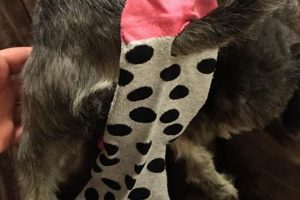
Dog enrichment, particularly when pursued through do-it-yourself projects, refers to the creation and implementation of stimulating activities and modifications to a dog’s environment. These are designed to satisfy a dog’s natural instincts and mental needs. An example would be constructing a puzzle feeder from recycled materials to encourage foraging behavior.
Providing enrichment is vital for canine well-being. It combats boredom, reduces destructive behaviors stemming from pent-up energy, and promotes cognitive function. The concept has evolved from simply fulfilling basic needs like food and shelter to actively enhancing a dog’s quality of life. Its significance has become increasingly recognized within veterinary behavioral science and responsible pet ownership.
The subsequent sections will delve into specific areas of canine enrichment that can be readily implemented at home. These will encompass categories such as food-based activities, sensory stimulation, environmental alterations, and interactive play opportunities.
Effective Canine Enrichment Through Do-It-Yourself Projects
The following tips provide guidance on implementing enrichment strategies using readily available materials and minimal financial investment. These projects aim to stimulate a dog’s natural instincts and reduce behavioral issues associated with boredom.
Tip 1: Construct Puzzle Feeders. Utilize empty plastic bottles or cardboard boxes to create challenging food dispensers. Cut openings in the containers and place kibble inside. The dog must manipulate the object to release the food, encouraging problem-solving skills.
Tip 2: Create a Snuffle Mat. Cut strips of fleece fabric and tie them to a rubber mat. Scatter kibble or treats within the fleece strands. The dog will use its sense of smell to locate the food, mimicking natural foraging behaviors.
Tip 3: Implement a Digging Box. Fill a large container with sand, shredded paper, or plastic balls. Hide toys or treats within the material to encourage digging, a natural instinct for many breeds. Supervise initial interactions to prevent ingestion of materials.
Tip 4: Rotate Toys Regularly. Limit the number of toys available to the dog at any given time. Rotate the selection every few days to maintain novelty and interest. This prevents habituation and encourages ongoing engagement.
Tip 5: Introduce Scent Work. Place a small amount of essential oil (safe for canine use, such as lavender) on a cotton ball. Hide the cotton ball in a designated area and encourage the dog to find it using its sense of smell. Increase the difficulty of the search as the dog becomes more proficient.
Tip 6: Provide Frozen Treats. Freeze dog-safe broth or yogurt in ice cube trays or Kong toys. Adding small pieces of fruit or vegetables enhances the nutritional value and provides a long-lasting, stimulating treat.
Tip 7: Build an Agility Course. Use household items like chairs, blankets, and hula hoops to create a simple agility course in the backyard or living room. Guide the dog through the course using positive reinforcement, promoting physical activity and mental focus.
Implementing these enrichment strategies can significantly improve a dog’s mental and physical well-being. Consistent application of these techniques can reduce boredom, minimize destructive behaviors, and strengthen the bond between dog and owner.
The subsequent sections will explore advanced enrichment techniques and address potential safety concerns associated with do-it-yourself projects.
1. Sensory Stimulation

Sensory stimulation plays a crucial role in canine enrichment, particularly when addressed through do-it-yourself projects. Engaging a dog’s senses in novel and appropriate ways can mitigate boredom, reduce stress, and enhance overall well-being. The subsequent facets detail specific approaches to sensory stimulation within the realm of do-it-yourself enrichment.
- Scent Work Activities
Scent work activities capitalize on a dog’s acute sense of smell. Simple do-it-yourself projects include hiding treats or toys infused with dog-safe essential oils (e.g., lavender, chamomile) for the dog to locate. This mimics natural foraging behavior and provides mental stimulation. Its implications extend to reducing anxiety and building confidence.
- Textural Exploration
Introducing varying textures can provide tactile enrichment. Do-it-yourself digging boxes filled with materials like shredded paper, sand, or fabric scraps allow for exploration through touch. The provision of different textured toys, crafted from materials like rope, rubber, or fleece, further contributes to tactile stimulation. These activities promote sensory integration and cognitive development.
- Auditory Enrichment
Auditory enrichment involves the controlled introduction of sounds. Playing calming music or nature sounds can reduce stress and anxiety, particularly in dogs prone to noise sensitivity. Avoid abrupt, loud noises. Do-it-yourself sound puzzles, constructed from items like plastic bottles with pebbles inside, can provide interactive auditory stimulation. This improves attention span and reduces negative reactions to environmental sounds.
- Visual Stimulation
Visual stimulation can be achieved through controlled exposure to different sights. Creating a window perch allows the dog to observe outdoor activity. Introducing puzzle toys with varying colors and shapes can also be stimulating. Rotating the dog’s environment by rearranging furniture or introducing new objects offers visual novelty. Careful consideration should be given to avoid overstimulation, especially with fast-moving images or bright, flashing lights, which can induce stress in some dogs.
The effective integration of these sensory stimulation techniques into a dog’s environment, utilizing do-it-yourself projects, provides a comprehensive approach to enrichment. By catering to a range of sensory inputs, these activities promote cognitive function, reduce behavioral issues, and enhance the overall quality of life for canine companions.
2. Puzzle Feeders

Puzzle feeders constitute a significant component within the spectrum of canine enrichment strategies achievable through do-it-yourself projects. These devices, designed to dispense food upon the completion of a cognitive or physical task, transform mealtime into a mentally stimulating activity. A direct causal relationship exists: the introduction of puzzle feeders mitigates boredom, a primary driver of destructive behaviors in dogs. Example scenarios range from simple adaptations of existing bowls, incorporating obstacles that necessitate maneuvering to access food, to more complex contraptions crafted from recycled materials, requiring specific actions to release kibble.
The importance of puzzle feeders lies in their capacity to mimic natural foraging behaviors. Domesticated dogs retain the instinct to hunt for food, a need often unfulfilled by conventional feeding methods. By presenting food as a challenge, puzzle feeders engage this instinct, leading to increased mental acuity and reduced anxiety. A practical illustration involves creating a “snuffle mat” from fleece strips attached to a rubber base; scattering kibble within the fleece requires the dog to use its sense of smell and problem-solving skills to locate the food, thereby prolonging the feeding process and enhancing engagement.
In summary, the incorporation of puzzle feeders into a canine’s routine, particularly through readily accessible do-it-yourself methodologies, presents a tangible means of promoting mental stimulation and addressing behavioral issues associated with under-stimulation. While the complexity of the puzzle feeder should be adapted to the individual dog’s capabilities to prevent frustration, the underlying principle remains consistent: the active engagement of the canine mind through food acquisition leads to a demonstrably enhanced quality of life.
3. Interactive Toys
Interactive toys form a crucial category within canine enrichment, often readily implemented through do-it-yourself projects. These toys are designed to stimulate mental and physical engagement, satisfying a dog’s innate needs beyond basic sustenance. Their effective utilization contributes significantly to a dog’s overall well-being by mitigating boredom and promoting cognitive function.
- Puzzle Toys for Mental Stimulation
Puzzle toys require dogs to solve a problem to access a treat or toy. These can range from simple designs involving sliding panels to more complex contraptions requiring multiple steps. Do-it-yourself versions may involve repurposing household items like PVC pipes, cardboard boxes, or plastic bottles. The cognitive challenge provided by these toys alleviates boredom and encourages problem-solving skills, directly contributing to mental enrichment.
- Fetch and Retrieve Variants
Traditional fetch games can be enhanced through the use of interactive elements. Throwing a standard ball provides exercise, but employing launchers or self-rolling balls increases the dog’s engagement. Do-it-yourself launchers can be constructed from readily available materials, while modified balls with treat compartments add an additional layer of stimulation. These activities promote physical exercise and improve a dog’s focus and coordination.
- Tug-of-War Implements with Strategic Design
Tug-of-war provides an opportunity for physical interaction and strengthens the bond between dog and owner. Durable ropes or fabric strips, often braided or knotted, are suitable for this game. Ensuring the toy is appropriately sized for the dog and that the game is played safely (avoiding sudden jerks) is crucial. The strategic design of the toy, incorporating different textures or handholds, can enhance the dog’s grip and engagement.
- Sensory Toys for Varied Stimulation
Sensory toys engage a dog’s senses through various textures, sounds, or scents. Do-it-yourself versions can involve stuffing toys with crinkly materials, adding squeakers, or scenting them with dog-safe essential oils. These toys provide a range of sensory experiences, catering to a dog’s individual preferences and promoting sensory exploration. The incorporation of varied stimuli prevents habituation and sustains interest.
The integration of these interactive toys, especially when realized through do-it-yourself projects, offers a practical and cost-effective approach to canine enrichment. By catering to a range of cognitive and physical needs, these toys contribute to a happier, healthier, and more well-adjusted canine companion.
4. Foraging activities

Foraging activities, as a component of canine enrichment, directly address a dog’s instinctual drive to seek out and acquire food. The correlation between these activities and do-it-yourself enrichment lies in the accessibility and adaptability of methods employed to satisfy this instinct. A primary effect of incorporating foraging tasks into a dog’s routine is the reduction of boredom-induced behaviors. This is achieved by providing a mental and physical challenge that occupies the dog’s attention for extended periods.
The importance of foraging activities within the framework of do-it-yourself enrichment stems from their cost-effectiveness and ease of implementation. Examples include scattering kibble in the yard for the dog to locate, creating a “snuffle mat” from fleece and a rubber base to simulate searching through grass, or hiding treats inside a rolled-up towel or cardboard box. These simple modifications to the feeding process transform mealtime from a passive consumption event into an active, engaging experience. This practical application holds significance for owners seeking to enhance their dog’s well-being without substantial financial investment. Furthermore, the adaptability of these activities allows customization based on the dog’s individual capabilities and preferences, ensuring sustained engagement.
In conclusion, foraging activities represent a readily accessible and effective method for canine enrichment, particularly within the context of do-it-yourself projects. By tapping into a dog’s inherent drive to seek food, these activities mitigate boredom, stimulate cognitive function, and promote overall well-being. While implementation requires consideration of the dog’s safety and abilities, the core principle of providing an engaging food-seeking experience remains a valuable component of responsible dog ownership.
5. Environmental modification

Environmental modification, within the context of canine well-being, refers to the intentional alteration of a dog’s surroundings to stimulate its senses, encourage natural behaviors, and reduce boredom. When approached through do-it-yourself projects, environmental modification becomes a cost-effective and adaptable means of enhancing a dog’s quality of life. The relationship is causal: specific modifications directly lead to predictable effects on canine behavior and mental state. For example, creating a designated digging area in the backyard satisfies a natural digging instinct, thus preventing destructive digging in other areas. Similarly, establishing a window perch provides visual stimulation and can reduce anxiety in dogs prone to barking at external stimuli.
The importance of environmental modification as a component of do-it-yourself canine enrichment lies in its holistic approach. It recognizes that a dog’s environment significantly influences its behavior and well-being. Examples include constructing an indoor agility course using household items to encourage physical activity and mental focus, or creating a multi-surface area with varying textures (grass, sand, concrete) to provide tactile stimulation. These modifications offer opportunities for exploration, problem-solving, and the expression of natural behaviors, ultimately contributing to a more fulfilled and balanced canine existence. The practical significance of this understanding is that even minor changes to a dog’s environment can yield substantial improvements in its behavior and overall happiness.
In summary, environmental modification through do-it-yourself projects presents a valuable strategy for canine enrichment. By understanding the connection between a dog’s environment and its behavior, owners can implement targeted changes that address specific needs and promote overall well-being. While challenges may include identifying appropriate modifications for individual dogs and ensuring safety, the potential benefits of a stimulating and enriching environment far outweigh these concerns, solidifying its role in responsible dog ownership.
6. Chew options
Chew options serve as a fundamental element within the domain of do-it-yourself canine enrichment. The act of chewing is an innate behavior for dogs, providing mental stimulation and contributing to dental health. A direct correlation exists between providing appropriate chew options and mitigating destructive chewing behaviors. For example, offering a dog a durable rubber chew toy reduces the likelihood of it targeting furniture or other household items. The act of chewing releases endorphins, contributing to a dog’s overall sense of well-being.
The importance of chew options within do-it-yourself enrichment strategies lies in their ease of implementation and adaptability. Suitable chew items can range from commercially available products to homemade options, utilizing materials and resources readily available. A frozen, stuffed Kong toy provides extended chewing time, mental stimulation as the dog works to extract the contents, and soothes teething puppies. Similarly, providing a sterilized bone or a durable rope toy satisfies the urge to chew while promoting dental hygiene through the scraping away of plaque and tartar. The practical significance lies in the ability to address a core canine need through cost-effective and accessible means.
In summary, providing a variety of safe and appropriate chew options is a crucial aspect of comprehensive canine enrichment. These options effectively manage chewing behavior, promote dental health, and contribute to a dog’s mental well-being. By utilizing do-it-yourself approaches, owners can tailor chew options to their dog’s individual preferences and needs, ensuring optimal engagement and benefit, thus enhancing the overall quality of life for their canine companions.
7. Training games
Training games represent a structured approach to canine enrichment, readily integrated through do-it-yourself initiatives. Their purpose extends beyond simple obedience, fostering mental acuity and strengthening the bond between dog and handler. The adaptability of training games allows for customization based on the dog’s breed, age, and individual skill set, ensuring sustained engagement and optimal benefit.
- Scent Discrimination Exercises
Scent discrimination games challenge a dog’s olfactory capabilities, providing significant mental stimulation. These activities involve training the dog to identify a specific scent amongst several others. A do-it-yourself approach might utilize cotton swabs infused with different essential oils (dog-safe varieties only), hidden within separate containers. The dog is then tasked with identifying the container containing the target scent. The successful completion of this task provides cognitive enrichment and reinforces the dog’s scent detection abilities.
- Recall Games with Variable Rewards
Recall, the act of a dog returning to its handler upon command, can be transformed into an engaging game through the implementation of variable rewards. Instead of consistently providing the same treat, the reward varies based on the speed and enthusiasm of the recall. A particularly swift recall might be rewarded with a high-value treat, while a slower recall receives a less desirable reward or verbal praise only. This variability introduces an element of unpredictability, motivating the dog to perform at its best. The do-it-yourself aspect involves carefully selecting and managing the reward system.
- Obstacle Course Navigation with Positive Reinforcement
Constructing a simple obstacle course using household items presents a physical and mental challenge for dogs. The course might include hurdles made from broomsticks, tunnels created from blankets draped over chairs, or weaving poles fashioned from empty plastic bottles. The dog is then guided through the course using positive reinforcement techniques, such as verbal praise and treats. The successful navigation of the obstacle course enhances the dog’s coordination, problem-solving skills, and confidence.
- “Find the Toy” Games for Cognitive Engagement
Hiding a toy and instructing the dog to find it utilizes its problem-solving abilities and scent detection. The difficulty can be increased by hiding the toy in increasingly challenging locations. The game can be modified by introducing a specific scent associated with the toy, further enhancing the dog’s olfactory skills. Success in finding the toy results in enthusiastic praise and a brief play session with the retrieved item, reinforcing the desired behavior and providing positive engagement.
These training games, when incorporated into a dog’s routine as do-it-yourself enrichment activities, provide a comprehensive approach to cognitive and behavioral development. They not only enhance specific skills but also strengthen the bond between dog and handler, contributing to a more harmonious and fulfilling relationship.
Frequently Asked Questions
This section addresses common inquiries regarding the implementation of do-it-yourself dog enrichment strategies. The responses provided offer practical guidance and aim to clarify potential misconceptions.
Question 1: What constitutes appropriate materials for constructing do-it-yourself enrichment devices?
Materials must be non-toxic, durable, and free from small parts that could be ingested. Cardboard, PVC pipes, and fabrics are often suitable, provided they are used under supervision and replaced when damaged.
Question 2: How can the level of difficulty of a do-it-yourself enrichment activity be adjusted?
Difficulty can be modulated by altering the size and placement of openings in puzzle feeders, increasing the complexity of scent trails, or modifying the height and spacing of obstacles in agility courses.
Question 3: Is constant access to enrichment items advisable?
Continuous availability can lead to habituation and reduced interest. Rotating enrichment items regularly maintains novelty and encourages sustained engagement. Limiting access to high-value items, such as food-based puzzles, to specific periods can also enhance their effectiveness.
Question 4: How should a dog’s reaction to a new enrichment activity be assessed?
Observe the dog’s behavior closely. Signs of enjoyment include focused attention, tail wagging, and active participation. Frustration is indicated by whining, pawing, or attempts to dismantle the item destructively. Adjust the activity as needed to ensure a positive experience.
Question 5: Can do-it-yourself enrichment activities replace formal training?
Enrichment activities complement, but do not replace, formal training. While they stimulate cognitive function and promote positive behaviors, structured training is essential for establishing obedience and addressing specific behavioral issues.
Question 6: What are the potential risks associated with do-it-yourself enrichment projects?
Risks include ingestion of materials, injury from sharp edges or unstable structures, and overstimulation leading to anxiety. Careful selection of materials, proper construction techniques, and supervised interaction are crucial for minimizing these risks.
In summary, the successful implementation of do-it-yourself dog enrichment requires careful planning, thoughtful material selection, and vigilant observation of the dog’s response. By addressing these key considerations, owners can effectively enhance their canine companions’ well-being.
The next section will provide additional resources for further exploration of canine enrichment strategies.
Conclusion
This exploration of dog enrichment ideas diy has demonstrated their capacity to meaningfully enhance canine well-being. From sensory stimulation to puzzle feeders and environmental modifications, the discussed methods offer practical avenues for addressing the cognitive and behavioral needs of domestic dogs. The effectiveness of these approaches hinges on responsible implementation, including careful material selection and consistent monitoring of canine response.
Sustained commitment to providing diverse and engaging enrichment opportunities is essential for responsible dog ownership. The presented information serves as a foundation for continued exploration and adaptation, with the ultimate goal of fostering a happier, healthier, and more mentally stimulated canine population. Prioritization of enrichment activities contributes directly to improved canine welfare and a strengthened bond between dogs and their human companions.