The act of constructing a feline waste receptacle designed to prevent canine access is a common practice among pet owners. This often involves modifying existing litter boxes or building new structures, utilizing readily available materials and tools to create a barrier that restricts a dog’s ability to reach the contents of the litter box. For example, a tall enclosure with a small entrance suitable for cats, but not dogs, exemplifies this approach.
Implementing such a solution offers several advantages. It promotes better hygiene by preventing the spread of bacteria and parasites found in cat feces, thus safeguarding canine health. It also reduces the likelihood of dogs ingesting the litter material, which can lead to digestive issues or even blockage. Historically, the need for such solutions has grown alongside increasing multi-pet households, highlighting the importance of maintaining separate and safe spaces for different animal species.
The following sections will detail various methods for constructing or modifying feline waste receptacles to effectively deter canine intrusion, providing practical guidance on material selection, design considerations, and construction techniques, ensuring a sanitary and secure environment for both cats and dogs.
Construction and Placement Strategies for Canine-Resistant Feline Waste Receptacles
The following guidance outlines key considerations for creating and positioning feline waste receptacles to effectively deter canine access, focusing on design elements and placement strategies.
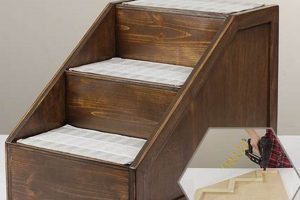
Tip 1: Elevated Placement: Position the litter box on a sturdy platform or elevated surface inaccessible to the dog. Ensure the cat can easily reach the box by providing a ramp or series of steps.
Tip 2: Enclosure with Limited Access: Build or purchase an enclosure with an entrance sized appropriately for the cat, but too small for the dog to enter. Consider a top-entry design as an alternative.
Tip 3: Utilize Existing Furniture: Adapt existing furniture, such as cabinets or side tables, by creating a cat-sized opening. This blends the litter box into the home decor while providing a barrier.
Tip 4: Barrier Creation: Employ physical barriers, such as baby gates or pet playpens, strategically placed to restrict canine access to the litter box area. Ensure the cat can easily bypass the barrier.
Tip 5: Deterrent Devices: Utilize motion-activated deterrents, such as compressed air sprayers, positioned near the litter box area. These devices discourage the dog from approaching without harming it.
Tip 6: Regular Maintenance: Consistently clean the litter box to minimize its attractiveness to the dog. A clean box is less likely to draw unwanted attention.
Tip 7: Scent Masking: Employ odor-neutralizing sprays or powders around the litter box area to mask the scent of the cat’s waste. This reduces the olfactory appeal to the dog.
Implementing these strategies contributes to a cleaner, healthier, and more peaceful multi-pet household, mitigating potential health risks and behavioral issues.
The subsequent section will explore material selection and specific design examples to further enhance the effectiveness of canine-resistant feline waste receptacles.
1. Material Durability

Material durability constitutes a foundational element in the successful execution of a “dog proof litter box diy” project. The selection of robust construction materials directly impacts the receptacle’s ability to withstand potential breaches by canines. A structure comprised of flimsy materials, such as thin cardboard or brittle plastic, is likely to succumb to a dog’s attempts to access the litter, negating the purpose of the project. Conversely, using reinforced plastic, solid wood, or even metal ensures the structure maintains its integrity and effectively restricts canine entry. For example, a DIY enclosure constructed from thick plywood resists scratching and pushing, whereas a cardboard alternative would quickly disintegrate.
The importance of material strength extends beyond mere resistance to physical force. Durable materials also contribute to the longevity of the modified litter box. Components resistant to moisture and scratching remain more hygienic and presentable over time. Consider the difference between an untreated wooden structure, which would absorb odors and degrade quickly, and one sealed with a waterproof coating and constructed from rot-resistant cedar. Furthermore, the chosen materials must be non-toxic and safe for both cats and dogs to prevent potential ingestion hazards should any chewing or destruction occur. A DIY top entry example would necessitate a durable and scratch resistant lid to bear the cat’s weight and resist canine attempts to access the contents.
In summary, the correlation between material durability and the overall effectiveness of a “dog proof litter box diy” solution is undeniable. Proper material selection is not simply a matter of aesthetics or ease of construction; it is a fundamental requirement for creating a functional, long-lasting, and safe barrier against canine intrusion. Challenges in this area typically involve balancing cost with desired durability and ensuring that selected materials are easy to clean and maintain. Addressing these challenges proactively leads to a more successful and sustainable solution that benefits both the feline and canine members of the household.
2. Entry Restriction

Entry restriction is a pivotal element in the successful implementation of a “dog proof litter box diy” project. Its efficacy dictates the degree to which canine access to feline waste is prevented. The absence of adequate entry restriction renders any other structural or material modifications largely inconsequential, as the dog retains unrestricted access. This, in turn, defeats the primary objective of protecting canine health and maintaining hygiene within the household. For example, a litter box placed inside an otherwise sturdy enclosure remains vulnerable if the enclosure’s opening is large enough for the dog to enter.
Effective entry restriction can be achieved through various design adaptations. Small entrances, elevated platforms requiring feline agility, or labyrinthine passageways are common strategies. Each method aims to create a physical barrier that a cat can easily navigate but a dog cannot. Consider a litter box with a top entry; the elevated opening presents a significant challenge for many dogs, while a cat can effortlessly jump to access it. Similarly, a narrow tunnel leading to the litter box serves as a selective filter, admitting cats while excluding larger dogs. The size and morphology of the dog in question must be factored into the specific design to ensure optimal effectiveness.
In conclusion, entry restriction stands as a crucial determinant of success in “dog proof litter box diy” endeavors. Its proper implementation directly impacts the health and hygiene of both feline and canine household members. The practical significance of this understanding lies in the proactive prevention of potential health issues and behavioral problems associated with canine access to feline waste. Addressing challenges in design and construction related to entry restriction leads to a more effective and sustainable solution for maintaining a harmonious multi-pet environment.
3. Height Advantage

Height advantage, in the context of constructing feline waste receptacles, represents a strategic design element employed to deter canine access. Its application directly influences the degree of success in achieving a “dog proof litter box diy” solution. Elevated placement or increased receptacle height exploits the physical limitations of dogs, restricting their ability to reach the contents without human intervention.
- Physical Barrier Creation
Elevation intrinsically creates a physical barrier. Placing the litter box on a surface beyond the comfortable reach of the dog effectively prevents access. Examples include raising the litter box onto a table or shelf. This approach is particularly effective against smaller dogs or those with limited jumping ability. The implication is a safer and more hygienic environment, reducing the risk of coprophagy and associated health hazards.
- Reinforced Vertical Walls
Increasing the height of the litter box walls serves as a deterrent, even if the receptacle is at ground level. High walls prevent the dog from reaching over the edge to access the contents. A tall enclosure built around the litter box, with an entry point sized for the cat, is a practical example. This limits access while allowing the cat unrestricted movement. Its implications are a less appealing target for the dog, reduced litter scatter, and enhanced odor control.
- Top-Entry Design
A top-entry litter box inherently leverages height advantage. The cat enters and exits from the top, requiring a level of agility beyond the capabilities of many dogs. Commercially available or DIY versions, typically involving a box with a hole in the lid, are common examples. The implication is a high degree of canine deterrence, although consideration must be given to the cat’s physical capabilities, particularly for senior or arthritic felines.
- Combination Strategies
Combining height advantage with other deterrence methods amplifies the overall effectiveness. For example, elevating a top-entry litter box further restricts access. Constructing a tall, enclosed structure with a small, elevated entrance is another example. The implication of a combined approach is a multi-layered defense against canine intrusion, addressing various behavioral patterns and physical capabilities.
The application of height advantage, whether through elevated placement, increased wall height, top-entry design, or a combination of strategies, significantly contributes to the success of a “dog proof litter box diy” project. These modifications create physical barriers that deter canine access, promoting a healthier and more sanitary environment for all pets within the household. The choice of method depends on the individual characteristics of the animals involved and the specific spatial constraints of the home.
4. Odor Containment
Odor containment plays a critical role in the effectiveness of a “dog proof litter box diy” initiative. Canine attraction to feline waste is often driven by olfactory stimuli; therefore, minimizing the scent emanating from the litter box directly reduces the likelihood of canine interest and subsequent attempts to access the receptacle. Poor odor control negates the intended benefits of physical barriers, as the lingering scent can still entice the dog, potentially leading to persistent efforts to breach the containment.
The relationship between odor containment and canine deterrence is a direct cause-and-effect phenomenon. Implementing odor-reducing strategies, such as utilizing specialized litters, employing activated carbon filters, or constructing enclosures with tight seals, lessens the attractant, thereby diminishing the dog’s motivation to investigate the litter box area. For example, a DIY enclosure utilizing rubber seals around the access point combined with a litter designed to neutralize ammonia minimizes odor escape, thereby reducing canine interest. Regular maintenance, including frequent scooping and complete litter replacement, further contributes to odor management, enhancing the effectiveness of the “dog proof” design. An effective solution would include a top-entry box with a charcoal filter in the lid.
In summary, the implementation of odor containment measures is not merely an ancillary consideration, but an integral component of a successful “dog proof litter box diy” strategy. By actively minimizing the olfactory stimuli emanating from the feline waste receptacle, the likelihood of canine interest and access attempts is significantly reduced. This integrated approach ensures a cleaner, healthier, and more harmonious multi-pet household, underscoring the practical significance of odor management in preventing undesirable canine behaviors.
5. Accessibility

The element of accessibility forms a crucial, yet often overlooked, component in the pursuit of a “dog proof litter box diy” solution. While the primary objective focuses on preventing canine access, neglecting feline accessibility can lead to unintended consequences, such as litter box avoidance and subsequent inappropriate elimination behaviors. The cause-and-effect relationship is direct: a litter box that is difficult or impossible for the cat to use, regardless of its effectiveness against dogs, is inherently unsuccessful. Examples include designing a high-walled enclosure that a kitten or senior cat cannot navigate, or creating an entry point that is too small for a larger cat to comfortably access.
The importance of accessibility necessitates a balanced approach between canine deterrence and feline usability. The physical capabilities and limitations of the feline occupant must be thoroughly considered during the design and construction phases. Solutions may involve ramps or steps leading to elevated platforms, appropriately sized entry points, or alternative designs that cater to specific needs, such as top-entry boxes for agile cats and low-entry options for those with mobility issues. Moreover, the internal space of the litter box must be sufficient to allow comfortable turning and elimination behavior. Failure to address these considerations results in a device that is dog-proof but cat-unfriendly, ultimately undermining the purpose of maintaining feline hygiene and reducing household messes.
In conclusion, accessibility is not merely a secondary consideration but a fundamental requirement for a successful “dog proof litter box diy” project. Prioritizing the cat’s ease of use, alongside canine deterrence, ensures that the solution effectively addresses both challenges without compromising feline well-being. The practical significance of this understanding lies in the prevention of litter box aversion and associated behavioral issues, contributing to a harmonious multi-pet household where each animal’s needs are adequately met.
Frequently Asked Questions
The following questions address common concerns and misconceptions surrounding the construction of canine-resistant feline waste receptacles.
Question 1: What is the primary benefit of implementing a “dog proof litter box diy” solution?
The primary benefit is the prevention of canine access to feline waste, mitigating potential health risks associated with coprophagy and promoting a more hygienic household environment.
Question 2: What materials are most suitable for a “dog proof litter box diy” project?
Durable, non-toxic materials such as solid wood, reinforced plastic, or metal are recommended. These materials resist damage and prevent the leaching of harmful substances.
Question 3: How can entry restriction be effectively implemented in a “dog proof litter box diy” design?
Entry restriction can be achieved through small entrances, elevated platforms, or labyrinthine passageways that are accessible to cats but physically challenging for dogs.
Question 4: Is height advantage a crucial element in a “dog proof litter box diy” construction?
Yes, height advantage, either through elevated placement or increased wall height, creates a physical barrier that effectively deters many dogs from accessing the litter box.
Question 5: How important is odor containment in a “dog proof litter box diy” design?
Odor containment is critical, as canine attraction to feline waste is often driven by scent. Effective odor control minimizes the dog’s motivation to investigate the litter box area.
Question 6: What considerations should be given to feline accessibility when creating a “dog proof litter box diy” solution?
Feline accessibility is paramount. The design must accommodate the cat’s physical capabilities, ensuring ease of entry and exit to prevent litter box avoidance.
In summary, a successful “dog proof litter box diy” project requires a balanced approach, considering material durability, entry restriction, height advantage, odor containment, and feline accessibility.
The subsequent section will explore specific design examples and practical construction tips to further assist in creating effective canine-resistant feline waste receptacles.
Conclusion
The preceding discussion has elucidated critical aspects of implementing a “dog proof litter box diy” solution. Success hinges on a multifaceted approach encompassing robust material selection, strategic entry restriction, exploitation of height advantage, effective odor containment, and careful consideration of feline accessibility. These elements, when properly integrated, contribute to a hygienic environment, preventing unwanted canine behavior and promoting the well-being of all pets within the household.
The construction of a canine-resistant feline waste receptacle demands diligence and attention to detail. While the undertaking presents challenges, the benefits derived from a well-executed project are significant. Continued research and innovation in this area are essential for refining existing techniques and developing novel solutions to meet the evolving needs of multi-pet households, ultimately fostering greater harmony and reducing potential health risks.