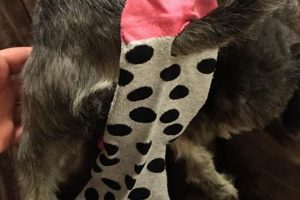
A custom-made garment for canines, typically knitted or sewn by hand, provides warmth and protection. Such creations allow pet owners to tailor fit and design, reflecting personal style and meeting specific breed needs. For instance, a miniature pinscher, sensitive to cold, benefits from a fitted covering during winter outings.
Creating personalized canine apparel offers several advantages. It provides a cost-effective alternative to commercially produced items, especially for breeds with unusual dimensions. Furthermore, the crafting process allows for selection of materials based on comfort, durability, and hypoallergenic properties. Historically, such handmade items were essential for working dogs in harsh climates, providing vital insulation. This practice continues today, albeit often with aesthetic considerations.
The following sections will delve into specific patterns, material choices, and construction techniques for creating customized canine coverings. Consideration will also be given to adapting designs for various breeds and addressing common fitting challenges. Finally, embellishment ideas and safety considerations will be explored.
DIY Dog Jumper
The creation of a well-fitting and functional canine garment requires careful planning and execution. The following guidelines provide practical advice for successful construction.
Tip 1: Accurate Measurement is Crucial. Before commencing any project, obtain precise measurements of the dog’s neck circumference, chest depth, back length (from neck to tail base), and belly circumference. These measurements form the foundation for a correctly sized pattern.
Tip 2: Select Appropriate Materials. Opt for fabrics that are both comfortable and durable. Fleece, wool, and cotton blends are suitable choices, considering factors such as breathability, stretch, and washability. Avoid materials with small, detachable parts that could pose a choking hazard.
Tip 3: Utilize a Well-Drafted Pattern. Employ a commercial pattern, adapt an existing garment, or draft a custom pattern based on the dog’s measurements. Ensure the pattern includes seam allowances and clear markings for construction.
Tip 4: Prioritize Comfort and Freedom of Movement. Design the garment to allow for unrestricted movement of the legs and torso. Consider incorporating gussets or stretch panels in key areas, such as the armholes and chest.
Tip 5: Reinforce Stress Points. Reinforce seams at stress points, such as the neck opening and leg holes, to prevent tearing and ensure longevity. Use a strong stitch and consider adding interfacing to stabilize vulnerable areas.
Tip 6: Secure Fastenings Properly. Employ secure and adjustable fastenings, such as Velcro straps, buttons, or snaps, to ensure a snug fit and prevent the garment from slipping off. Position fastenings to avoid chafing or irritation.
Tip 7: Test the Fit Regularly. During construction, frequently test the garment on the dog to ensure a comfortable and accurate fit. Make adjustments to the pattern or construction as needed to address any fit issues.
Adhering to these guidelines will contribute to the creation of a safe, comfortable, and functional canine garment. The resulting item will provide warmth, protection, and a personalized touch.
The concluding sections will address embellishment ideas, safety considerations, and advanced construction techniques for further customization.
1. Measurements (Accurate)

Accurate measurements represent a foundational element in the successful creation of a custom-made canine garment. A direct causal relationship exists between precise measurements and the ultimate fit and functionality. Erroneous measurements invariably lead to ill-fitting articles, potentially causing discomfort, restricting movement, or presenting safety hazards. For instance, a neck circumference measurement that is too tight can impede breathing, while an excessively long back measurement may result in the garment dragging on the ground, creating a tripping risk. Proper measurement, therefore, is not merely a preliminary step but an intrinsic component of the entire process.
The practical significance of accurate measurements extends beyond mere comfort. Consider a sighthound breed, such as a greyhound, which possesses a deep chest and slender waist. A commercially available item, sized based on generic canine proportions, is unlikely to accommodate these unique dimensions. Consequently, a garment that is too tight around the chest can restrict the ribcage, hindering respiration, while a loose-fitting waist offers minimal insulation and invites snagging. By meticulously recording the chest depth, waist circumference, and back length, a custom pattern can be drafted, ensuring a snug yet comfortable fit that optimizes thermal regulation and prevents injury.
In summary, the accuracy of initial measurements directly affects the final outcome of the project. Inadequate measurements undermine the effort invested in material selection, pattern adaptation, and construction techniques. Recognizing the critical role of precise measurements allows for the creation of canine apparel that is not only aesthetically pleasing but also prioritizes the well-being and safety of the animal. Challenges in measurement often arise with particularly active or uncooperative dogs; employing patience and enlisting assistance can mitigate these difficulties. This understanding underscores the interconnectedness of each step in the creation of a custom canine garment.
2. Material Selection

The choice of material exerts a considerable influence on the functionality, durability, and overall suitability of a custom-made canine garment. Material selection is not merely an aesthetic consideration; it directly impacts comfort, thermal regulation, and safety. Specific material properties must align with the intended purpose and the dog’s individual needs.
- Thermal Properties
The insulating capacity of a material determines its effectiveness in maintaining the dog’s body temperature. Wool and fleece, for example, exhibit high thermal resistance, providing warmth in cold environments. Conversely, cotton and linen possess lower insulating properties, making them suitable for warmer climates or indoor wear. The selection must consider the dog’s breed, coat thickness, and activity level to prevent overheating or hypothermia. Real-world examples include using fleece for a Chihuahua during winter walks and opting for a lightweight cotton blend for a short-haired breed in the summer.
- Durability and Resistance
The fabric’s resistance to wear and tear is paramount for active dogs and outdoor use. Materials like canvas, denim, and tightly woven synthetics offer increased abrasion resistance, prolonging the garment’s lifespan. Considerations include the dog’s propensity to scratch, roll, or interact with rough surfaces. A hunting dog, for instance, requires a garment constructed from durable, water-resistant material to withstand harsh conditions and prevent injury from branches or thorns. In contrast, a less active indoor dog may benefit from a softer, less robust material.
- Comfort and Texture
The tactile properties of the fabric directly affect the dog’s comfort level. Rough or irritating materials can cause skin irritation, chafing, or allergic reactions. Soft, smooth materials, such as microfleece or knit fabrics, minimize friction and promote comfort. Furthermore, stretch fabrics allow for greater freedom of movement, particularly in areas like the armholes and chest. An example would be avoiding wool directly against the skin for dogs with sensitive skin, opting instead for a soft, hypoallergenic fleece lining.
- Safety Considerations
Material selection must prioritize safety by avoiding fabrics with small, detachable components or toxic dyes. Loose threads or embellishments can pose a choking hazard, while certain dyes can cause allergic reactions or skin irritation. Reflective materials enhance visibility in low-light conditions, reducing the risk of accidents during walks. Selecting materials that are easy to clean and maintain reduces the risk of bacterial growth and skin infections. A practical application involves using non-toxic, colorfast dyes and avoiding buttons or zippers that could be chewed off.
These facets underscore the significance of informed material selection when undertaking a “diy dog jumper” project. The chosen materials directly influence the garment’s effectiveness in fulfilling its intended purpose, be it providing warmth, protection, or aesthetic enhancement. Ignoring these considerations can compromise the dog’s comfort, safety, and well-being, thereby negating the benefits of a custom-made article.
3. Pattern Adaptation

Pattern adaptation is a crucial aspect of creating custom-made canine apparel. The pre-existing designs are rarely tailored to a specific animal’s unique dimensions and breed characteristics. Therefore, modifications are frequently necessary to achieve an optimal fit and ensure the garment’s functionality.
- Breed-Specific Modifications
Different dog breeds possess varying body shapes and proportions. Standard patterns often fail to accommodate these variations adequately. For instance, a dachshund’s elongated torso necessitates lengthening the pattern’s body section, while a bulldog’s broad chest requires widening the chest area. Adapting patterns based on breed-specific measurements ensures comfort and unrestricted movement. Ignoring such adaptations results in garments that either constrict or hang loosely, compromising both functionality and aesthetics. Examples include adjusting sleeve length for short-legged breeds like corgis or altering the neckline for brachycephalic breeds like pugs.
- Accommodation of Physical Peculiarities
Many individual dogs exhibit unique physical characteristics that deviate from breed standards. Scars, injuries, or conformational abnormalities may necessitate further pattern alterations. A dog with a missing limb, for example, requires a pattern modified to eliminate the corresponding sleeve. Similarly, a dog with a pronounced spinal curvature may need a pattern adjusted to avoid pressure points. Failure to accommodate such peculiarities can lead to discomfort, skin irritation, or even exacerbate existing medical conditions. Practical applications involve creating strategically placed darts or gussets to compensate for asymmetry.
- Integration of Functional Elements
Pattern adaptation also involves incorporating functional elements specific to the intended use of the garment. A rain jacket pattern, for instance, may require the addition of a hood or a waterproof lining. A therapeutic garment designed to support a specific muscle group may necessitate the inclusion of reinforced panels or strategically placed compression elements. These functional adaptations extend beyond mere aesthetics, contributing directly to the garment’s utility and effectiveness. Examples include adding a harness opening for leash attachment or incorporating reflective strips for nighttime visibility.
- Adjustment for Material Properties
The properties of the chosen fabric also influence pattern adaptation. Stretch fabrics, for example, require less ease in the pattern compared to non-stretch fabrics. Bulky materials necessitate larger seam allowances to accommodate the increased thickness. Lightweight fabrics may require interfacing to provide structure and prevent sagging. Failing to account for these material properties can result in a garment that either fits too tightly or lacks the desired shape and drape. This encompasses reducing seam allowances for stretch knits or adding lining to lightweight fleece.
In essence, pattern adaptation is not merely a cosmetic adjustment but a critical step in tailoring a “diy dog jumper” to meet the individual needs of the animal. It ensures a comfortable, functional, and safe garment that enhances the dog’s well-being. The discussed considerations collectively emphasize the pivotal role of attentive and precise pattern adaptation in the realm of custom-made canine apparel.
4. Seam Reinforcement

Seam reinforcement constitutes a critical aspect of constructing a durable and functional canine garment. The integrity of seams directly impacts the longevity and performance of the “diy dog jumper,” particularly under conditions of stress and activity.
- High-Stress Areas
Certain areas of a canine garment experience disproportionately high levels of stress. These areas typically include the neck opening, leg holes, and points of attachment for fastenings. Reinforcing these seams prevents premature tearing or separation, extending the garment’s lifespan. Examples include using a zigzag stitch or multiple rows of stitching at the neck opening to withstand pulling during walks, or employing bar tack stitches at fastening points to resist tearing from repeated use. Failure to reinforce these critical areas invariably leads to garment failure under normal conditions.
- Fabric Type and Weight
The choice of reinforcement technique depends heavily on the fabric type and weight used in the “diy dog jumper.” Lightweight or loosely woven fabrics require more substantial reinforcement than heavier, tightly woven materials. Interfacing or seam tape can be applied to the fabric before stitching to provide additional support and prevent stretching or distortion. For instance, a lightweight fleece garment would benefit from fusible interfacing applied to the seam allowances before construction, while a heavier denim garment may only require a durable topstitch along the seam line.
- Stitch Selection and Technique
The selection of an appropriate stitch and sewing technique directly affects the strength and durability of the seam. A straight stitch, while suitable for many applications, may not provide sufficient reinforcement for high-stress areas. A zigzag stitch, serged edge, or reinforced backstitch offer superior strength and resistance to tearing. Employing a longer stitch length can also increase seam strength by distributing stress over a wider area. A real-world application involves using a serger to create a clean and durable seam finish on a stretch knit garment.
- Thread Selection
The thread’s composition and tensile strength are integral to seam reinforcement. Polyester or nylon threads offer superior strength and resistance to abrasion compared to cotton threads. The thread weight should be appropriate for the fabric weight; using too heavy a thread on lightweight fabric can cause puckering or distortion, while using too light a thread on heavy fabric may result in seam failure. An example involves using heavy-duty upholstery thread for reinforcing seams on a durable canvas dog coat.
These facets illustrate the multifaceted nature of seam reinforcement in the context of canine garment construction. Effective reinforcement techniques are essential for creating a durable, functional, and safe “diy dog jumper” that can withstand the rigors of daily wear and activity. Proper implementation of these techniques ensures the garment’s longevity and protects the investment of time and resources.
5. Fit Adjustments

The creation of a functional and comfortable canine garment necessitates meticulous attention to fit adjustments. A pre-existing pattern, even if adapted for breed specifics, may still require refinement to accommodate individual anatomical variations. Inadequate fit can lead to discomfort, restricted movement, chafing, or even skin irritation. Conversely, a well-fitted garment provides warmth, protection, and freedom of movement, enhancing the animal’s well-being. Therefore, incorporating fit adjustments into the “diy dog jumper” process is not merely an optional step but a fundamental requirement for achieving a successful outcome. The practical significance of this understanding is evident in cases where commercially available items fail to accommodate unique body shapes, such as deep chests or unusually short legs, necessitating custom alterations to ensure proper fit and functionality. The causal link between accurate adjustments and garment suitability is undeniable.
Effective fit adjustments involve a multi-stage process of trial and error. Basting the garment together with long, easily removable stitches allows for repeated fittings and adjustments during construction. Observing the dog’s posture and gait while wearing the basted garment reveals areas requiring alteration. Common adjustments include shortening or lengthening the body, widening or narrowing the chest, adjusting the neckline, and modifying the sleeve length or armhole size. Specific adjustments are dictated by the material properties. A stretch fabric requires less ease than a non-stretch material; thus, adjustment strategies vary accordingly. Additionally, specialized alterations can address particular needs, such as accommodating a harness opening or providing extra room for a dog recovering from surgery. These alterations showcase the breadth of adjustments needed in creating tailored canine apparel.
In conclusion, the implementation of precise fit adjustments represents a critical element in the creation of canine apparel. A garment that fits properly not only enhances the animal’s comfort and freedom of movement but also promotes safety and well-being. Recognizing the importance of adjustment and mastering related techniques ensures a successful “diy dog jumper” project, resulting in a well-fitting and functional item. Ongoing refinement of fitting techniques and adaptation to various breeds and body shapes remain challenges for those engaged in creating canine apparel, highlighting the need for continued learning and experimentation.
6. Fastening Security

Fastening security, in the context of a handmade canine garment, represents a paramount consideration that directly influences the item’s functionality, safety, and overall suitability for its intended purpose. Insufficiently secured fastenings can lead to unintended garment removal, potentially exposing the animal to adverse weather conditions or hazards.
- Type of Fastener
The choice of fastener dictates the overall security and adjustability of the “diy dog jumper.” Options such as Velcro straps, buckles, snaps, and buttons each possess distinct characteristics. Velcro provides ease of adjustment but can degrade with repeated use or accumulate debris. Buckles offer a secure closure but may lack fine-grained adjustability. Snaps provide a clean aesthetic but can become detached with sufficient force. Buttons present a classic option but can be challenging to manipulate, particularly for owners with limited dexterity. The selection should align with the garment’s intended use, the dog’s activity level, and the owner’s capabilities. An active dog requiring frequent garment adjustments may benefit from durable Velcro straps, while a less active animal may find snaps or buttons sufficient. The appropriate fastener contributes significantly to the garment’s reliability.
- Placement and Distribution
The strategic placement and distribution of fasteners directly affect the garment’s ability to remain securely in place. A single fastener, regardless of its strength, may prove inadequate for maintaining proper fit. Multiple fasteners, strategically positioned along the chest, back, and belly, distribute the load and minimize the risk of slippage. Additionally, positioning fasteners away from areas prone to friction or entanglement minimizes wear and tear. For example, fasteners located near the armpits may chafe or restrict movement, while those positioned too close to the ground may become soiled or damaged. Careful consideration of fastener placement contributes to both the garment’s security and the animal’s comfort.
- Adjustability and Range
A secure fastening system must offer sufficient adjustability to accommodate variations in the dog’s body size and shape. A fixed-size fastener may prove inadequate for animals with fluctuating weight or those positioned between standard sizes. Adjustable straps, buckles, or snaps allow for a customized fit that minimizes the risk of slippage or constriction. Furthermore, the adjustability range should be sufficient to accommodate seasonal variations in coat thickness. A garment designed for winter wear may require additional adjustability to accommodate the animal’s thicker coat. The inclusion of adjustable elements ensures a secure and comfortable fit throughout the year.
- Material Integrity and Durability
The materials used to construct the fasteners themselves must possess sufficient integrity and durability to withstand the rigors of daily use. Low-quality fasteners are prone to breakage, deformation, or detachment, compromising the garment’s security. Reinforced stitching and durable materials ensure that the fasteners remain securely attached to the garment, even under conditions of stress. The use of high-quality Velcro, robust buckles, and reinforced snaps contributes significantly to the fastening system’s overall reliability. A “diy dog jumper” employing inferior fasteners may quickly become unusable, negating the effort invested in its construction.
These considerations underscore the critical role of fastening security in the creation of a functional and reliable canine garment. The selection, placement, adjustability, and material integrity of fasteners directly influence the garment’s ability to remain securely in place, protecting the animal from adverse conditions and ensuring its well-being. Overlooking these factors can compromise the garment’s effectiveness and potentially endanger the animal.
Frequently Asked Questions
This section addresses common inquiries regarding the creation and utilization of custom-made canine garments. These answers aim to provide clarity and informed guidance for individuals undertaking such projects.
Question 1: What are the primary benefits of constructing a homemade canine garment as opposed to purchasing a commercially available item?
Homemade garments allow for tailored fit, accommodating the unique dimensions of individual dogs. They facilitate the selection of specific materials, addressing allergies or sensitivities. Cost-effectiveness is also a potential advantage, particularly for owners with sewing skills and access to affordable materials.
Question 2: What potential safety hazards should be considered during the construction of a “diy dog jumper”?
Small, detachable components, such as buttons or loose threads, pose a choking hazard. Fabrics treated with potentially toxic dyes or chemicals should be avoided. Ill-fitting garments can restrict movement or cause chafing. Overheating is also a concern if the garment is too warm for the prevailing weather conditions.
Question 3: How can accurate measurements be obtained from an uncooperative canine subject?
Employ positive reinforcement techniques, such as treats and praise, to encourage cooperation. Enlist assistance from another individual to distract the dog while measurements are taken. Use a flexible measuring tape and record measurements multiple times to ensure accuracy. Short, frequent measuring sessions are often more effective than prolonged attempts.
Question 4: What types of fabric are generally recommended for canine apparel construction, and what are their respective advantages?
Fleece offers warmth and softness, making it suitable for cold weather garments. Cotton is breathable and lightweight, ideal for warmer climates. Wool provides excellent insulation but may cause irritation in some dogs. Durable synthetics, such as nylon or polyester, are suitable for outdoor wear, offering water resistance and abrasion protection. The selection should align with the dog’s needs and the garment’s intended use.
Question 5: How can the fit of a “diy dog jumper” be assessed during construction to ensure comfort and functionality?
Baste the garment together loosely and conduct frequent fittings on the dog. Observe the animal’s posture and gait for signs of discomfort or restriction. Ensure that the garment allows for full range of motion in the legs and torso. Check for chafing or pressure points, particularly around the neck, armholes, and chest. Adjust the pattern as needed to address any fit issues.
Question 6: What methods can be employed to reinforce seams and prevent premature wear and tear in a handmade canine garment?
Use a strong stitch, such as a zigzag or reinforced straight stitch. Apply seam tape or interfacing to provide additional support. Reinforce high-stress areas, such as the neck opening, leg holes, and fastener attachments. Select a durable thread appropriate for the fabric weight. Regularly inspect seams for signs of wear and repair as needed.
The preceding responses offer a foundation for understanding the complexities inherent in creating custom canine apparel. Prioritizing safety, accurate measurement, and appropriate material selection will contribute to a successful and beneficial outcome.
The following sections will delve into advanced construction techniques and design considerations for “diy dog jumper” projects.
DIY Dog Jumper
This exploration of the “diy dog jumper” concept has traversed essential considerations, ranging from precise measurement and material selection to seam reinforcement and fastening security. The discussed elements collectively emphasize that creating canine apparel transcends mere aesthetic considerations; it requires a nuanced understanding of canine anatomy, textile properties, and construction techniques.
The undertaking warrants a commitment to safety, functionality, and the unique needs of the individual animal. By adhering to the guidelines presented, constructors of “diy dog jumper” projects can create durable, comfortable, and functional garments that enhance the well-being of their canine companions. Further innovation and refinement of construction methods remain promising avenues for enhancing the quality and utility of custom-made canine apparel.