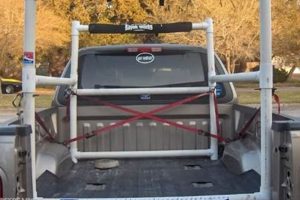
Creating a customized sleeping arrangement within the cargo area of a pickup truck for recreational purposes is an increasingly popular approach to vehicle-based travel. This method involves modifying or equipping the truck bed to serve as a comfortable and functional living space during camping excursions. Examples include building a platform for sleeping, installing a canopy or tent, and incorporating storage solutions for gear.
The appeal of this approach stems from its relative affordability and adaptability. It offers a balance between the cost and complexity of a dedicated recreational vehicle and the bare-bones simplicity of traditional tent camping. Furthermore, it allows individuals to access remote locations with relative ease and establish a comfortable campsite quickly. The historical context finds roots in the desire for increased mobility and self-sufficiency in outdoor pursuits.
The following sections will delve into the essential components of successful truck bed conversions, including structural considerations, weather protection strategies, and organization techniques to maximize space and comfort. These elements are critical for ensuring a safe, enjoyable, and practical camping experience.
Essential Guidance for Truck Bed Conversions
Optimizing the truck bed for camping requires careful planning and execution. The following guidelines provide critical considerations for a safe and comfortable experience.
Tip 1: Structural Integrity Assessment: Evaluate the truck bed’s load-bearing capacity and overall condition. Reinforce the bed if necessary, particularly when adding substantial weight from platforms or equipment. Consider rust prevention measures to maintain structural integrity over time.
Tip 2: Weather Protection Prioritization: Invest in a high-quality canopy, tent, or shell designed for truck bed use. Ensure adequate waterproofing and ventilation to manage condensation and prevent moisture damage. Proper sealing is essential for insulation and preventing drafts.
Tip 3: Optimized Space Utilization: Implement efficient storage solutions, such as drawers, bins, and overhead compartments. Maximize vertical space to minimize clutter and maintain a functional living area. Consider modular systems for flexible configuration.
Tip 4: Ventilation and Airflow Management: Prioritize adequate ventilation to prevent condensation build-up and maintain air quality. Install vents or utilize screened windows for cross-ventilation. Portable fans can further enhance airflow in warmer climates.
Tip 5: Power and Lighting Systems Integration: Incorporate a reliable power source, such as a deep-cycle battery or portable power station, to operate lighting and electronic devices. Utilize energy-efficient LED lighting to conserve power. Secure wiring and connections to prevent hazards.
Tip 6: Secure Cargo Management: Secure all camping gear and equipment to prevent shifting during transit. Utilize tie-down straps, cargo nets, or storage containers to maintain organization and safety. Distribute weight evenly within the truck bed.
Tip 7: Mattress and Bedding Selection: Choose a mattress specifically designed for truck bed camping, considering factors such as size, thickness, and comfort. Opt for bedding materials that are appropriate for the expected weather conditions. A comfortable sleeping arrangement is paramount.
Implementing these strategies will significantly enhance the practicality, safety, and overall enjoyment of truck bed camping. Prioritizing structural integrity, weather protection, and efficient organization will ensure a more comfortable and functional mobile campsite.
The subsequent sections will cover advanced customization options and safety protocols for more experienced individuals seeking to elevate their truck bed camping setup.
1. Platform construction
Platform construction is a foundational element of transforming a pickup truck bed into a habitable camping space. It provides a level, stable surface upon which to sleep and organize belongings, addressing the inherent unevenness and ribbed texture of the typical truck bed. The absence of a properly constructed platform can lead to discomfort, inefficient use of space, and potential damage to camping equipment. A well-designed platform maximizes usable area and separates occupants from the cold metal of the truck bed, thereby increasing comfort and facilitating organization. For example, a platform constructed from plywood supported by a simple wooden frame provides a cost-effective and straightforward solution for creating a level surface, while more elaborate designs may incorporate drawers or hinged sections for integrated storage.
The connection between platform construction and a successful truck bed camping setup is causal. A sturdy, well-designed platform contributes directly to improved sleep quality, increased storage capacity, and overall organization within the limited space. The dimensions of the platform should precisely match the truck bed’s internal dimensions, ensuring minimal wasted space. Common materials used include plywood, dimensional lumber, and occasionally lightweight metals like aluminum for weight reduction. Furthermore, considerations regarding weight distribution are crucial to prevent overloading the truck’s suspension and ensure safe handling. For instance, distributing heavier items closer to the truck’s cab helps maintain a balanced load.
In summary, platform construction is a critical aspect of effective truck bed transformations. It directly influences comfort, organization, and overall functionality. Challenges include accurate measurement, material selection, and weight management. Overcoming these challenges ensures that the finished platform contributes positively to the overall truck bed camping experience, facilitating comfortable and organized travel.
2. Weather protection
Weather protection represents a fundamental requirement for viable truck bed camping configurations. It directly addresses the inherent vulnerability of exposed truck beds to precipitation, temperature extremes, wind, and solar radiation. The absence of adequate weather protection renders the space uninhabitable under adverse conditions, negating the core benefits of mobile shelter. Weather protection measures, such as canopies, shells, and insulated covers, mitigate these environmental factors, thereby enabling comfortable and safe occupancy. For instance, a fully enclosed truck bed shell provides substantial protection from rain, snow, and wind, while also offering a degree of insulation against cold temperatures. Conversely, a simple canopy may offer sufficient shade from the sun but limited protection from precipitation.
The causal relationship between weather protection and a positive truck bed camping experience is direct and easily observable. Insufficient protection leads to discomfort, potential health risks (hypothermia, heatstroke), and damage to gear. Conversely, effective weather protection allows for camping in a wider range of environments and seasons, extending the usability and enjoyment of the setup. Examples include the use of insulated truck bed tents for winter camping in snowy regions, or the deployment of awnings to create shaded living spaces in hot, sunny climates. The selection of appropriate materials, such as waterproof fabrics, insulated panels, and UV-resistant coatings, is paramount in achieving effective weather protection. Practical applications extend to integrating ventilation systems to mitigate condensation build-up within enclosed spaces.
In summary, weather protection is not merely an optional add-on, but an essential element of any functional truck bed camping setup. It directly impacts comfort, safety, and the overall utility of the mobile shelter. Challenges include balancing cost, weight, and effectiveness when selecting weather protection solutions. Addressing these challenges through informed decision-making allows individuals to create truck bed camping configurations that are resilient to environmental variations, thereby enabling more versatile and enjoyable outdoor experiences.
3. Storage solutions
The availability and implementation of effective storage solutions represent a critical determinant of the practicality and overall success of vehicle-based camping endeavors. Within the confined space of a pickup truck bed, organized storage is not merely a convenience, but a necessity for maximizing living area, ensuring efficient access to essential gear, and maintaining safety during transit and occupancy. The absence of dedicated storage systems leads to clutter, restricted movement, and the potential for damage to equipment. Consider the scenario where camping supplies, cooking utensils, and personal belongings are strewn haphazardly across the truck bed. This impedes access to needed items, creates potential tripping hazards, and occupies valuable space that could otherwise be used for sleeping or relaxing. Adequate storage systems, conversely, promote a functional and organized living environment within the limited confines of the truck bed.
The correlation between well-designed storage solutions and a positive truck bed camping experience is demonstrably causal. Custom-built drawers, shelving units, and overhead compartments maximize vertical space and create designated areas for specific items. For example, constructing a pull-out drawer system beneath a sleeping platform provides concealed storage for clothing, cooking equipment, and tools, freeing up valuable surface area. Similarly, utilizing cargo nets or tie-down straps to secure loose items prevents shifting during travel, reducing the risk of damage and maintaining order within the truck bed. Practical application involves a careful evaluation of individual storage needs, the available space within the truck bed, and the weight limitations of the vehicle. Thoughtful planning and execution of storage solutions significantly contribute to the habitability and overall enjoyment of truck bed camping.
In summary, storage solutions are an indispensable component of truck bed camping. They directly influence the practicality, safety, and comfort of the experience. Challenges may include space constraints, weight considerations, and the need for durable, weather-resistant materials. Addressing these challenges through strategic design and implementation of appropriate storage systems transforms a cluttered truck bed into an organized and efficient mobile campsite, enhancing the overall utility and appeal of truck bed camping.
4. Power management
Power management is an indispensable element for successful and extended truck bed camping. This aspect encompasses the generation, storage, distribution, and efficient utilization of electrical energy within the mobile living space. It directly addresses the dependence on electricity for essential functionalities such as lighting, refrigeration, communication, and powering electronic devices. Without adequate power management, the practicality and comfort of truck bed camping are severely compromised. The absence of a reliable power source limits the ability to maintain safe food storage temperatures, communicate in emergencies, or even provide basic illumination during nighttime hours. This highlights the critical role of power management in enabling a functional and enjoyable experience. For example, consider a camper relying solely on a vehicle’s starting battery to power a refrigerator; this would likely result in a drained battery, leaving the vehicle unable to start. A dedicated power management system, however, mitigates this risk.
The correlation between effective power management and an enhanced truck bed camping experience is demonstrably causal. Implementing a robust power system allows for the seamless integration of various electrical appliances and devices, expanding the range of activities possible while camping. Solar panels, coupled with a charge controller and deep-cycle battery, can provide a renewable energy source for powering lights, charging electronic devices, and running small appliances such as fans or portable refrigerators. In addition, a power inverter converts the battery’s DC power into AC, enabling the use of standard household electronics. Careful consideration must be given to the power consumption of each device to ensure the system is adequately sized and that energy is used efficiently. For example, switching to LED lighting from traditional incandescent bulbs significantly reduces energy consumption, prolonging the battery’s usable life. Understanding these practical applications allows for a more efficient and sustainable truck bed camping experience.
In summary, power management is not merely a supplementary feature but an essential foundation for truck bed camping. It directly influences the comfort, safety, and overall sustainability of the setup. Challenges include balancing cost, space constraints, and energy demands when selecting power components. Addressing these challenges through informed selection and diligent management of power resources is paramount for creating a self-sufficient and enjoyable mobile camping experience. It makes truck bed camping easier.
5. Securing cargo
Safe transport of equipment and personal items is paramount within the context of truck bed camping. The act of securing cargo transcends simple tidiness; it is directly correlated with occupant safety, prevention of equipment damage, and vehicle handling stability. Unsecured cargo within a moving vehicle constitutes a significant hazard. Items can shift during braking, acceleration, or cornering, potentially impacting the driver or causing damage to the vehicle’s interior, including the truck bed itself. In the context of truck bed camping, where space is often at a premium and items may be stacked or positioned in unconventional ways, the risk of cargo displacement is amplified. The use of straps, nets, bins with secure lids, and strategically placed dividers is essential to mitigate these risks. Failure to properly secure cargo can result in items shifting during transit, leading to damage, injury, or even contributing to accidents.
Practical application involves a thorough assessment of the cargo’s weight, dimensions, and fragility. Heavy objects should be positioned low and close to the truck’s cab to minimize their impact on the vehicle’s center of gravity. Lighter, more fragile items require secure containment to prevent damage from impacts or abrasion. Straps and tie-downs must be appropriately rated for the weight they are intended to secure. Regular inspection of these securing devices is crucial, as wear and tear can compromise their effectiveness. For example, a worn ratchet strap may fail under tension, releasing its load and creating a dangerous situation. Additionally, cargo nets are useful for containing loose items, preventing them from becoming projectiles during sudden stops. Weight distribution is a key consideration. Overloading one side of the truck bed can negatively impact handling and stability, particularly on uneven terrain. A balanced load ensures safer and more predictable vehicle performance.
Securing cargo is an integral component of responsible truck bed camping. It demands careful planning and execution to ensure the safety of occupants, the preservation of equipment, and the maintenance of vehicle control. Overlooking this aspect can lead to preventable accidents and damage. Thus, diligence in cargo management is not merely a matter of convenience, but a fundamental prerequisite for safe and enjoyable truck bed camping experiences. Effective securing of cargo is a necessity.
Frequently Asked Questions
This section addresses common inquiries and concerns regarding the practice of converting a pickup truck bed into a camping setup, providing factual information for informed decision-making.
Question 1: Is it legal to sleep in a truck bed camper on public land?
Regulations vary significantly depending on location. It is imperative to consult local ordinances and land management agencies regarding permitted camping areas and restrictions on vehicle habitation.
Question 2: What are the primary safety considerations for truck bed camping?
Key safety concerns include carbon monoxide poisoning (requiring proper ventilation), secure cargo management (preventing shifting loads), and awareness of potential hazards related to wildlife and environmental conditions.
Question 3: How can condensation be minimized inside a truck bed camper?
Adequate ventilation is crucial. Utilizing vents, fans, and moisture-wicking materials helps to reduce condensation build-up, mitigating potential damage to equipment and maintaining a comfortable environment.
Question 4: What type of insurance coverage is required for a truck bed camper?
Standard auto insurance policies may not fully cover modifications and contents within a truck bed camper. Consulting with an insurance provider to determine appropriate coverage for modifications and personal property is recommended.
Question 5: What are the weight limitations for a truck bed camping setup?
Exceeding the truck’s Gross Vehicle Weight Rating (GVWR) can compromise handling, braking, and overall safety. It is critical to accurately calculate the weight of all additions, including the platform, camping gear, and occupants.
Question 6: What essential tools are needed for constructing a truck bed camping platform?
Commonly required tools include a circular saw, drill/driver, measuring tape, level, safety glasses, and appropriate fasteners. Specific tool needs vary depending on the complexity of the platform design and materials used.
In summary, successful truck bed camping requires careful planning, adherence to safety guidelines, and a thorough understanding of local regulations. Addressing these concerns proactively helps to ensure a safe and enjoyable experience.
The subsequent section will delve into advanced customization strategies for individuals seeking to refine their truck bed camping configurations beyond the basics.
diy truck bed camping
This exploration has elucidated essential aspects of the practice, encompassing construction techniques, weather protection protocols, efficient space utilization, power management strategies, and cargo securing methods. A comprehensive understanding of these elements is crucial for ensuring a safe and functional experience.
The successful implementation of these principles depends on careful planning, adherence to safety guidelines, and a thorough assessment of individual needs and environmental conditions. Prioritizing these considerations will allow individuals to maximize the benefits while mitigating potential risks, fostering a responsible and sustainable approach to mobile outdoor recreation.