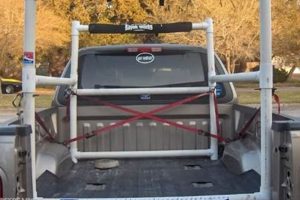
Constructing a customized bicycle carrier within a truck’s cargo area involves designing and building a structure to securely transport bicycles. This process usually entails selecting appropriate materials, such as wood or metal, and employing carpentry or welding skills to create a frame or mounting system that prevents bikes from shifting or being damaged during transit. For example, individuals might construct a wooden rack with slots to hold bicycle front wheels, or fabricate a metal framework that attaches to the truck bed rails and utilizes straps or clamps to stabilize the bicycles.
The advantage of crafting a personal carrier lies in the potential cost savings compared to purchasing commercially available options. The ability to tailor the design to specific truck bed dimensions and the quantity and types of bicycles to be carried offers further benefit. Historically, individuals have resorted to self-fabrication due to the limited availability of specialized commercial products or as a way to meet unique transportation needs, often leveraging readily available resources and skills.
Understanding the various designs, materials, and construction techniques is crucial before embarking on the process. Safety considerations, including secure attachment methods and protection of the bicycles, must be prioritized. The following sections will detail specific methods, material options, and essential safety measures to ensure a successful and safe outcome.
Tips for Fabricating a Truck Bed Bicycle Carrier
The creation of a secure and functional bicycle carrier within a pickup truck bed demands careful planning and execution. The following tips provide guidance for a successful project.
Tip 1: Precise Measurement of Truck Bed Dimensions. Prior to any material procurement or construction, accurate measurements of the truck bed’s length, width, and depth are critical. These measurements will dictate the overall size and configuration of the rack, ensuring a snug and secure fit.
Tip 2: Material Selection Based on Durability and Weather Resistance. The choice of materials, whether wood or metal, must consider the carrier’s exposure to the elements. Pressure-treated lumber or powder-coated steel offer enhanced resistance to moisture and corrosion, prolonging the lifespan of the structure.
Tip 3: Prioritization of Bicycle Security. Incorporate features that firmly secure the bicycles to the rack. Wheel slots, fork mounts, and tie-down points, coupled with appropriate straps or clamps, prevent movement and potential damage during transit.
Tip 4: Design Considerations for Ease of Use. The design should facilitate easy loading and unloading of bicycles. Consider ramp systems for heavier bikes or incorporating tilting mechanisms for simplified access.
Tip 5: Adequate Clearance for Bicycles. Ensure sufficient vertical clearance between the bicycles and the truck bed cover (if applicable) or any overhanging structures. Inadequate clearance can result in damage to the bicycles.
Tip 6: Thorough Inspection of Fasteners and Connections. Regularly inspect all bolts, screws, welds, and connections for signs of loosening or corrosion. Promptly address any issues to maintain structural integrity.
Tip 7: Consideration of Additional Storage. If desired, incorporate storage compartments for tools, spare parts, or other cycling accessories into the rack’s design. This maximizes the utility of the available space.
Adhering to these guidelines promotes the creation of a robust, secure, and user-friendly bicycle carrying solution tailored to the specific requirements of the truck and the bicycles being transported.
The subsequent sections will explore specific carrier designs and provide detailed instructions for their construction.
1. Material Strength
Material strength is a paramount consideration in the construction of a truck bed bicycle carrier. The selection of materials with inadequate strength can lead to structural failure, resulting in damage to the bicycles being transported or, more seriously, posing a safety hazard to other vehicles on the road. The carrier is subjected to dynamic forces during transit, including acceleration, deceleration, and vibration. Insufficient material strength compromises the carrier’s capacity to withstand these forces. As a result, the structural integrity of the carrier will gradually weaken and potentially collapse. A real-life example of this is the use of thin-gauge, non-reinforced steel, which can easily bend or break under the weight of multiple bicycles, especially on uneven roads.
Conversely, employing materials with sufficient yield strength and tensile strength, such as thick-gauge steel or reinforced wood, enhances the carrier’s capacity to withstand stress and prevent deformation. This translates to a more durable and reliable carrier, capable of safely transporting bicycles under a wider range of conditions. Furthermore, the type of joinery or welding used is equally crucial. Weak welds or poorly constructed joints can act as failure points, even if the base material possesses adequate strength. A carrier constructed with robust materials and sound fabrication techniques provides a significant increase in safety and longevity, protecting both the bicycles and other drivers.
In summation, the selection of appropriately strong materials is not merely a design choice but a safety imperative. Skimping on material quality to save costs can lead to catastrophic consequences. Prioritizing material strength, coupled with proper fabrication techniques, is essential to ensuring a safe and durable bicycle carrier capable of withstanding the rigors of transportation. The additional cost associated with stronger materials is offset by the reduced risk of damage or accidents and the increased lifespan of the carrier.
2. Bicycle Security
Bicycle security is a crucial design parameter in the context of truck bed bicycle carriers. The primary function of such a carrier is the safe and stable transportation of bicycles. Inadequate security measures directly contribute to the risk of bicycle damage, theft, or even complete loss during transit. The design of a bicycle rack within a truck bed must therefore prioritize securing the bicycles against movement and external threats. As a consequence, improperly secured bicycles can shift, collide with each other or the truck bed, and potentially be ejected from the vehicle during sudden stops or sharp turns. A practical example involves using only bungee cords to secure expensive mountain bikes; these are easily cut by thieves and do not provide adequate resistance to movement, particularly on rough terrain. This creates an environment susceptible to both damage and theft.
Effective bicycle security in a truck bed carrier encompasses several aspects: robust mounting mechanisms, secure locking systems, and protection from the elements. Fork mounts, wheel straps, and frame clamps are common features designed to prevent movement. Integrated locking mechanisms can deter opportunistic theft, especially during brief stops. Weather protection, such as covers or positioning within the truck bed, minimizes exposure to rain, snow, and UV radiation, preventing corrosion and degradation of bicycle components. The absence of these security features renders the bicycles vulnerable, increasing the likelihood of damage or loss. Consider, for instance, a carrier that lacks any locking mechanism, allowing anyone to easily remove the bicycles while the truck is unattended, even for a short period.
In conclusion, bicycle security is not an optional accessory but an integral component of a well-designed truck bed bicycle carrier. The implementation of effective security measures directly translates to reduced risk of damage, theft, and loss, ensuring that the bicycles arrive at their destination in the same condition as when they were loaded. Failure to prioritize security undermines the fundamental purpose of the carrier, rendering it a potentially hazardous and unreliable method of bicycle transportation. Investing in robust security features is a necessary expenditure to protect valuable bicycles and ensure peace of mind during transport.
3. Truck Bed Compatibility
Truck bed compatibility is a foundational element determining the success and safety of any bicycle carrier system designed for installation within a pickup truck. The specific dimensions, features, and inherent structural limitations of a given truck bed directly influence the design and fabrication of a suitable bicycle carrier. A carrier constructed without regard for these factors may prove unstable, prone to failure, or simply incompatible with the intended vehicle. For example, a carrier designed for a full-size, long-bed truck will not fit correctly, and may even be unusable, in a mid-size truck with a short bed. This mismatch creates instability and compromises the carrier’s intended function of securing the bicycles during transport.
The attachment points and overall structural integrity of the truck bed also necessitate careful consideration. Some truck beds feature pre-existing rails or mounting points that can be utilized for secure attachment of the bicycle carrier. Conversely, others may require the installation of aftermarket mounting hardware or necessitate a design that distributes the load across a larger surface area to prevent damage to the truck bed. In situations where the carrier relies on clamping to the bed rails, ensuring compatibility with the rail profile and material is crucial to avoid slippage or damage. Failure to account for these variations can lead to an improperly secured carrier, posing a significant risk to the bicycles being transported and other vehicles on the road.
In summary, truck bed compatibility is not merely a desirable feature but an essential prerequisite for safe and effective bicycle transportation using a DIY carrier system. Careful measurement, analysis of truck bed features, and selection of appropriate materials and mounting methods are critical steps in ensuring a secure and reliable installation. Overlooking these aspects can result in a carrier that is unstable, prone to failure, and ultimately unsuitable for its intended purpose, highlighting the practical significance of understanding and addressing compatibility issues in all bicycle carrier designs.
4. Construction Skills
The realization of a truck bed bicycle carrier is fundamentally contingent upon the builder’s construction skills. These skills encompass a range of competencies, including material selection, cutting, joining, and finishing. A deficiency in any of these areas directly affects the structural integrity, functionality, and overall safety of the finished product. For instance, an individual lacking proficiency in welding may produce weak joints, leading to potential failure points under stress. Similarly, inaccurate cutting of materials can result in misalignment and instability of the carrier frame. Therefore, the level of construction skills serves as a direct determinant of the feasibility and success of constructing a durable and reliable carrier.
The application of specific construction skills is evident in various stages of the process. Measuring and marking materials requires precision to ensure accurate dimensions and proper fit within the truck bed. Assembling the carrier frame demands expertise in joining techniques, whether through welding, bolting, or carpentry. Securing the bicycle mounting points necessitates careful planning and execution to prevent movement or damage during transport. Furthermore, applying protective coatings or finishes requires knowledge of surface preparation and application techniques to enhance durability and resistance to corrosion. An individual with inadequate skills in these areas is likely to produce a substandard carrier, potentially compromising the safety of the bicycles and other vehicles on the road.
In summary, construction skills are not merely a supplementary aspect but an indispensable component in the undertaking of a truck bed bicycle carrier project. Proficiency in material selection, cutting, joining, and finishing techniques directly influences the structural integrity, functionality, and safety of the carrier. A deficiency in these skills increases the risk of failure and compromises the ability to transport bicycles safely. Therefore, assessing and developing the necessary construction skills is crucial before embarking on such a project to ensure a successful and reliable outcome.
5. Cost-Effectiveness
Cost-effectiveness is a primary driver for individuals considering a do-it-yourself approach to constructing a bicycle carrier for a pickup truck bed. The potential for significant savings compared to commercially available options makes this a compelling alternative, contingent upon available skills and resources.
- Material Acquisition Strategies
Obtaining materials at reduced costs is fundamental to enhancing cost-effectiveness. This can involve sourcing reclaimed lumber, purchasing surplus metal, or utilizing existing tools and hardware. For example, repurposing wood from pallets or scaffolding can significantly lower material expenses compared to purchasing new lumber. The application of such strategies directly impacts the overall project cost.
- Labor and Time Investment Analysis
A thorough assessment of the time and labor required is essential for evaluating true cost-effectiveness. While direct monetary expenses may be reduced, the value of the time invested in design, construction, and finishing should not be disregarded. An individual’s hourly wage or the opportunity cost of spending time on the project rather than engaging in paid work must be factored into the overall cost analysis. Completing the same task in less time would be more cost effective.
- Tooling and Equipment Considerations
The availability of necessary tools and equipment significantly influences the initial investment. If specialized tools, such as welding equipment or power saws, are not already owned, their purchase or rental represents a substantial upfront expense. This expense must be amortized over the lifespan of the bicycle carrier to accurately determine its overall cost-effectiveness. Cost effectiveness can be measured in terms of how often you need to utilize said tool.
- Long-Term Maintenance and Durability
The long-term maintenance requirements and overall durability of the self-constructed carrier impact its ultimate cost-effectiveness. Utilizing inferior materials or construction techniques may result in a lower initial cost but could necessitate more frequent repairs or premature replacement, thereby diminishing the long-term savings. Therefore, investing in durable materials and sound construction methods is crucial for maximizing long-term cost-effectiveness.
In summary, the pursuit of cost-effectiveness in a do-it-yourself bicycle carrier project demands a comprehensive analysis encompassing material acquisition, labor investment, tooling requirements, and long-term maintenance considerations. The potential for significant savings exists, but a thorough evaluation is essential to ensure that the project truly represents a cost-effective solution compared to commercially available alternatives. It is an important component of pickup bed bike rack diy.
6. Design Simplicity
Design simplicity, in the context of a bicycle carrier for a pickup truck bed, refers to the deliberate effort to minimize complexity in the carrier’s design and construction. This approach directly impacts the ease of fabrication, the reliability of the finished product, and the overall cost-effectiveness of the project.
- Reduced Material Requirements
Simpler designs often require fewer individual components and less material overall. A minimalist approach, focusing on essential structural elements, can significantly reduce material costs and the time required for cutting and assembly. For instance, a basic rack utilizing vertical supports and horizontal crossbars may require less material than a complex, multi-tiered system. The implications include lower project costs and reduced waste.
- Simplified Construction Processes
Less complex designs translate directly into simplified construction processes. Fewer steps, easier cuts, and straightforward assembly methods reduce the skill level required and the potential for errors. A design utilizing readily available materials and simple joinery techniques, such as bolting or screwing, is inherently easier to construct than one requiring welding or intricate carpentry. The reduced complexity also minimizes the need for specialized tools or equipment, further enhancing accessibility.
- Enhanced Structural Reliability
Paradoxically, simpler designs can often lead to enhanced structural reliability. Fewer components and simpler connections reduce the number of potential failure points. A straightforward design, thoroughly engineered and constructed with robust materials, may prove more durable and resistant to stress than a complex design with numerous intricate joints and connections. The reduced complexity also facilitates easier inspection and maintenance, allowing for prompt identification and correction of potential issues.
- Improved Ease of Use
Design simplicity extends beyond the construction phase to encompass the operational aspects of the bicycle carrier. A straightforward design that facilitates easy loading and unloading of bicycles, with minimal adjustments or intricate procedures, enhances the user experience. For example, a rack with readily accessible wheel slots and simple tie-down points is more convenient to use than a complex system requiring intricate strapping or adjustment mechanisms. Improved ease of use translates directly to increased practicality and user satisfaction.
The advantages conferred by design simplicity in the construction of a bicycle carrier are manifold, ranging from reduced material costs and simplified construction processes to enhanced structural reliability and improved ease of use. By prioritizing a minimalist approach and focusing on essential functionality, individuals can create a safe, effective, and cost-effective solution for transporting bicycles within a pickup truck bed. It is an important design component for pickup bed bike rack diy.
7. Weather Resistance
Weather resistance is a critical performance characteristic for any bicycle carrier designed for use in a pickup truck bed. These carriers are inherently exposed to environmental elements, potentially leading to degradation, corrosion, or structural failure if not properly addressed during design and construction. The ability to withstand prolonged exposure to moisture, sunlight, and temperature fluctuations directly influences the longevity and reliability of the carrier.
- Material Selection and Corrosion Prevention
The choice of materials significantly impacts the carrier’s resistance to corrosion and degradation. Untreated steel, for example, is highly susceptible to rust, which can weaken structural components and compromise the carrier’s integrity. Aluminum offers superior corrosion resistance, but may require protective coatings to prevent oxidation. Wood, if used, necessitates pressure treatment or sealing to prevent rot and insect infestation. The careful selection of materials and the application of appropriate protective coatings are fundamental to mitigating the effects of weather. The decision to use powder-coated steel instead of untreated steel is an example.
- Joint Protection and Water Ingress Mitigation
Joints and connections within the carrier are particularly vulnerable to water ingress, which can accelerate corrosion and weaken structural integrity. Welding should be performed meticulously to create watertight seals. Bolted connections require the use of corrosion-resistant hardware and may benefit from sealant application to prevent moisture from penetrating the joints. Careful attention to joint design and protection is essential to preventing premature failure. For instance, if one were to fail to use sealant at the bolted connections, water can easily enter into that point, and speed up the corrosion.
- UV Radiation Resistance and Material Degradation
Prolonged exposure to ultraviolet (UV) radiation from sunlight can cause degradation of certain materials, particularly plastics and certain types of wood. UV-resistant coatings or materials should be employed to minimize this effect. UV degradation can lead to cracking, fading, and embrittlement of components, ultimately compromising the carrier’s structural integrity. An example would be a carrier design with Nylon straps, they will degrade very fast in the sun.
- Drainage and Ventilation Considerations
Proper drainage and ventilation are essential for preventing the accumulation of moisture within the carrier structure. Designing the carrier to allow water to drain freely and to promote air circulation can significantly reduce the risk of corrosion and rot. Enclosed areas should be avoided to prevent moisture from becoming trapped. The use of drainage holes in the carriers design is a good example.
The integration of weather-resistant features into the design and construction of a DIY bicycle carrier is not merely a cosmetic consideration but a critical factor determining its long-term performance and safety. A well-executed design that addresses material selection, joint protection, UV radiation resistance, and drainage considerations will ensure that the carrier remains reliable and functional for an extended period, providing safe and secure transportation for bicycles even under adverse weather conditions. It is an important component of pickup bed bike rack diy.
Frequently Asked Questions
This section addresses common inquiries regarding the design, construction, and safety aspects of creating a customized bicycle carrier for a pickup truck bed.
Question 1: What are the primary safety considerations when constructing a bicycle carrier?
Securing bicycles against movement during transit is paramount. The carrier must prevent shifting, tipping, or ejection of bicycles, especially during abrupt maneuvers or collisions. Weight distribution should be even to maintain vehicle stability, and sharp edges or protrusions that could cause injury should be avoided. All materials and construction methods must adhere to recognized safety standards.
Question 2: What materials are most suitable for building a durable bicycle carrier?
Pressure-treated lumber offers weather resistance and structural integrity for wooden carriers. Steel provides superior strength and can be welded for robust joints. Aluminum offers a lightweight, corrosion-resistant option, though welding requires specialized skills. Material selection should consider weight, strength, weather resistance, and ease of fabrication.
Question 3: How can bicycle carriers be secured to the truck bed to prevent theft?
Integrated locking mechanisms, such as cable locks or locking fork mounts, can deter opportunistic theft. Securing the carrier itself to the truck bed using tamper-resistant hardware and lockable fasteners enhances security. Parking in well-lit areas and avoiding prolonged unattended storage of bicycles in the carrier are also recommended.
Question 4: What are the key dimensions to consider when designing the carrier?
The width and length of the truck bed dictate the maximum carrier size. Bicycle wheelbase measurements determine the spacing between mounting points. Vertical clearance is essential to prevent contact between bicycles and the truck bed cover or roof. Accurate measurements ensure proper fit and prevent damage to bicycles or the truck.
Question 5: How can weather resistance be improved on a self-built bicycle carrier?
Applying waterproof sealants or paints to wooden carriers protects against moisture damage. Powder coating steel components enhances corrosion resistance. Covering the carrier with a tarp or waterproof cover during inclement weather provides additional protection. Regular inspection and maintenance are essential for identifying and addressing potential issues.
Question 6: What are the legal considerations when transporting bicycles in a truck bed?
Local regulations may dictate requirements for securing cargo in truck beds. Ensuring that bicycles are securely fastened and do not obstruct the driver’s vision is generally required. Exceeding the truck’s weight capacity or improperly distributing the load can result in fines or penalties. Familiarizing oneself with applicable laws is crucial for legal compliance.
The importance of safety and compliance cannot be overstated. When constructing a bicycle carrier, prioritizing these will ensure a reliable and legal operation.
The subsequent section will elaborate on different carrier designs and construction methods.
Conclusion
This exploration of “pickup bed bike rack diy” has detailed the multifaceted considerations essential for successful execution. Material selection, structural integrity, bicycle security, truck bed compatibility, construction skills, cost-effectiveness, design simplicity, and weather resistance represent critical parameters demanding careful attention. These considerations serve as the bedrock upon which a safe, functional, and durable bicycle carrier is built.
The information presented provides a comprehensive foundation for individuals contemplating the construction of a customized bicycle transportation solution. Adherence to these principles facilitates the creation of a practical and economical alternative to commercially available options, while prioritizing the safety of both the bicycles and the operator.