The construction of a bed frame utilizing reclaimed wooden shipping platforms, undertaken as a do-it-yourself project, represents a popular approach to affordable and customized furniture creation. This method typically involves sourcing pallets, preparing them through cleaning and sanding, and assembling them into a platform suitable for supporting a mattress. The resultant structure offers a low-profile aesthetic and can be modified to incorporate features such as headboards or under-bed storage.
The appeal of this construction lies in its cost-effectiveness, sustainability, and potential for personalization. Utilizing salvaged materials reduces waste and provides an alternative to purchasing new furniture. The modular nature of pallets allows for flexible design options, catering to various room sizes and style preferences. Historically, the repurposing of readily available materials for essential household items has been a common practice, reflecting resourcefulness and adaptability.
The subsequent sections will delve into the practical considerations involved in this construction, encompassing material selection, safety precautions, assembly techniques, and finishing options. The goal is to provide a clear and actionable guide for individuals interested in undertaking this furniture-building endeavor.
Essential Considerations for Pallet Bed Construction
The successful construction of a bed frame using reclaimed wooden shipping platforms requires careful planning and execution. The following tips offer guidance to ensure both structural integrity and aesthetic appeal.
Tip 1: Source Pallets Responsibly: Prioritize heat-treated (HT) pallets over chemically treated (MB) pallets, which are marked with codes accordingly. Avoid pallets with stains or signs of spills, which could indicate hazardous materials.
Tip 2: Thoroughly Inspect and Prepare Pallets: Carefully examine each pallet for damage, including splinters, protruding nails, and rot. Sand all surfaces to eliminate roughness and potential hazards. Cleaning with a suitable disinfectant is crucial before beginning the project.
Tip 3: Prioritize Structural Integrity: Reinforce joints with additional screws or brackets to ensure stability, particularly if the bed will support significant weight. Consider the spacing between pallet boards to provide adequate mattress support and prevent sagging.
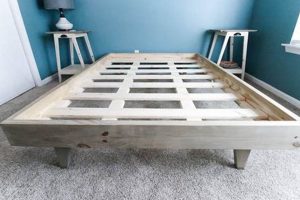
Tip 4: Ensure Proper Ventilation: When designing the bed frame, consider adequate airflow beneath the mattress to prevent moisture buildup and potential mold growth. Incorporating spaces or gaps between pallets can facilitate ventilation.
Tip 5: Apply a Protective Finish: Seal the wood with a suitable finish, such as varnish or sealant, to protect against moisture, dirt, and wear. Select a non-toxic finish to minimize off-gassing and promote a healthy sleep environment.
Tip 6: Consider Mattress Size and Dimensions: Accurately measure the mattress dimensions to ensure the pallet bed frame is appropriately sized. Allow for a slight overhang or recessed edge to prevent the mattress from shifting during use.
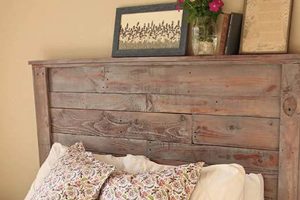
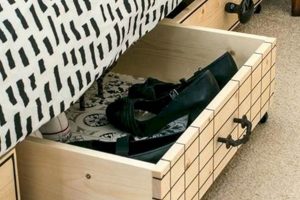
Tip 7: Integrate Headboard and Storage: Pallets can be adapted to create a headboard or under-bed storage. When adding these features, ensure they are securely attached and do not compromise the structural integrity of the frame.
Adhering to these recommendations will enhance the durability, safety, and overall aesthetic of the pallet bed. The process allows for customization while addressing potential risks.
The next phase involves exploring the design options and specific construction techniques that can be employed to tailor the pallet bed to individual preferences.
1. Sourcing

The acquisition of reclaimed wooden shipping platforms, or “sourcing,” forms a foundational element of a pallet bed do-it-yourself project. The origin and type of pallets directly influence the safety, durability, and aesthetic quality of the final product. For instance, the use of chemically treated pallets can introduce harmful substances into the sleeping environment, rendering the bed unsuitable for use. Conversely, sourcing heat-treated pallets mitigates this risk, presenting a safer alternative. Improper sourcing can lead to structural instability. Selecting damaged or rotted pallets compromises the bed’s weight-bearing capacity and overall lifespan, highlighting the detrimental impact of poor material selection. Consider a scenario where pallets are sourced from an industrial site known for handling hazardous materials; the residual contamination could pose a health risk, negating the cost savings associated with the do-it-yourself approach.
Furthermore, the dimensions and consistency of sourced pallets affect the design and assembly process. Variations in pallet size necessitate additional cutting and modification, potentially increasing the complexity and time investment of the project. A practical example involves attempting to construct a queen-sized pallet bed using predominantly small or irregularly sized pallets; the resulting structure may require significant improvisation and may not achieve the desired aesthetic or functional outcome. Reputable sources, such as smaller local businesses, may be able to supply higher quality pallets that are consistently sized.
In summary, the sourcing phase of a pallet bed project warrants meticulous attention due to its direct impact on safety, structural integrity, and design flexibility. Challenges in sourcing suitable pallets may necessitate exploration of alternative materials or project modifications. Strategic sourcing is therefore vital to the project’s ultimate success and aligns with the principles of sustainable and responsible furniture construction.
2. Preparation
The “preparation” phase is critical within the domain of pallet bed construction. The steps taken prior to assembly directly influence the resulting bed’s structural integrity, aesthetic quality, and long-term durability. Inadequate preparation can manifest as instability, splintering, or a diminished lifespan. For instance, failure to properly sand pallet surfaces can lead to discomfort and potential injury, while neglecting to clean pallets may introduce contaminants into the sleeping environment. Consequently, a thorough preparation process acts as a preventative measure, mitigating risks associated with using reclaimed materials.
Effective preparation encompasses several distinct processes. Initial cleaning removes dirt, debris, and potential biological contaminants. This often involves scrubbing with a suitable cleaning solution and allowing the pallets to dry completely. Subsequent sanding eliminates rough edges and splinters, creating a smoother, safer surface. Depending on the intended aesthetic, additional steps may include filling gaps or imperfections with wood filler and applying a primer to prepare the wood for painting or staining. A real-world example involves a project where the pallets were inadequately sanded; the resulting bed exhibited a rough texture, leading to discomfort and dissatisfaction with the final product. Proper preparation ensures ease of use, safety, and enhances the final aesthetic outcome.
In conclusion, the level of “preparation” undertaken directly correlates to the quality and longevity of a pallet bed. The attention dedicated to cleaning, sanding, and addressing imperfections determines the overall success of the project. Overlooking this phase compromises the bed’s structural integrity and aesthetic appeal. Therefore, meticulous preparation is a non-negotiable aspect of successful pallet bed creation, aligning with the principles of responsible and sustainable DIY practices.
3. Assembly

The stage of “assembly” represents the critical juncture where individual prepared pallet components are united to form the functional structure of a pallet bed. The techniques employed during this phase dictate the bed’s stability, load-bearing capacity, and overall longevity. A poorly executed assembly process can lead to a structurally unsound bed, posing potential safety hazards and reducing the lifespan of the furniture.
- Fastening Techniques and Hardware Selection
The choice of fasteners (screws, bolts, nails) and their application method significantly impacts the strength of the connections between pallets. Screws generally offer superior holding power compared to nails, particularly when dealing with the potentially uneven and weathered wood of reclaimed pallets. Pre-drilling pilot holes is recommended to prevent splitting the wood during screw insertion. Inadequate fastening can result in loose joints and structural instability, especially under the weight of a mattress and occupants.
- Alignment and Leveling
Ensuring proper alignment and leveling during assembly is crucial for a stable and comfortable bed. Misaligned pallets can create an uneven sleeping surface, leading to discomfort and potential back problems. The use of a level is essential to verify that the assembled frame is horizontally and vertically aligned. Shims may be necessary to compensate for variations in pallet thickness or uneven floor surfaces.
- Structural Reinforcement
Depending on the intended use and the condition of the pallets, structural reinforcement may be necessary. This can involve adding additional support beams or brackets to strengthen the joints between pallets. Corner braces are particularly effective in preventing racking and maintaining the overall squareness of the bed frame. Reinforcement is especially important for larger beds or when using pallets with pre-existing damage.
- Safety Considerations During Assembly
Assembly often involves power tools and heavy materials, necessitating strict adherence to safety protocols. Wearing appropriate safety gear, such as eye protection and gloves, is essential. Securely clamping pallets during drilling or screwing operations prevents movement and potential injury. It is also crucial to be aware of the potential for splinters and protruding nails when handling reclaimed pallets.
The successful execution of “assembly” hinges on a thorough understanding of these interrelated components. The application of appropriate techniques and attention to safety considerations are paramount to creating a durable, safe, and aesthetically pleasing platform bed that integrates well into “pallet bed diy” principles.
4. Reinforcement

The structural integrity of a pallet bed is directly contingent upon effective reinforcement techniques. Reinforcement, in the context of do-it-yourself pallet bed construction, refers to the methods employed to enhance the load-bearing capacity and stability of the pallet structure. The inherent nature of reclaimed wooden pallets presents certain challenges: variations in wood density, pre-existing damage, and inconsistent dimensions can compromise the overall strength of the bed frame. Consequently, reinforcement becomes an indispensable element in ensuring the bed’s long-term durability and safety. The absence of adequate reinforcement can lead to sagging, joint failure, and eventual collapse, rendering the bed unusable and potentially causing injury. As a result, proper reinforcement techniques are essential to the success of any pallet bed DIY endeavor.
Common reinforcement strategies include the strategic placement of additional support beams beneath the pallet platform. These beams, often constructed from lumber or additional pallet sections, distribute the weight of the mattress and occupants more evenly, mitigating stress on individual pallets. Furthermore, metal brackets and corner braces are frequently used to strengthen the joints between pallets, preventing racking and maintaining the overall squareness of the frame. The choice of reinforcement method is often dictated by the size and design of the bed, as well as the condition of the pallets themselves. For example, a king-sized pallet bed constructed from weathered pallets would necessitate more extensive reinforcement than a twin-sized bed made from newer, more robust pallets.
In conclusion, reinforcement serves as a critical intervention in the construction of pallet beds, compensating for the inherent limitations of reclaimed materials. Effective reinforcement strategies enhance structural stability, prolong the lifespan of the bed, and ensure the safety of its users. The implementation of appropriate reinforcement techniques transforms a collection of repurposed pallets into a functional and reliable piece of furniture. The adherence to sound reinforcement principles remains crucial within the broader context of responsible and sustainable DIY practices.
5. Finishing

The “finishing” stage of pallet bed DIY extends beyond mere aesthetics, representing a critical process that directly impacts the longevity, safety, and overall appeal of the constructed bed. The application of appropriate finishes serves to protect the wood, enhance its natural beauty, and address potential health concerns associated with reclaimed materials.
- Protective Sealants and Their Role
The application of sealants, such as varnish, polyurethane, or lacquer, forms a protective barrier against moisture, dirt, and wear. This barrier prevents the absorption of liquids, which can lead to warping, rotting, and the growth of mold or mildew. For example, a sealant applied to a pallet bed exposed to high humidity levels will significantly prolong its lifespan by preventing moisture-related damage. The selection of an appropriate sealant depends on the desired level of durability and the intended use of the bed.
- Aesthetic Enhancement Through Staining and Painting
Staining and painting offer opportunities to customize the appearance of the pallet bed, allowing it to complement the existing dcor of the room. Stains penetrate the wood, highlighting its natural grain and adding depth of color, while paints provide a more opaque finish, concealing the wood’s texture and allowing for a wider range of color options. Consider a scenario where a pallet bed is stained to match existing furniture; the stain not only enhances the bed’s aesthetic appeal but also integrates it seamlessly into the room’s design scheme.
- Addressing Safety Concerns with Non-Toxic Finishes
Given that pallets are often reclaimed from industrial settings, they may contain residual chemicals or contaminants. The use of non-toxic finishes, such as water-based paints and sealants, minimizes the risk of exposure to harmful substances. These finishes are formulated to release minimal volatile organic compounds (VOCs), promoting a healthier sleeping environment. Selecting non-toxic finishes is particularly important for individuals with allergies or sensitivities.
- Surface Preparation for Optimal Finish Adhesion
Proper surface preparation, including sanding and cleaning, is crucial for ensuring optimal adhesion of the chosen finish. Sanding creates a smooth surface, removing imperfections and allowing the finish to penetrate the wood evenly. Cleaning removes dirt, grease, and other contaminants that can interfere with adhesion. A pallet bed that has been thoroughly sanded and cleaned will exhibit a more uniform and durable finish.
In summation, the “finishing” stage is essential to the transformation of raw pallets into a safe and aesthetically pleasing bed frame. The strategic application of sealants, stains, and paints, coupled with careful surface preparation, not only enhances the visual appeal of the bed but also extends its lifespan and promotes a healthier sleeping environment, reinforcing the importance of considering finishing details within a “pallet bed diy” approach.
6. Customization
The intrinsic connection between customization and do-it-yourself pallet bed construction arises from the inherent adaptability of pallet-based designs. Customization, in this context, refers to the modification of the bed frame beyond its basic structural form to suit individual needs and aesthetic preferences. The use of reclaimed pallets as a foundational material inherently fosters customization due to their modular nature and the potential for creative manipulation. Standard bed frames often offer limited customization options, whereas the pallet medium allows for adjustments in height, width, length, and the incorporation of supplemental features. For example, a low-profile bed frame can be constructed by utilizing a single layer of pallets, while a taller frame with integrated storage can be achieved by stacking multiple layers. This variability directly addresses the limitations of standardized furniture designs, promoting a tailored solution that meets specific spatial requirements and functional desires. The cause is the desire for a bed tailored to individual needs and preferences, and the effect is the transformative potential inherent in the raw materials of pallets.
Real-world examples illustrate the practical significance of customization in pallet bed projects. The addition of a headboard, constructed from repurposed pallet wood, provides back support and a visual focal point. Integrating under-bed storage solutions, such as drawers or open shelving, maximizes space utilization in smaller living areas. The application of custom paint colors, stains, or decorative elements reflects personal style and complements the room’s aesthetic. A deeper understanding allows for increased function, better fits to one’s spaces, more personalized expression, and a sustainable DIY project. The importance of the interplay of customization and “pallet bed diy” lies in the potential to create a unique piece, adapted to individual needs and preferences.
In summary, customization forms a cornerstone of pallet bed do-it-yourself projects, empowering individuals to create furniture that aligns with their specific requirements and aesthetic visions. While challenges may arise in achieving precise dimensions or complex designs, the benefits of customization, including space optimization, personalized style, and cost-effectiveness, outweigh the potential difficulties. This customization potential reinforces the attractiveness of pallet bed construction as a viable alternative to purchasing conventional furniture. A customizable approach, moreover, underscores the potential for adaptive reuse of materials within a sustainable design framework.
7. Ventilation
The integration of adequate airflow is paramount to the longevity and hygiene of a pallet bed constructed via do-it-yourself methods. Due to the proximity of the bed frame to the floor and the potential for moisture accumulation, ventilation directly impacts the risk of mold growth, mattress degradation, and overall air quality within the sleeping environment.
- Air Circulation and Mattress Health
The absence of sufficient air circulation beneath a mattress resting on a pallet bed can trap moisture emanating from perspiration and ambient humidity. This trapped moisture creates an environment conducive to the growth of mold and mildew, which can compromise the integrity of the mattress and pose health risks to occupants. Adequate ventilation mitigates this risk by allowing moisture to evaporate, thereby maintaining a drier and healthier sleeping surface. For example, a pallet bed constructed without gaps between the pallets and with minimal space between the frame and the floor is likely to experience poor air circulation and increased moisture accumulation.
- Pallet Spacing and Design Considerations
The design of the pallet bed frame directly influences the effectiveness of ventilation. Incorporating spaces between the pallets allows for air to circulate freely beneath the mattress. Raising the bed frame off the floor, even slightly, further enhances airflow. The specific design should consider the climate and typical humidity levels of the room in which the bed will be located. A pallet bed in a humid environment necessitates greater emphasis on ventilation than one in a dry climate.
- Material Selection and Breathability
The choice of mattress and bedding materials also impacts ventilation. Breathable materials, such as cotton or linen, allow for greater air exchange and reduce moisture buildup compared to synthetic materials. Selecting a mattress with built-in ventilation channels can further enhance airflow. The combination of a well-ventilated pallet bed frame and breathable bedding materials creates a more comfortable and hygienic sleeping environment.
- Preventing Condensation and Mold Growth
Inadequate ventilation can lead to condensation forming on the underside of the mattress and the pallet frame, particularly in colder climates. This condensation provides a breeding ground for mold and mildew. Regularly inspecting the bed frame and mattress for signs of moisture or mold is essential. Addressing any ventilation issues promptly can prevent the development of these problems and maintain a healthy sleeping environment. This is especially pertinent in “pallet bed diy” projects, where the quality and prior use of the pallets may not be fully known.
These facets demonstrate the critical connection between ventilation and pallet bed construction. Addressing ventilation concerns through thoughtful design and material selection is crucial for ensuring the longevity and hygiene of the bed, and to safeguarding the health of those who use it. By prioritizing air circulation, individuals undertaking a pallet bed project can create a comfortable and sustainable sleeping environment, aligning with the principles of conscientious do-it-yourself practices.
Frequently Asked Questions
The following section addresses common inquiries regarding the construction and use of beds made from reclaimed wooden pallets. Information presented aims to clarify misconceptions and provide practical guidance.
Question 1: Are all pallets safe for bed construction?
No. Pallets marked with “MB” indicate methyl bromide fumigation, a toxic pesticide. Heat-treated (“HT”) pallets are the preferred and safer option.
Question 2: How can mold growth be prevented in pallet beds?
Ensure adequate ventilation by spacing pallets and allowing airflow beneath the mattress. Regularly inspect for moisture and consider using a dehumidifier in damp environments.
Question 3: What is the recommended weight limit for a pallet bed?
Weight capacity varies depending on pallet condition and construction techniques. Reinforcement with additional supports is recommended for heavier loads.
Question 4: How often should a pallet bed be cleaned?
Regular cleaning is advisable. Vacuuming and wiping down surfaces with a disinfectant solution helps maintain hygiene and prevent pest infestations.
Question 5: Can a pallet bed be easily disassembled and moved?
Disassembly depends on the assembly method. Screws facilitate easier disassembly compared to nails. Consider modular designs for portability.
Question 6: What type of mattress is best suited for a pallet bed?
The mattress choice depends on personal preference. Foam mattresses conform well to the pallet surface. Regardless of type, ensure adequate support and ventilation.
These FAQs address critical aspects of pallet bed construction, promoting informed decision-making and responsible DIY practices.
The subsequent section delves into design variations and inspirational ideas for those considering a pallet bed project.
Conclusion
This exploration of the pallet bed diy construction domain has elucidated essential facets, ranging from responsible material sourcing and meticulous preparation to robust assembly techniques and the critical importance of adequate ventilation. The customization potential inherent in this approach offers unique opportunities for personalization, while mindful application of finishing techniques ensures both aesthetic appeal and the mitigation of potential health hazards. Reinforcement strategies are underscored as paramount to structural integrity and long-term durability.
The construction of a bed frame from repurposed shipping platforms represents a viable and often cost-effective alternative to conventional furniture purchases. It demands careful consideration, diligent execution, and a commitment to safety protocols. The informed application of the principles outlined herein will maximize the likelihood of a successful project, resulting in a functional and sustainable addition to the domestic environment. Future endeavors in this sphere should continue to prioritize responsible resource utilization and innovative design adaptations.